66,000,000 years ago today · Cretaceous–Paleogene boundaryThursday, 22 October 2026 · Strictly scientific. Always sourced.
Latest
Footprints from Italy: crocodile and dinosaur relatives were already around before the mass extinctionHole in the shoulder blade: a new Neanderthal from Shanidar CaveAncient coral from North Carolina turns out to be a precious coralResearchers assign Greenland fossils to a Siberian spiny fish
← All daily editions

Research news for 15 October 2026

Prehistory in brief

All daily editions →

New studies, briefly explained. Each item includes the original study’s publication date.

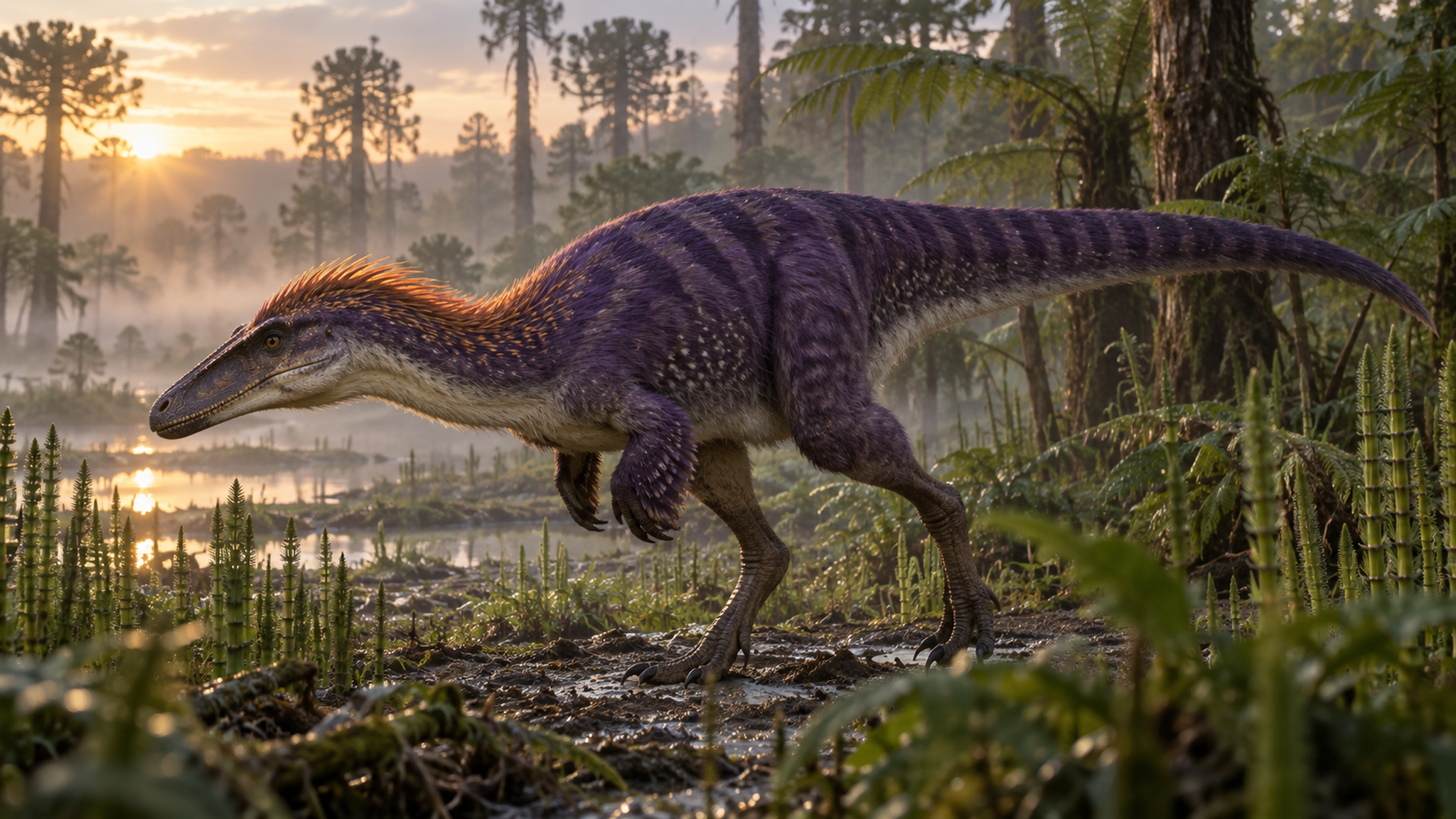
  1. Illustrative image/AI reconstruction of a purple-feathered, horse-sized predatory dinosaur (Invictibellatrix amberina) roaming a fern-covered floodplain forest of the Early Cretaceous on the Isle of Wight.
    AI reconstruction: this is how Invictibellatrix amberina might have looked – only its fossil braincase is known; the rest of its appearance is a scientifically plausible approximation modelled on early megaraptorans.AI reconstruction: Tiefenzeit / GPT Image

    Isle of Wight: braincase reveals new predatory dinosaur

    Researchers have identified a new predatory dinosaur on the Isle of Wight in England: Invictibellatrix amberina. All they have of it is the braincase, the bony capsule around the brain. It dates from the Early Cretaceous, a team reports in the journal Royal Society Open Science.

    The joint with the spine, the opening for the spinal cord and a bony crest at the back of the neck place it among the megaraptorans, a group of predatory dinosaurs. In the family tree, it sits among the early members. Relatives such as Megaraptor namunhuaiquii from Argentina had huge claws on their first two fingers.

    The analysis suggests that early megaraptorans probably lived almost worldwide in the Early Cretaceous. The researchers see regional extinction as the most likely reason why they are later missing from the northern continents.

    Royal Society Open Science · Study published · Original study ↗
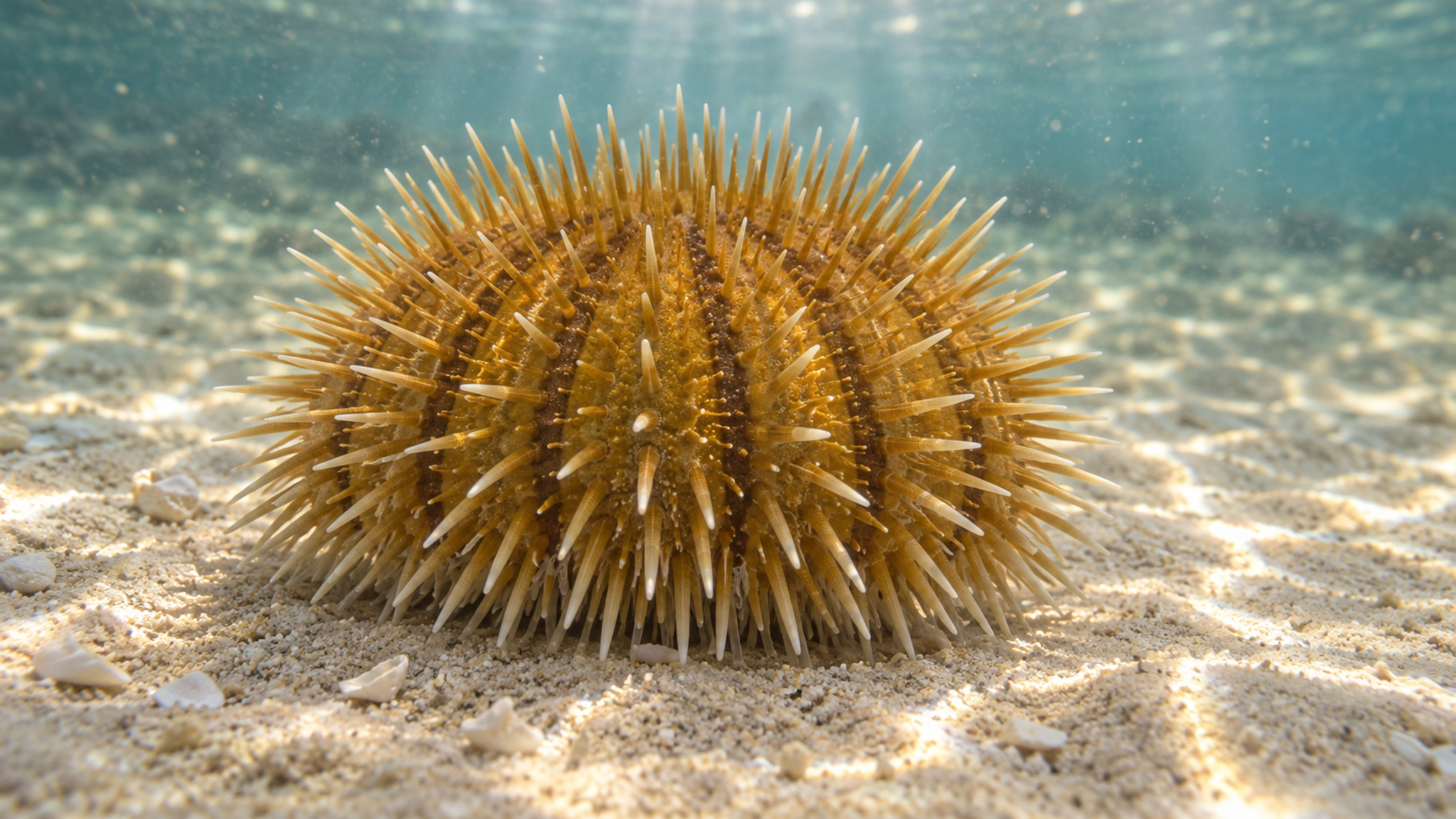
  2. AI-generated reconstruction of a sea urchin of the fossil species Arbacia percaribbeana with dense ochre-golden spines on a sandy seabed, close-up from a low underwater viewpoint with sunbeams in the water.
    AI reconstruction: how the newly described fossil sea urchin Arbacia percaribbeana might have lived in the shallow coastal sea of the Caribbean and south-eastern North America around 3 to 2 million years ago.AI reconstruction: Tiefenzeit / GPT Image

    New prehistoric sea urchin from the Caribbean resembles Pacific relatives

    Researchers have described a new species of fossil sea urchin: Arbacia percaribbeana from Venezuela, the Caribbean and southern Florida. The team examined more than 400 specimen lots from the Pliocene and the Ice Age held in museum collections, and some of the sea urchins still carry their spines.

    The new species resembles sea urchins from the Pacific more closely than four other species from the western Atlantic do. The pattern points to two lineages: one from the North Atlantic and one with relatives in the Pacific. Sea urchins may have moved between the oceans as the seaway in Central America gradually closed.

    Developmental biologists have used sea urchins as laboratory animals for more than a hundred years, because their eggs are transparent and easy to study in the lab.

    Journal of Paleontology · Study published · Original study ↗

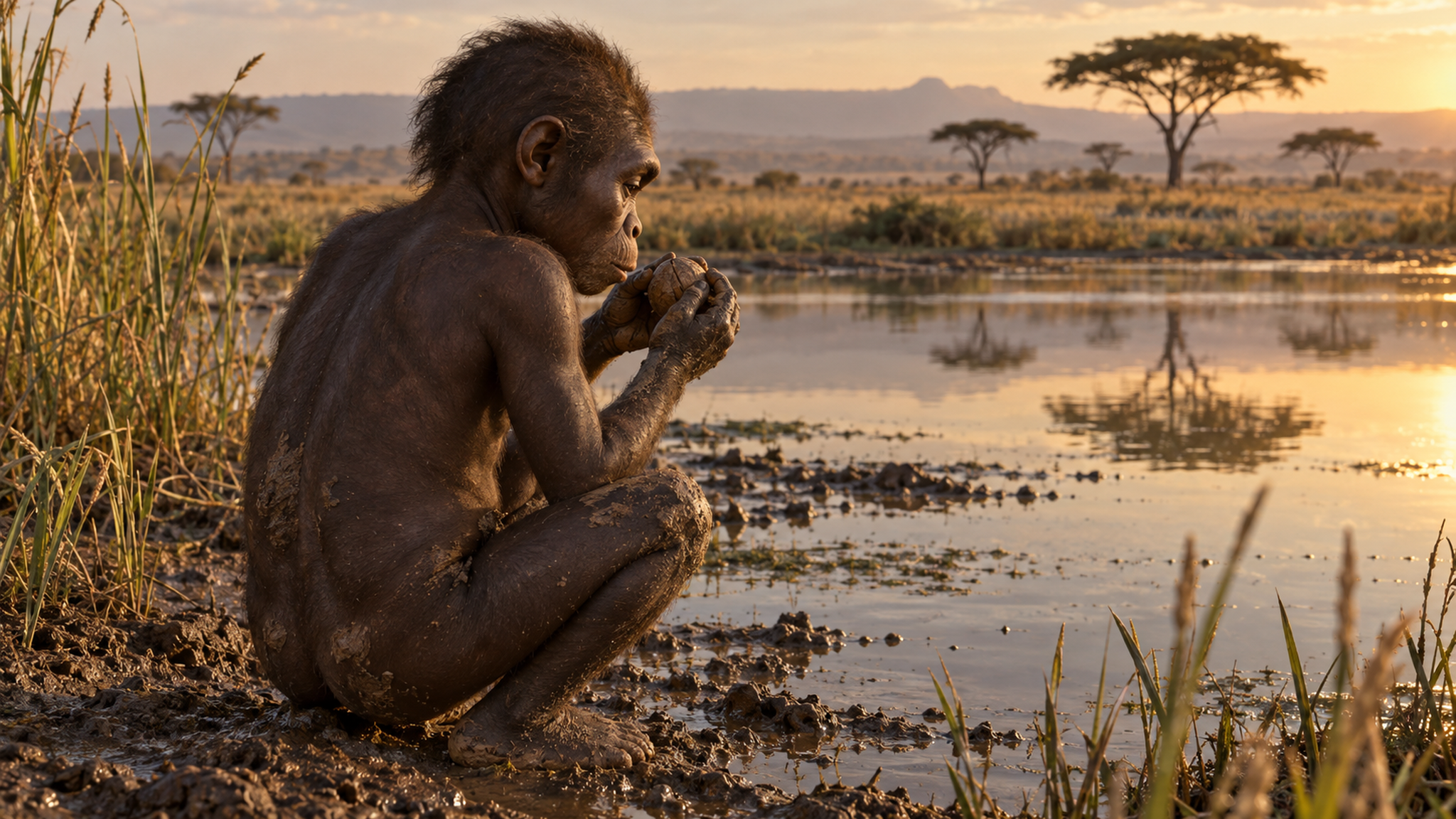
  3. AI-generated illustrative image: a young Paranthropus boisei child crouches unclothed, seen in profile, at the edge of a waterhole in an East African savannah landscape, holding a hard-shelled seed up to its mouth.
    AI reconstruction (illustrative image): this is how a child of Paranthropus boisei in the Omo Basin might have looked – unclothed, with only clay on its hands, forearms and knees, examining a hard-shelled seed.AI reconstruction: Tiefenzeit / GPT Image

    Child's jaw from Ethiopia reveals how an early human grew up

    Researchers have described the upper jaw of a child of Paranthropus boisei, a robust early human from East Africa, from the Shungura Formation in Ethiopia. Judging by the state of its teeth, the child died at around 3.8 to 5 years of age. The study was published in the journal Comptes Rendus Palevol.

    What is new: the small jaw already shows some features typical of its genus, but not others. This means its growth followed a partly different path from that of its relative Paranthropus robustus. The researchers see this as a sign that the species of the group developed in different ways.

    The species became known in 1959, when Mary Leakey found a skull in Olduvai Gorge in Tanzania. The press nicknamed it Nutcracker Man.

    Comptes Rendus Palevol · Study published · Original study ↗