Footprints from Italy: crocodile and dinosaur relatives were already around before the mass extinction
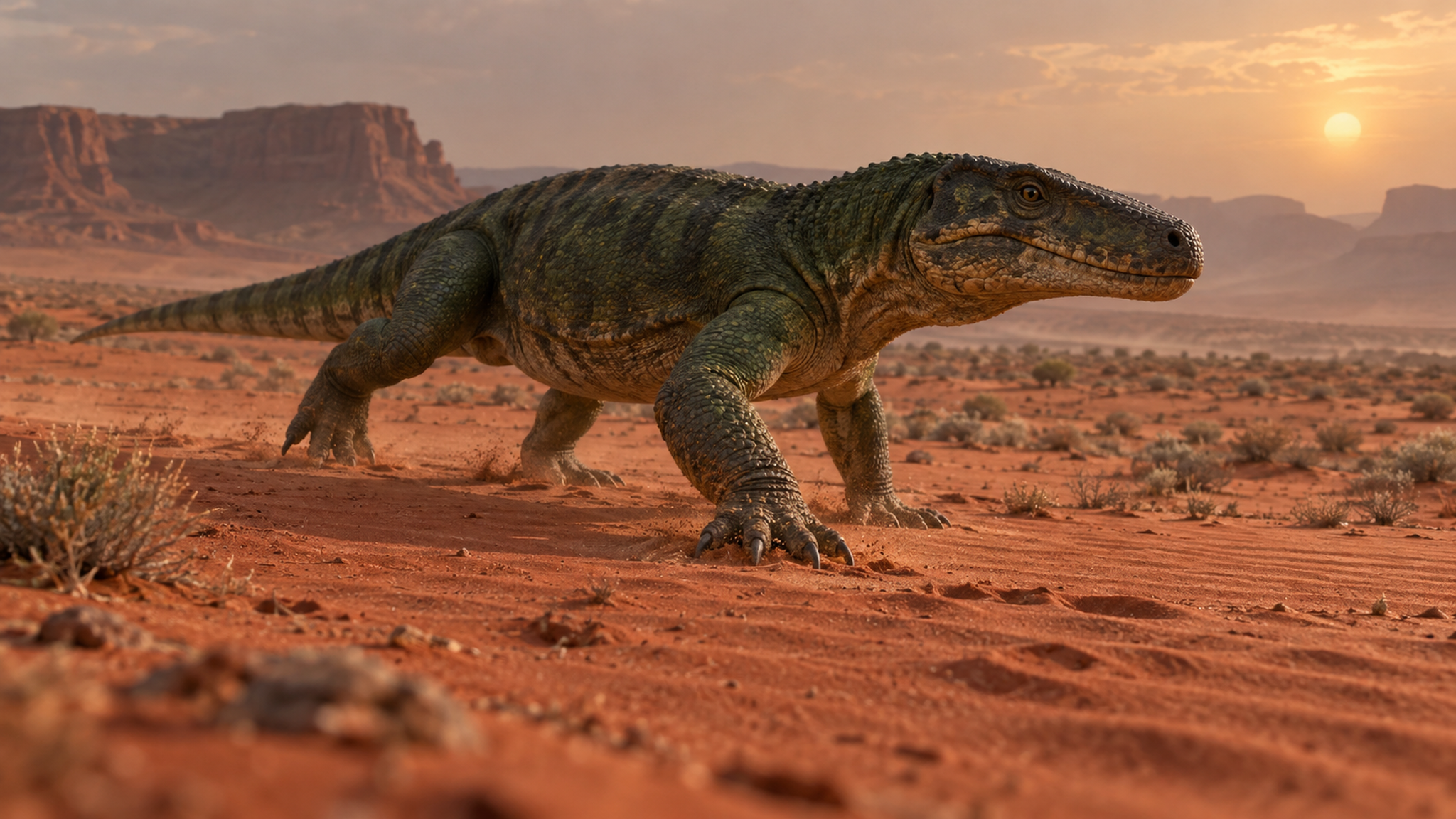
Researchers have described a new type of fossil track from the Val Gardena Sandstone in northern Italy: Pachychirotherium gardenaensis. The prints date from the late Permian, before the mass extinction at the end of that period. They are the earliest known tracks of the chirotheriid family. The team thinks the trackmakers were early relatives of crocodiles and dinosaurs, perhaps from the group known as the erythrosuchids.
The features of the tracks fit a wide-legged gait, with the legs splayed out to the sides. Tracks from the Early Triassic show transitional forms, and the group probably only achieved an upright stance in the Middle Triassic. Walking on the toes also developed step by step.
The first track of this family, the "hand beast" Chirotherium, was noticed in 1833 by a headmaster in Hildburghausen in Thuringia.
Palaeontology · Study published · Original study ↗