66,000,000 years ago today · Cretaceous–Paleogene boundarySaturday, 31 October 2026 · Strictly scientific. Always sourced.
Latest
Footprints from Italy: crocodile and dinosaur relatives were already around before the mass extinctionHole in the shoulder blade: a new Neanderthal from Shanidar CaveAncient coral from North Carolina turns out to be a precious coralResearchers assign Greenland fossils to a Siberian spiny fish

Sea Reptiles

Tethys Ocean

4 articles · Page 1 / 1 · All sections in the archive
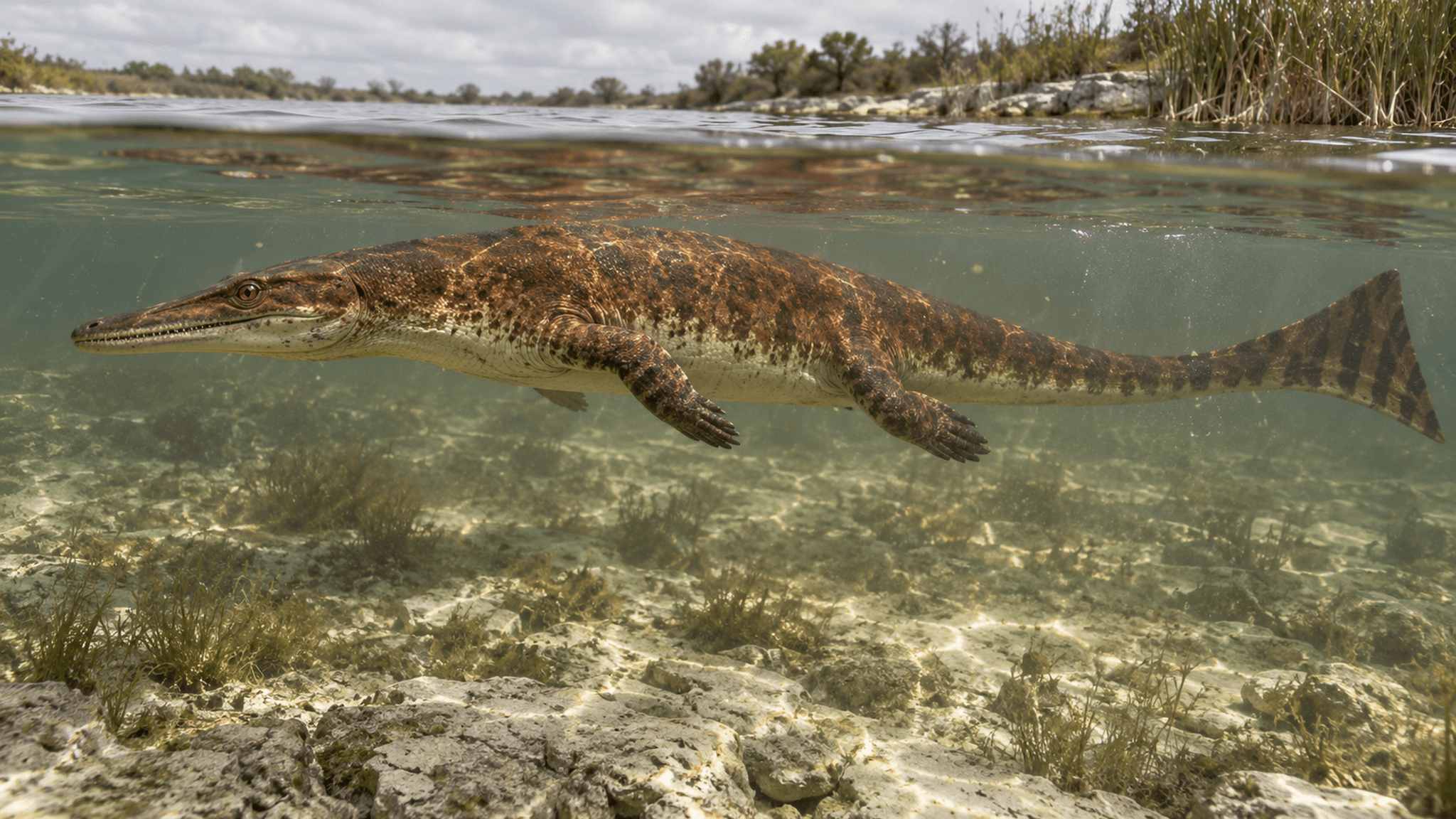
AI life reconstruction of Garamaudo bauciensis, a roughly 2.5-meter-long freshwater mosasaur from Provence that, according to the study, likely lived in shallow freshwater.Sea Reptiles
Sea Reptiles · 4 Oct 2026

Sea Lizard with Land Legs: Researchers Find Freshwater Mosasaur in France

About 2.5 metres long, with legs like a land animal and buried in the deposits of an ancient lake: researchers have described a new freshwater mosasaur from Provence. Mosasaurs are known as marine reptiles of the Cretaceous. This animal, named *Garamaudo bauciensis*, probably lived in freshwater near Bouc-Bel-Air in south-eastern France about 85 million years ago.
CheckedSource: Garamaudo bauciensis, a new freshwater mosasaurid (Reptilia, Squamata) from the Santonian (Late Cretaceous) of Provence, southeastern France
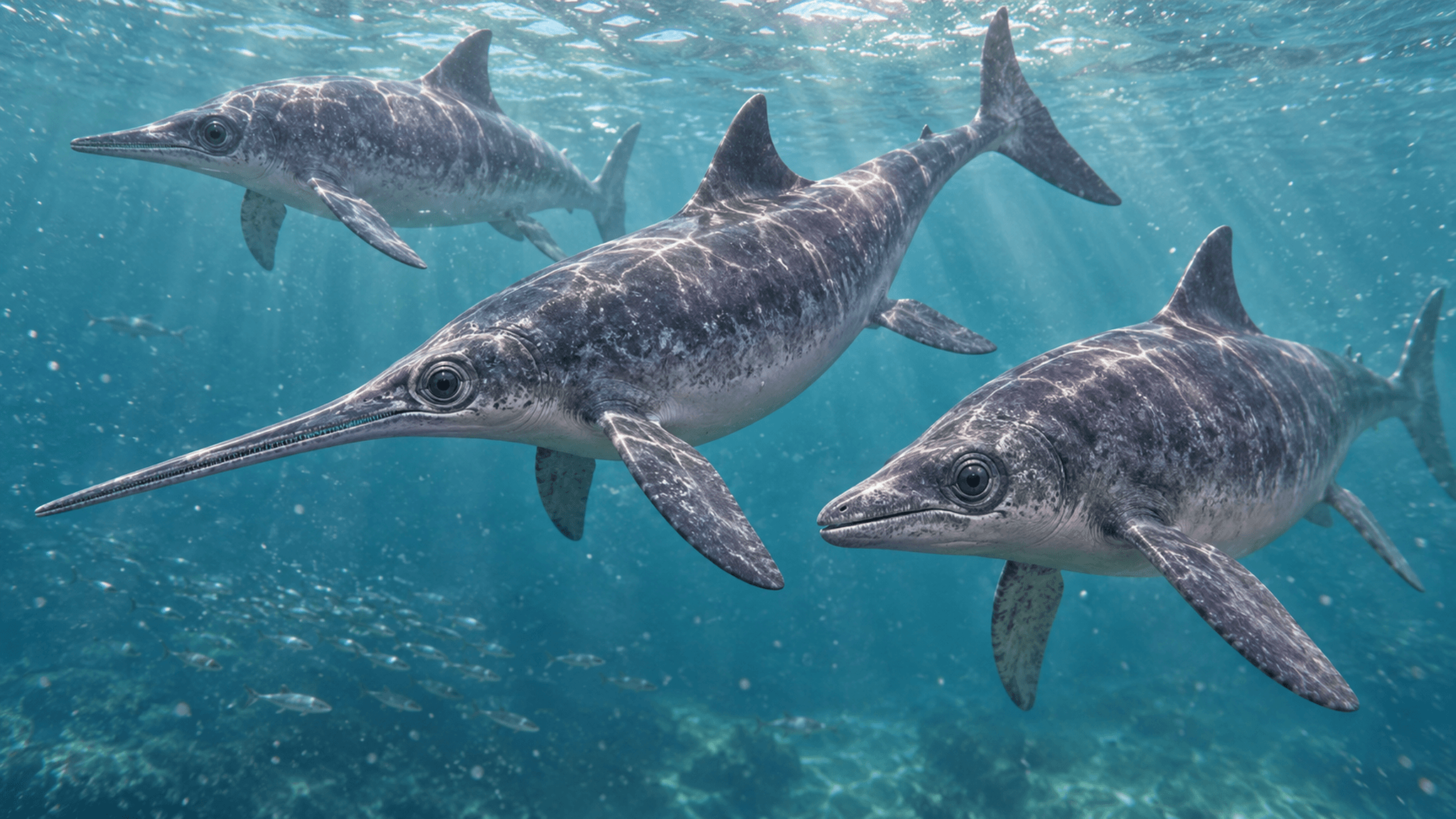
AI life reconstruction: Triassic ichthyosaurs varied greatly in skull length – a new model dates the peak of this diversity to about 231.1 million years ago, without a matching environmental trigger.Sea Reptiles
Sea Reptiles · 2 Oct 2026

Ichthyosaur mystery: Their skull lengths diverged early, yet the environmental data do not fit

Ichthyosaurs made a lightning start in the Triassic. According to the median of a new evolutionary model, the range of their skull lengths peaked around 231.1 million years ago. At that point, only about one eighth of their evolutionary history had passed. That is the finding of a study that has not yet been peer-reviewed. Neither sea level nor sea-surface temperature, rock area or sedimentary sequences show a turning point that matches it significantly.
CheckedSource: A novel phylogenetic comparative model reveals strong signals for early high disparity in ichthyosaurs
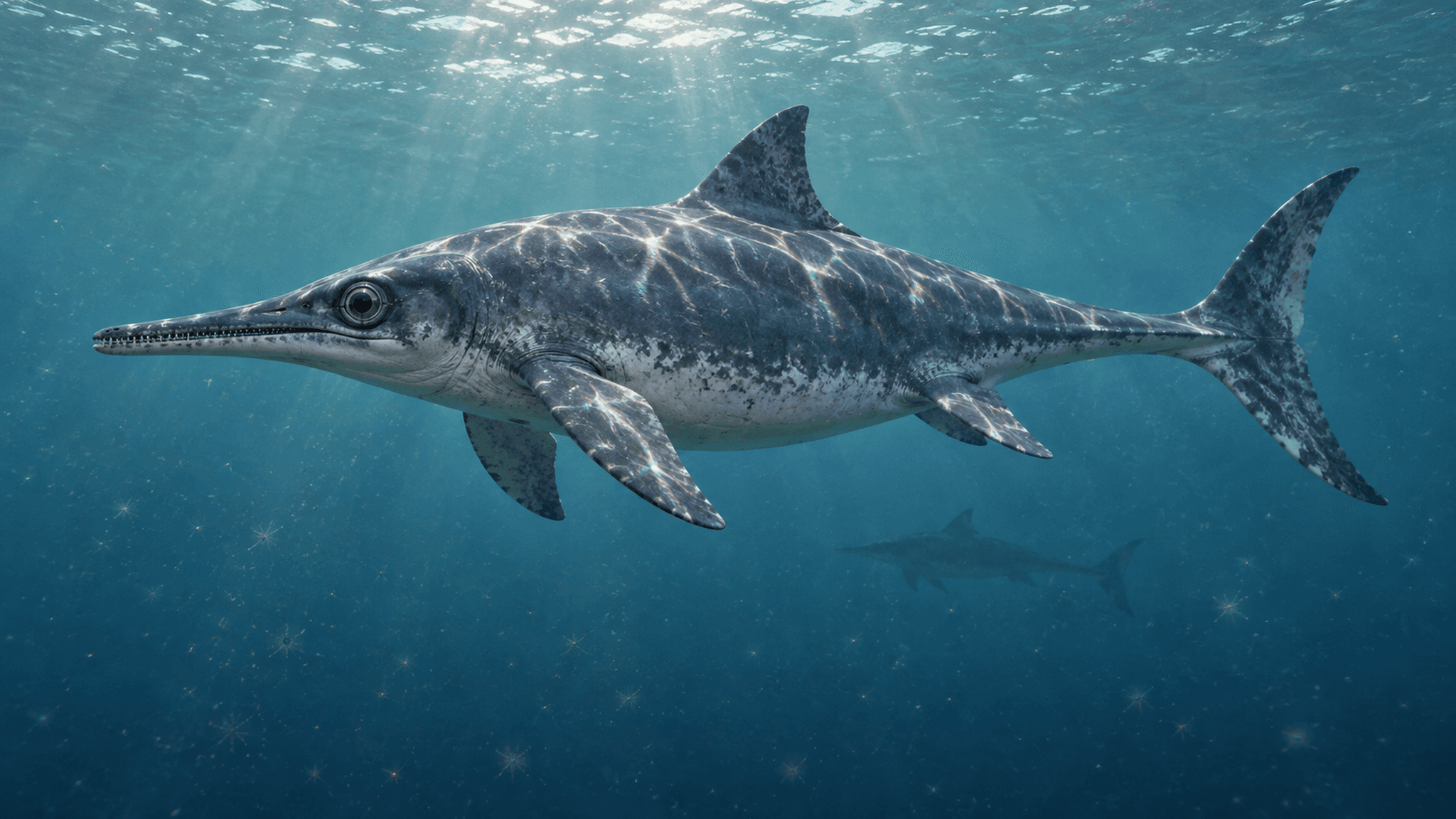
AI life reconstruction of Ichthyosaurus anningae, an ichthyosaur species whose first unambiguous record outside the United Kingdom was found in the Rodiles Formation in Asturias, Spain.Sea Reptiles
Sea Reptiles · 29 Sept 2026

Ichthyosaur in Spain: Record-Breaking Marine Reptile Shatters Dorset’s Monopoly

A skeleton from Asturias tears down an old boundary: this ichthyosaur from Spain unquestionably belongs to *Ichthyosaurus anningae*, a species previously confirmed only in Dorset, England. Judged by its upper arm bone, it is also the largest known animal of its species. It swam through a Lower Jurassic sea whose fauna closely linked northern Spain with Britain.
CheckedSource: First record of Ichthyosaurus anningae outside the United Kingdom: new evidence from the Lower Jurassic of northern Spain
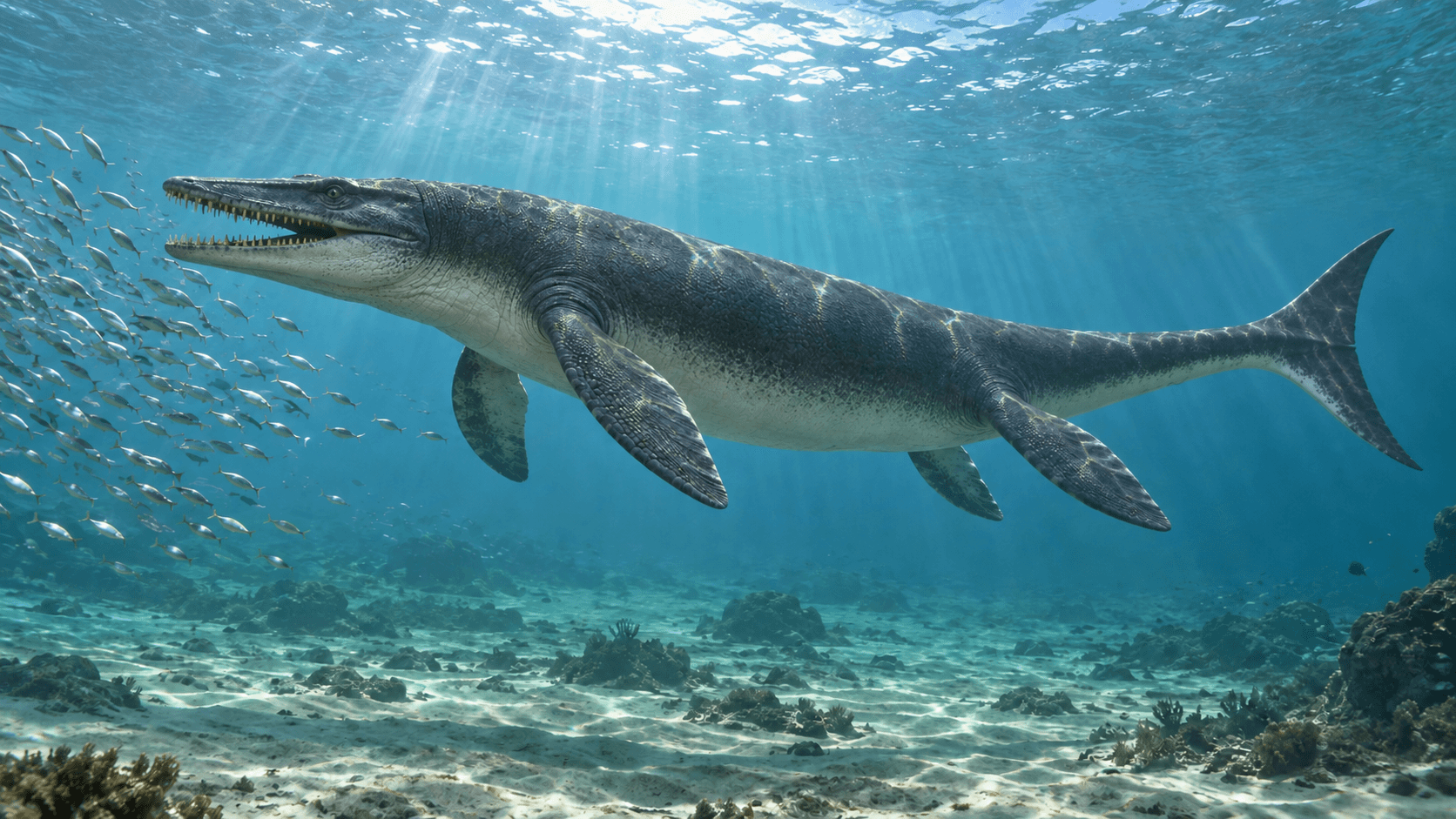
Artistic depiction of a mosasaur in the Late Cretaceous. A generic reconstruction, not the animal from Kaizuka.Sea Reptiles
Sea Reptiles · 14 Sept 2026

New marine reptile? This skull bone matches no known mosasaur

A rock block from Japan sat in a museum for more than three decades — packed with mosasaur bones that nobody had recognised. Researchers found four overlooked bones inside it, including the first confirmed front upper-jaw bone from a mosasaur in Japan. A braincase bone bears a combination of features unlike any described mosasaur. It may represent a new species, but that has not been established.

CheckedSource: www.eurekalert.org