How do you prove that an animal from northern Spain belongs to a species previously known from just one confirmed locality? And which detail turns a single skeleton into evidence about an entire sea? The answers lie in a skull, a flipper and spiral shells in the rock.
Dorset Loses Its Monopoly
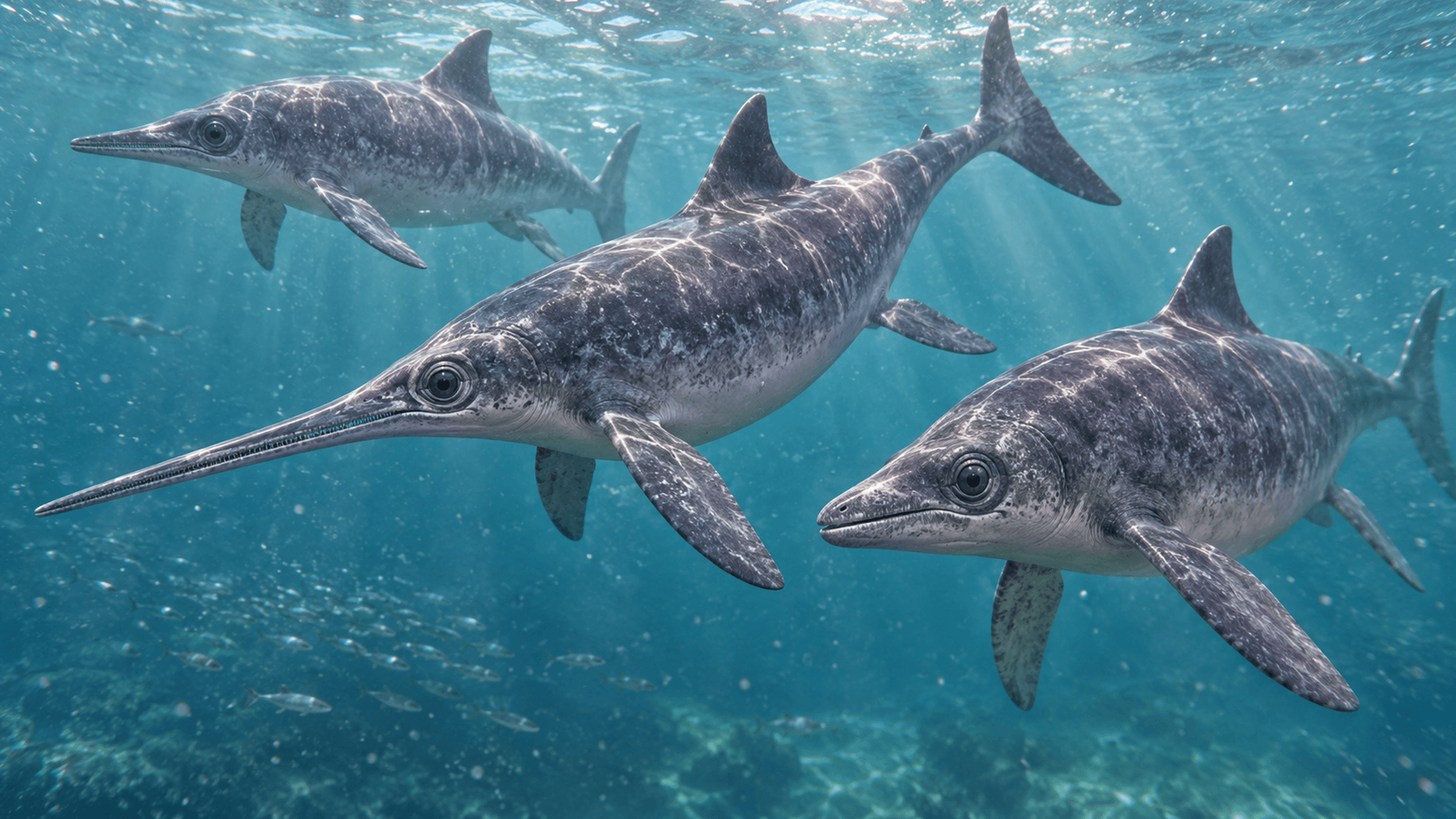
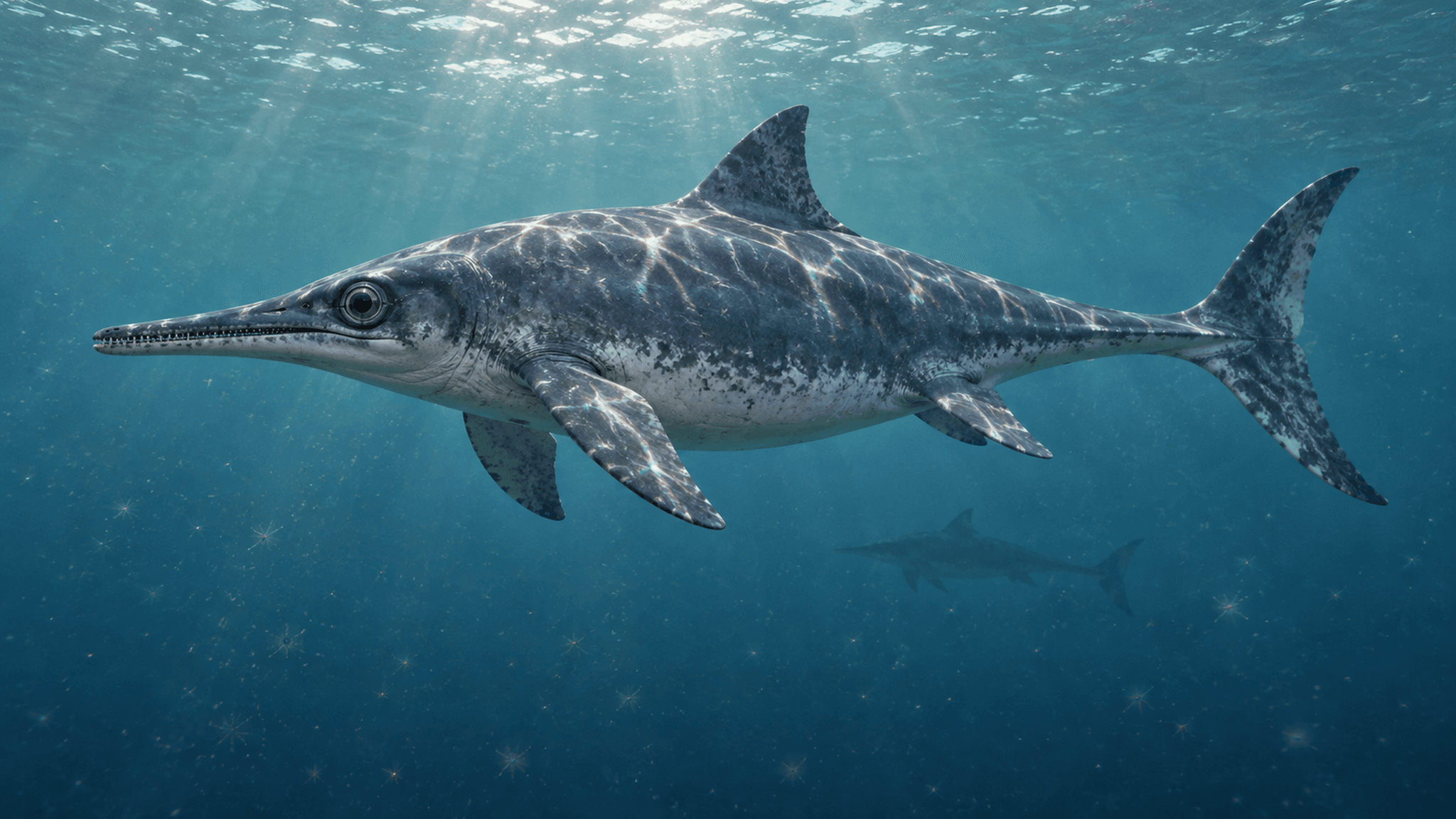
Ichthyosaurs were marine reptiles with streamlined bodies and flippers. Their name means ‘fish lizards’. Until now, Ichthyosaurus anningae could be identified with certainty only at its type locality, the site in Dorset on which the species description was based.
The animal from Asturias breaks that monopoly. It is the first unequivocal record of the species outside the United Kingdom. What seemed to be a Dorset local was, in fact, a species distributed far beyond the English coast.
Spiral Shells Reveal the Precise Age
A bone carries no date. Ammonites from the same rock provide one: extinct relatives of squid with spiral shells. Their species changed so rapidly that geologists can use them to pin rock layers to a particular time.
The ammonites place the skeleton unambiguously. It comes from the Rodiles Formation, specifically the Jamesoni Zone of the Pliensbachian, a stage of the Lower Jurassic. That puts the Asturian sequence directly alongside marine basins of the same age in north-western Europe.
The Skull Reveals Something New, the Flipper Breaks the Record
The skull and the rest of the skeleton carry precisely the features specialists use to identify this species. There is more: nobody had documented some details of its skull anatomy before. The species can now be described more precisely than ever.
Then comes the record. Judged by its upper arm bone, this animal surpasses every known specimen of Ichthyosaurus anningae. The study summary gives no total body length; the size comparison rests on this single bone.
The Family Tree Draws a Clear Line
The researchers added the find to an updated family-tree analysis. Such analyses compare numerous features across different species to reconstruct how they are related.
The result supports Ichthyosaurus as a distinct lineage with a shared origin. At the same time, it separates Ichthyosaurus anningae even more clearly from other Pliensbachian ichthyosaurs. The Spanish find does not blur the species; it brings it into sharper focus.
A Surprise in the Rock: The Record Holder Had Neighbours
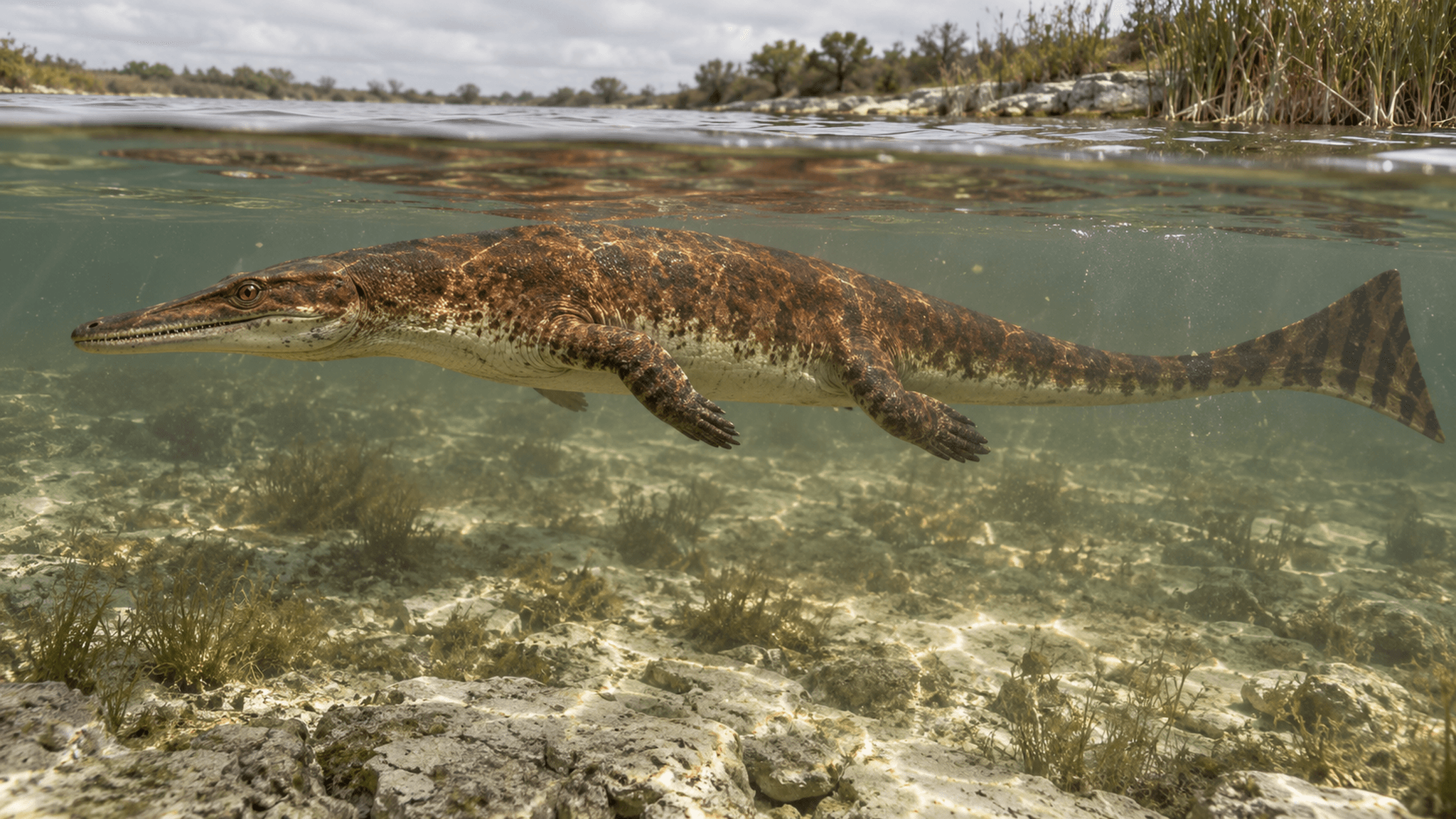
Where Asturias lies today, there was once a sea. A large ichthyosaur moved through the water and surfaced to breathe. But it was not alone.
The same Rodiles Formation also contains remains of Leptonectes, a second ichthyosaur whose exact species remains uncertain. The researchers regard this coexistence as new evidence of niche partitioning. In other words, the two species used their habitat in different ways instead of competing for exactly the same resources.
Researchers already know this pattern from fossil sites in south-west England. Two distant coastlines therefore reveal the same picture.
Spain Moves Closer to England
The find expands the known range of Early Jurassic ichthyosaurs. It also shows how diverse and intricately structured the fauna along the edge of the Iberian Peninsula was.
The marine communities of northern Spain closely resembled those of the Jurassic sea over Britain. Water once connected what national borders divide today, and the same patterns of coexistence unfolded within it.
---