66,000,000 years ago today · Cretaceous–Paleogene boundaryThursday, 22 October 2026 · Strictly scientific. Always sourced.
Latest
Footprints from Italy: crocodile and dinosaur relatives were already around before the mass extinctionHole in the shoulder blade: a new Neanderthal from Shanidar CaveAncient coral from North Carolina turns out to be a precious coralResearchers assign Greenland fossils to a Siberian spiny fish
← All daily editions

Research news for 14 October 2026

Prehistory in brief

All daily editions →

New studies, briefly explained. Each item includes the original study’s publication date.

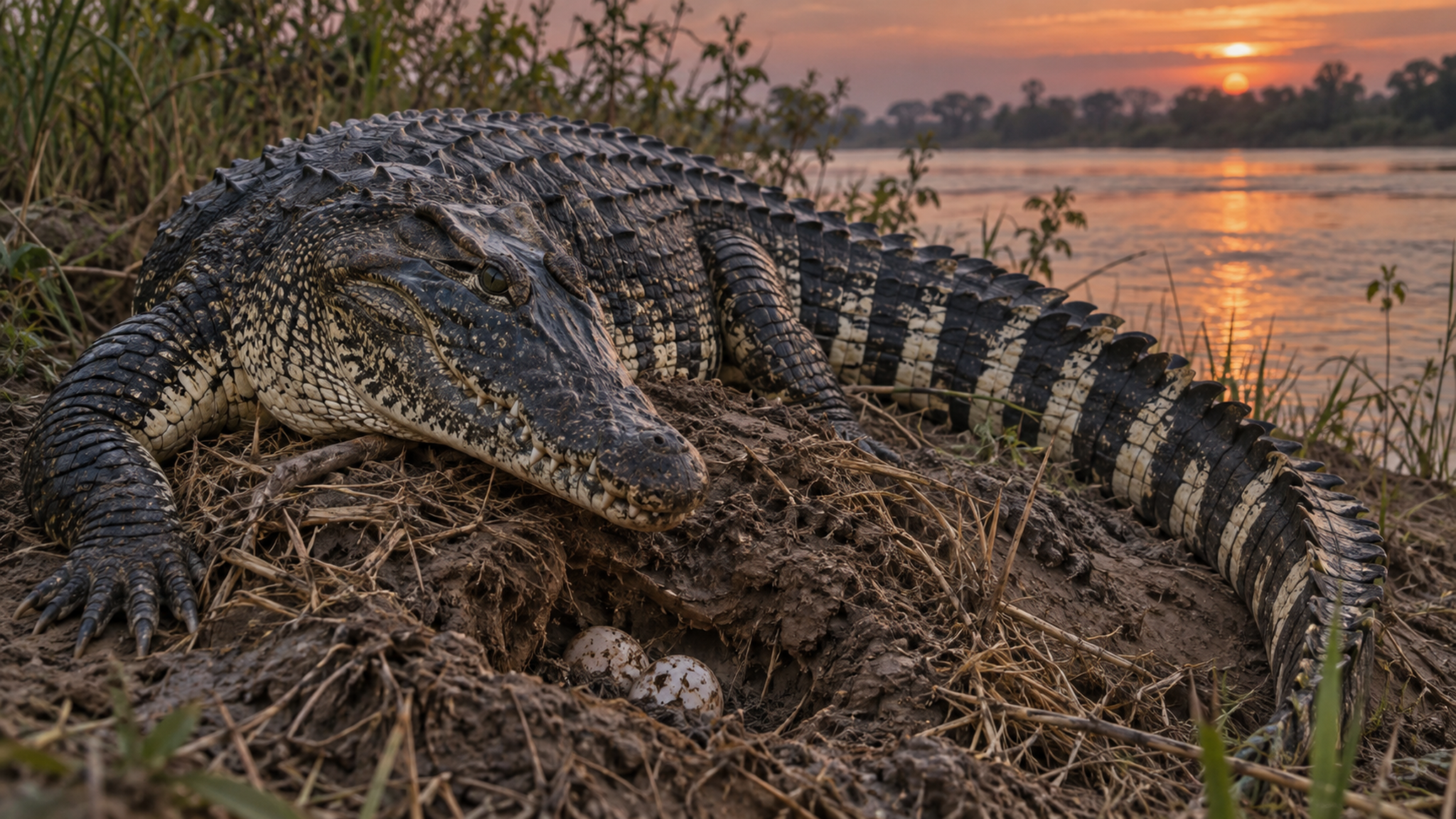
  1. Illustrative image, AI-generated: a living crocodile of unspecified species lies protectively over an opened earth nest on a riverbank at dusk, with individual eggs visible; not a real fossil or study image.
    AI reconstruction (illustrative image): a mother crocodile guards her earth nest on the riverbank – according to a new review, the structure of the eggshell itself has remained remarkably unchanged since the Jurassic.AI reconstruction: Tiefenzeit / GPT Image

    Crocodile eggs: shell blueprint barely changed since the Jurassic

    The eggshell of crocodiles and their ancestors has barely changed its basic blueprint since the Jurassic. That is shown by a new review in the journal Historical Biology. The researchers examined fossil eggs, shells and nests from the Early Jurassic to the Pliocene. Wedge-shaped shell units with small knobs at their base persisted throughout.

    Subtle differences in thickness, pores and ornamentation point to adaptations to the environment, and perhaps also to traits of individual lineages. Crocodiles survived earlier mass extinctions. Because they need very specific nesting sites, they are nevertheless vulnerable to human interference.

    In 2017, a nest of 13 eggs from the Late Jurassic in Portugal was regarded as the oldest known egg find from crocodile relatives.

    Historical Biology · Study published · Original study ↗
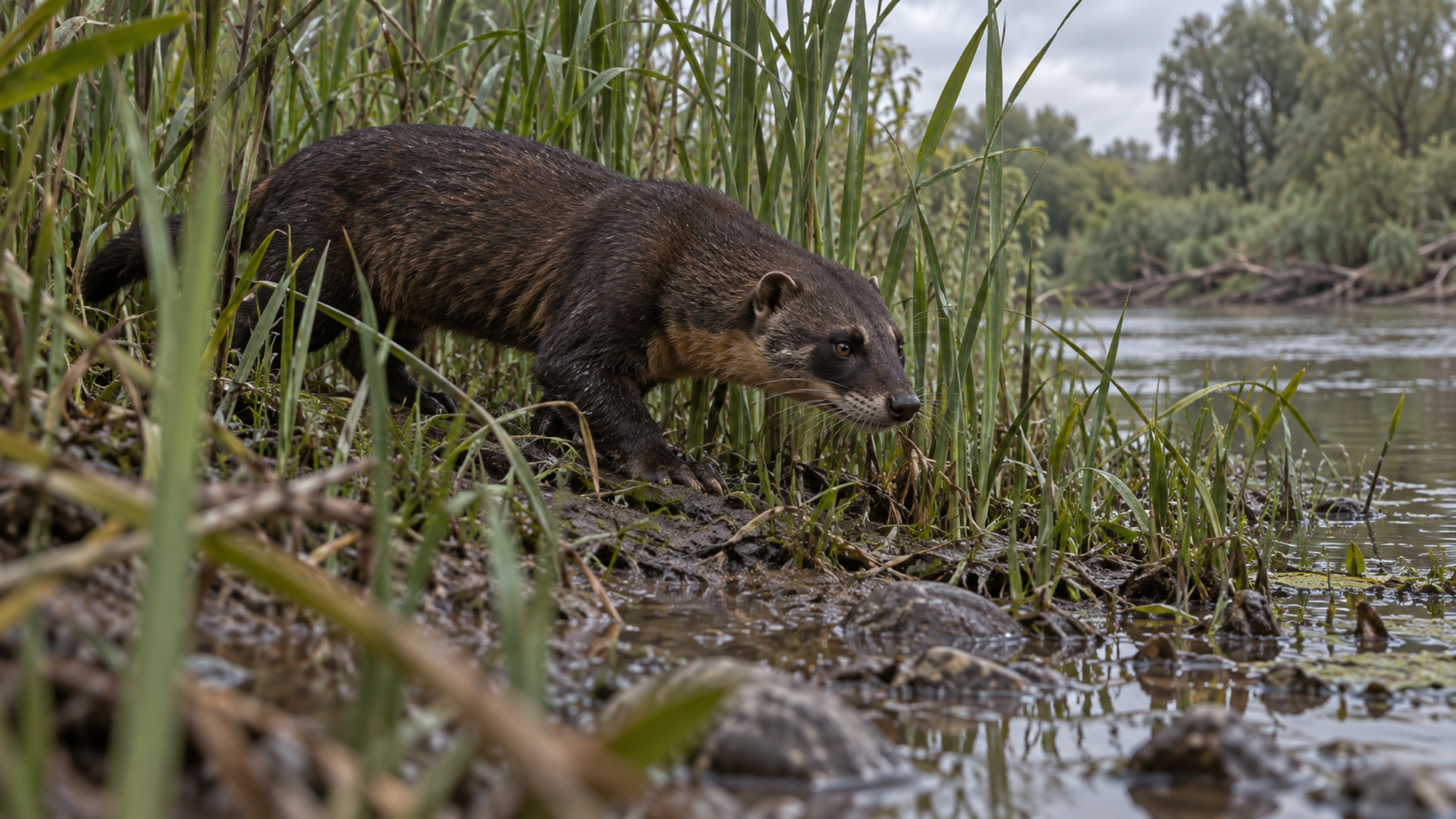
  2. Digitally created AI reconstruction used as an illustrative image: a dark-coloured large marten (Pannonictis pliocaenica) moves low to the ground through reeds on a muddy riverbank in overcast daylight; not an image of a real fossil.
    AI reconstruction (illustrative image): how the extinct large marten Pannonictis pliocaenica might have looked on a Crimean riverbank – not a photograph, not an image of a fossil.AI reconstruction: Tiefenzeit / GPT Image

    Crimean cave yields jaw of a large prehistoric marten

    Researchers have described the remains of a large marten from the early Ice Age in Taurida Cave in Crimea: Pannonictis pliocaenica. The find extends the species' known range considerably further east.

    What survives is a complete half of a lower jaw and four isolated teeth. A detailed comparison with other finds points to this species, the study reports in the journal Scientific Reports. In Eastern Europe and Western Asia, the marten had previously been known from only a few sites.

    Finds of the genus often come from riverside landscapes. This supports the idea that Crimea had waterside habitats at the time. According to National Geographic, the same cave also yielded the thigh bone of a giant bird, Pachystruthio dmanisensis, estimated to have stood just under 3.7 metres tall.

    Scientific Reports · Study published · Original study ↗
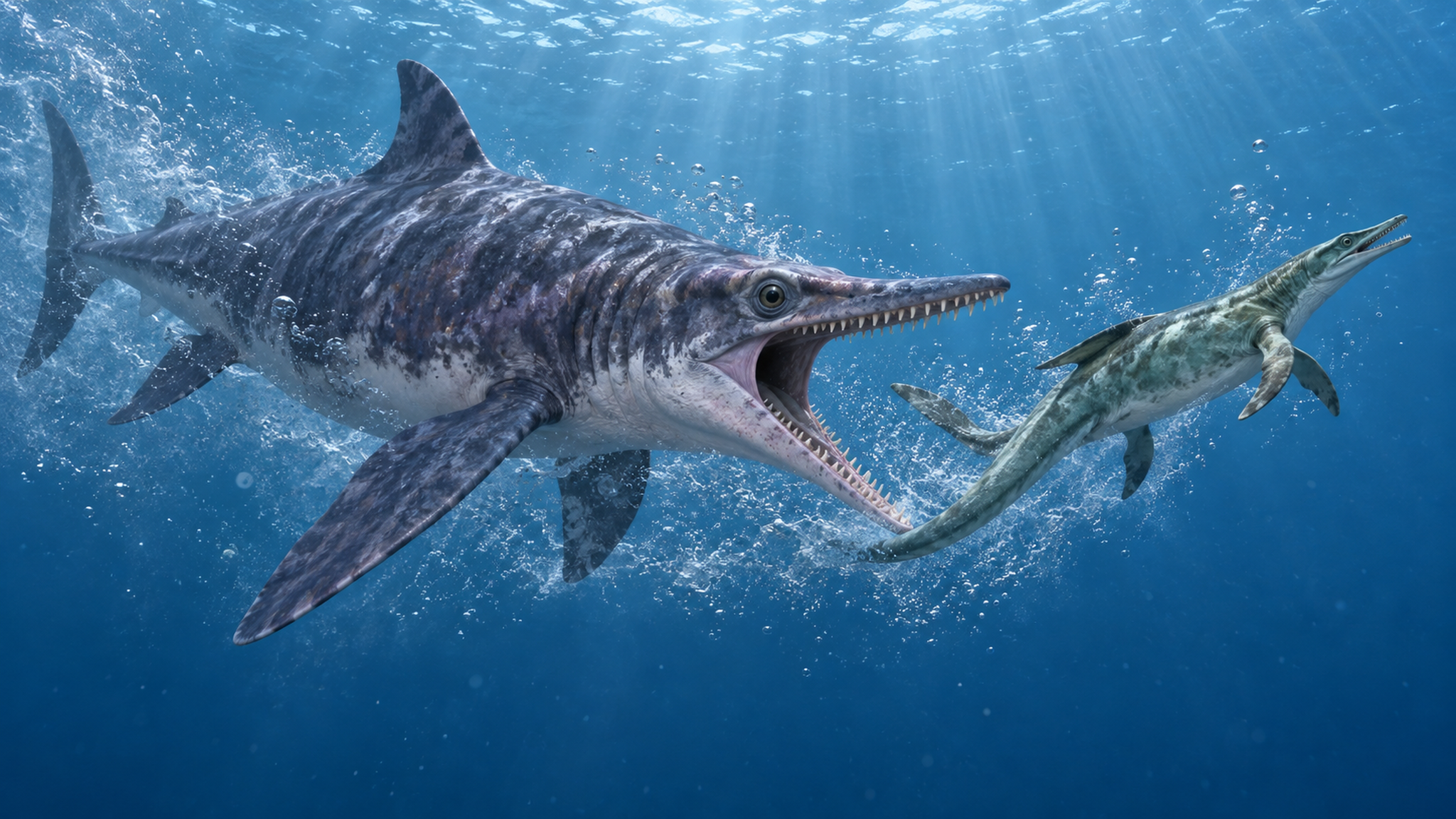
  3. AI-generated illustrative image: a dark, ichthyosaur-like marine reptile with a black back and white underside seizes a smaller, greenish, long-tailed marine reptile in open water; neither species is identified by name in the article.
    AI reconstruction (illustrative image): a large, ichthyosaur-like marine reptile catches a smaller marine reptile in the open Triassic sea, a symbol of the study's late phase, when marine reptiles in South China became large predators. Neither species is specifically named in the article.KI-Rekonstruktion: Tiefenzeit / GPT Image

    After the mass extinction: marine reptiles conquered South China's seas in three stages

    After the great mass extinction at the end of the Permian, marine reptiles conquered the seas of South China in three stages. The study, published in Proceedings of the Royal Society B, analyses some 20 million years of the Triassic.

    At first, many species lived in similar ways. In the Middle Triassic, their ways of life became more varied. After that, the reptiles moved out into the open sea, and by the end there were giant hunters. In South China they only took on roles like those of today's whales late in the Middle Triassic; elsewhere this probably happened earlier. Fluctuating sea levels may have favoured this move.

    An earlier find from South China shows such hunters: the stomach of a 4.8-metre-long ichthyosaur contained the remains of a marine reptile around four metres long.

    Proceedings of the Royal Society B: Biological Sciences · Study published · Original study ↗

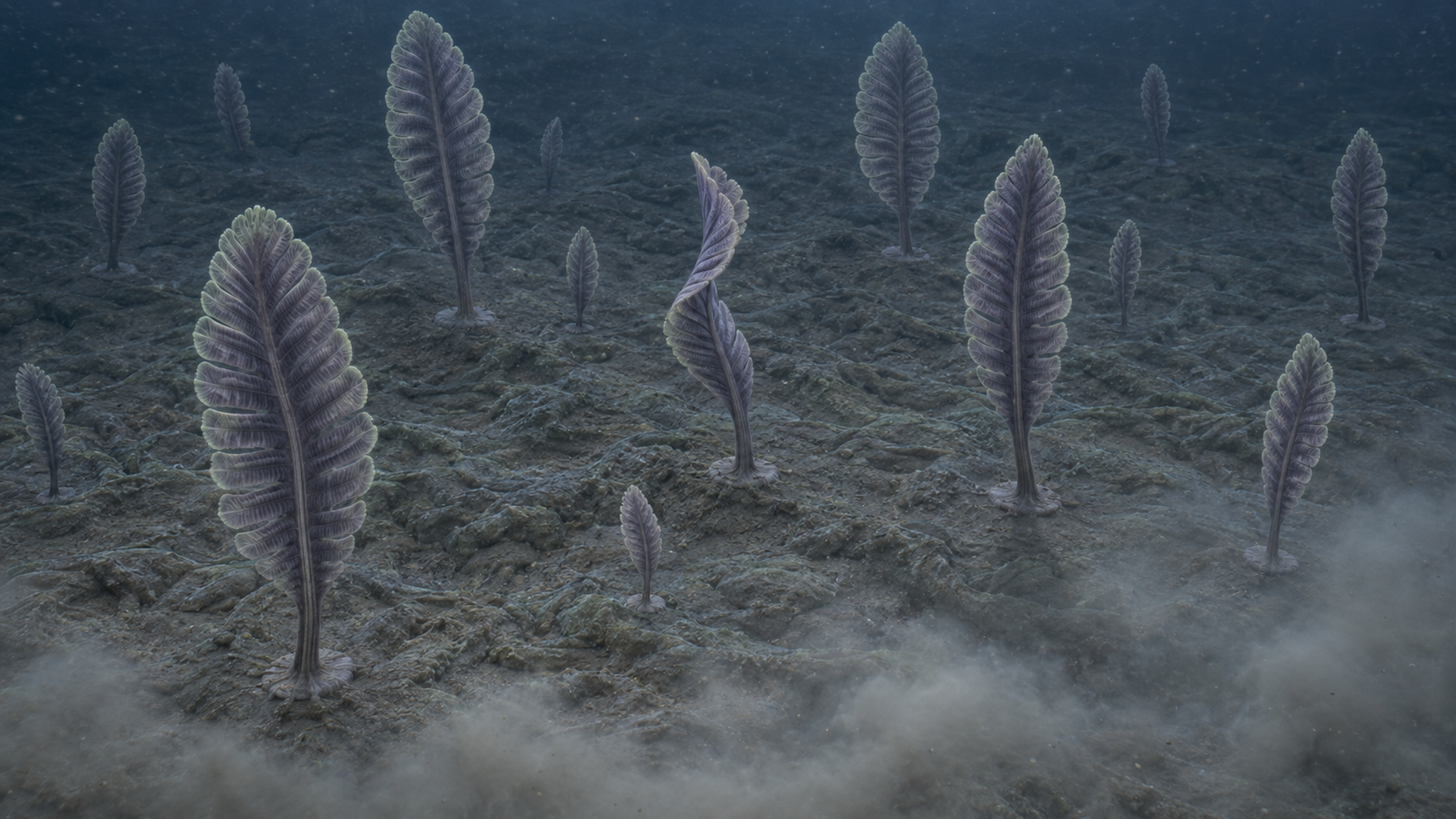
  4. AI reconstruction of a field of upright Charniodiscus concentricus fronds on the Ediacaran seabed, photographed at an angle from above, one of them slightly twisted by a subsiding turbidity current.
    AI reconstruction: a lifelike image of the Ediacaran frond Charniodiscus concentricus in its habitat, designed in line with current research on its presumed tissue structure.AI reconstruction: Tiefenzeit / GPT Image

    Prehistoric frond Charniodiscus: calculation points to firm animal tissue

    Researchers have calculated how stiff the prehistoric frond Charniodiscus from the Ediacaran was, the age of the first large living things. Their figures point to a load-bearing stalk made of densely packed, uniformly aligned collagen fibres, the tough connective tissue of animals. For the most part, that does not fit non-animals, sponges or tiny placozoans.

    Many of the fossils are twisted. The team puts this down to turbidity currents, underwater mudslides on the seabed, and uses it to work out the stiffness. This supports the idea that Charniodiscus belonged to the extended family of the tissue animals, the group that includes almost all animals alive today, the researchers report in Proceedings of the Royal Society B.

    Charniodiscus is one of the first known Ediacaran fossils: it was described in 1958 from Charnwood Forest in England.

    Proceedings of the Royal Society B: Biological Sciences · Study published · Original study ↗