New studies, briefly explained. Each item includes the original study’s publication date.
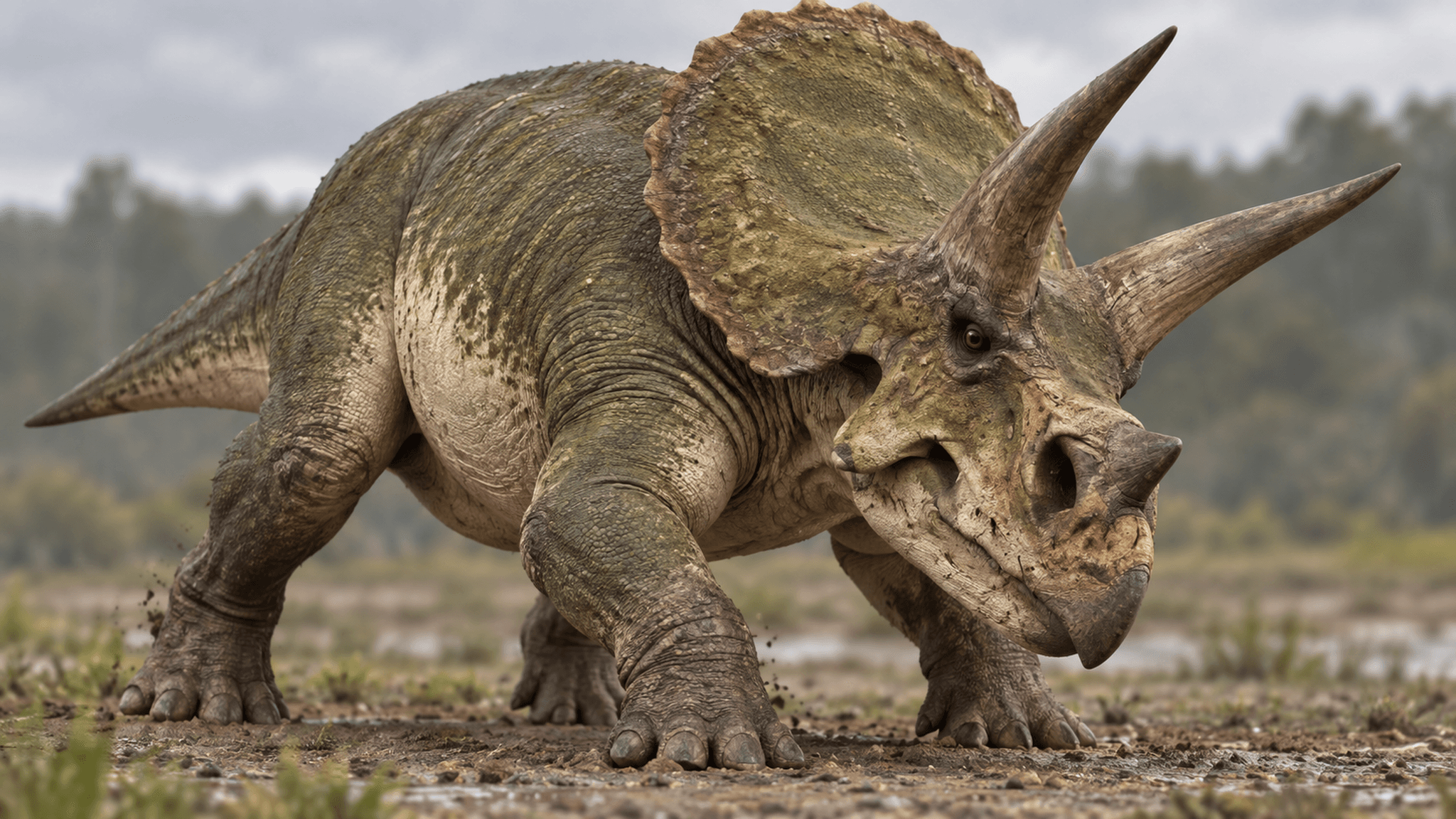
AI reconstruction (illustrative image): Triceratops horridus in a fighting stance – studies such as the one presented here test how well its horns withstood ramming forces.AI reconstruction: Tiefenzeit / GPT Image
Did horned dinosaurs ram their rivals with their horns? A research team has recreated this on the computer. Using 3D models that calculate stress in bone, the team simulated fighting movements in five species, from Psittacosaurus to Triceratops. The study was published in the journal PeerJ.
The nose horn of Centrosaurus coped well with forces from above and below and from front and back, but much less well with forces from the side. The horns above the eyes of Spiclypeus and Triceratops showed only low to moderate stress in most tests.
According to the researchers, this suggests that different fighting styles between members of the same species may have driven the evolution of these head weapons. The animals therefore probably inherited their sturdy skulls from earlier relatives.
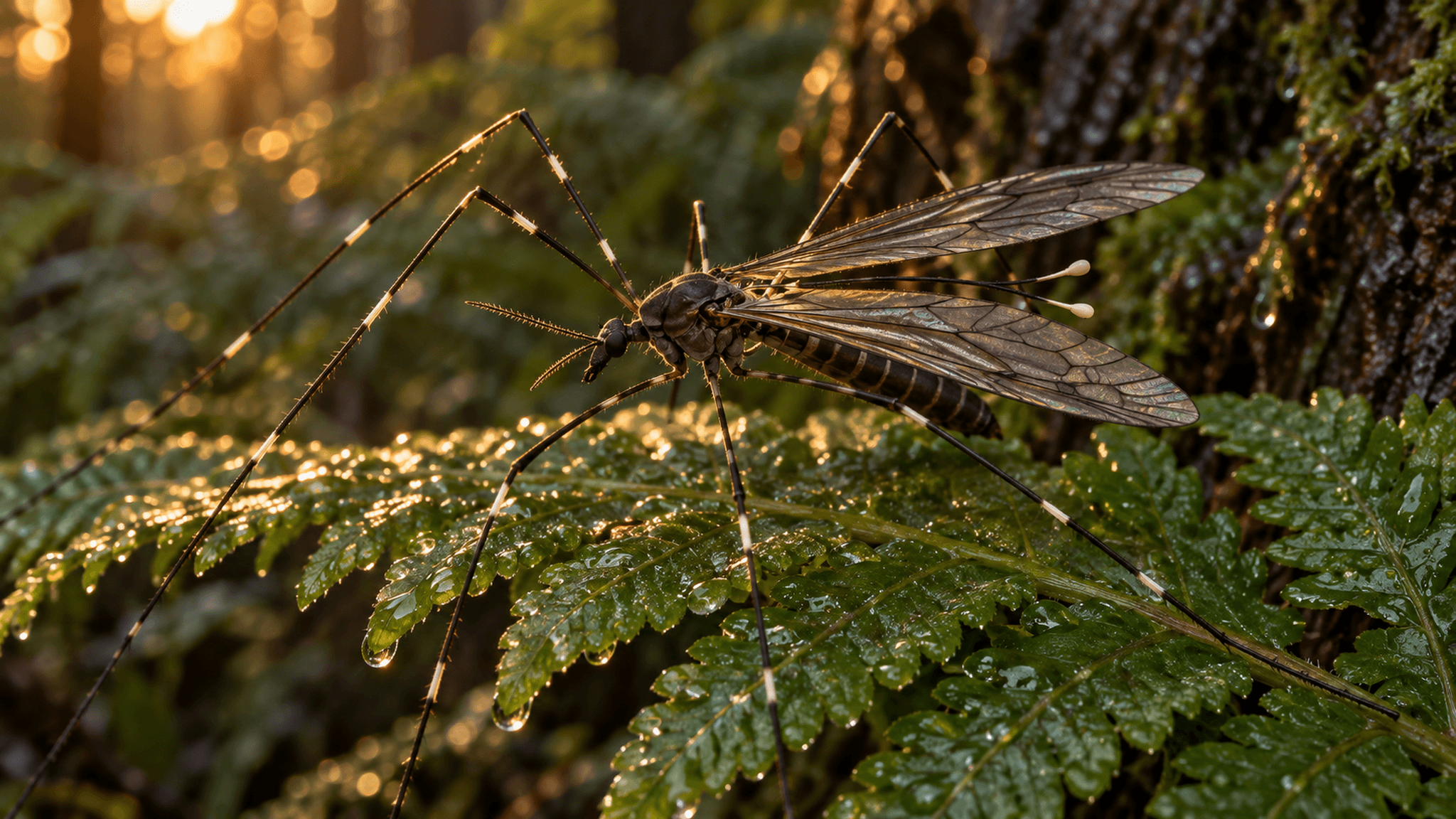
AI reconstruction/illustrative image: Protipula crassa, the type species of the Jurassic cranefly genus Protipula, re-examined in a recent study of Architipulinae fossils from Dobbertin and Karatau (including the newly described species Protipula oosterbroeki).AI reconstruction: Tiefenzeit / GPT Image
Little is known about limoniid craneflies of the genus Protipula from the Jurassic. There are hardly any fossils, so species that have already been described are difficult to verify.
A research team has now re-examined Protipula crassa, the species on which the entire genus is based. It comes from Dobbertin in Germany. In addition, there is a new species from the Upper Jurassic of Karatau in Kazakhstan: Protipula oosterbroeki. The researchers also assign a further fossil from Dobbertin, previously listed as Architipula areolata, to Protipula.
New evidence suggests that Protipula and its subfamily Architipulinae were more diverse and more widely distributed across the northern continent of Laurasia than previously thought. The study was published in Acta Palaeontologica Polonica.
Acta Palaeontologica Polonica · Study published · Original study ↗
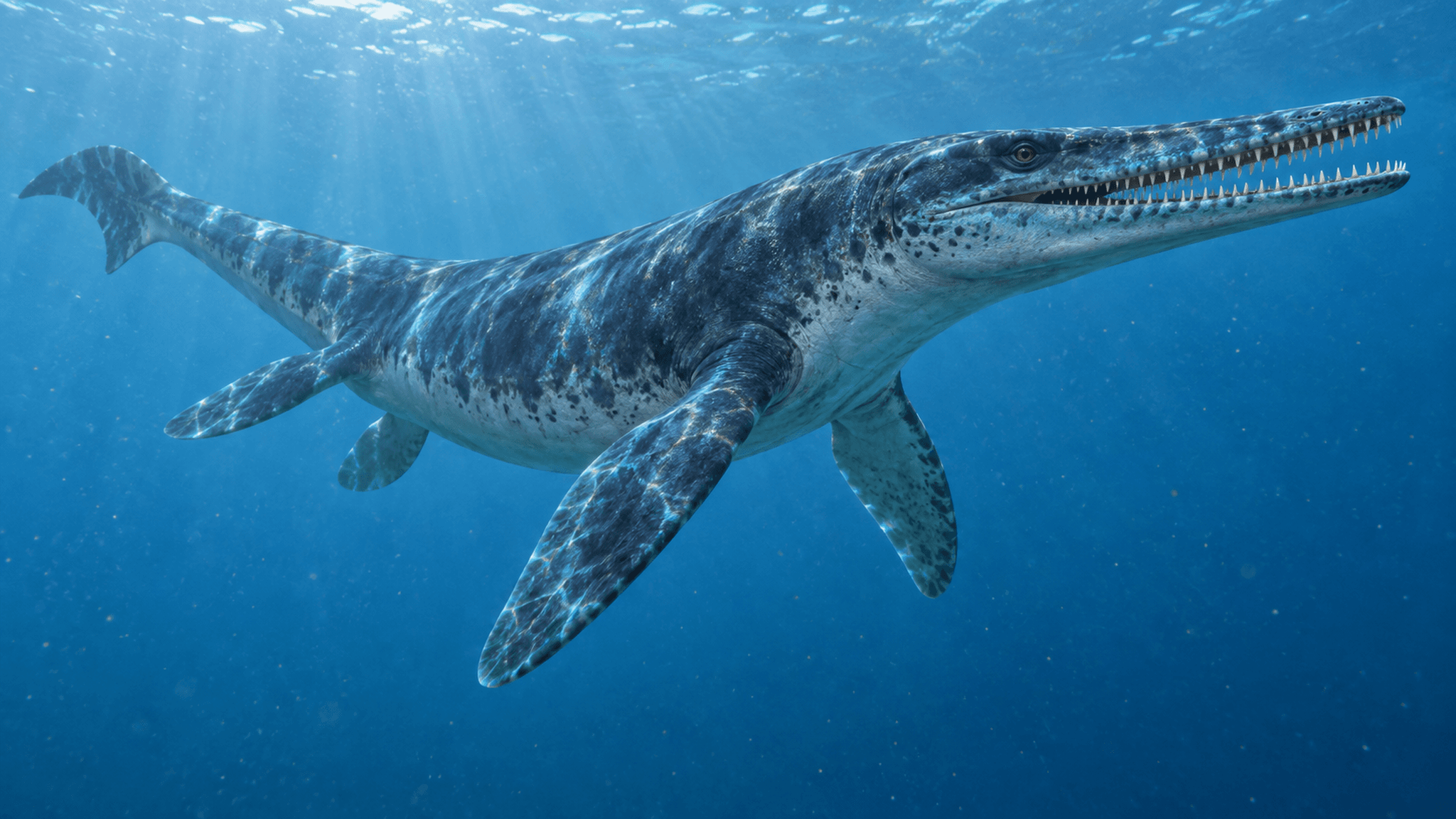
AI reconstruction: this is how Halisaurus sp. nov. from the Dakhla Oasis in Egypt might have looked, with its unusually long, slender jaw.AI reconstruction: Tiefenzeit / GPT Image
In the Dakhla Oasis in Egypt's Western Desert, researchers have described a new species of the marine lizard genus Halisaurus. The animal lived in the early Maastrichtian, a stage of the Late Cretaceous.
The jaws are very long and slender. The upper and lower jaws each hold more than 20 teeth. A bone in the ear region is also heavily modified. The build of the jaws points to a fast but rather weak bite.
The same rock layers also contain Halisaurus hebae, which lived at the same time. The jaws and ears suggest that the new species played a different role in the ecosystem. Two such different species in the same place suggest that these marine lizards divided up their roles in the sea.
Acta Palaeontologica Polonica · Study published · Original study ↗