66,000,000 years ago today · Cretaceous–Paleogene boundaryMonday, 5 October 2026 · Strictly scientific. Always sourced.
Latest
Horns as weapons: computer models test fights between horned dinosaursJurassic craneflies were probably more diverse than thoughtNew marine lizard from Egypt had long, slender jaws
← All daily editions

Research news for 25 September 2026

Prehistory in brief

All daily editions →

New studies, briefly explained. Each item includes the original study’s publication date.

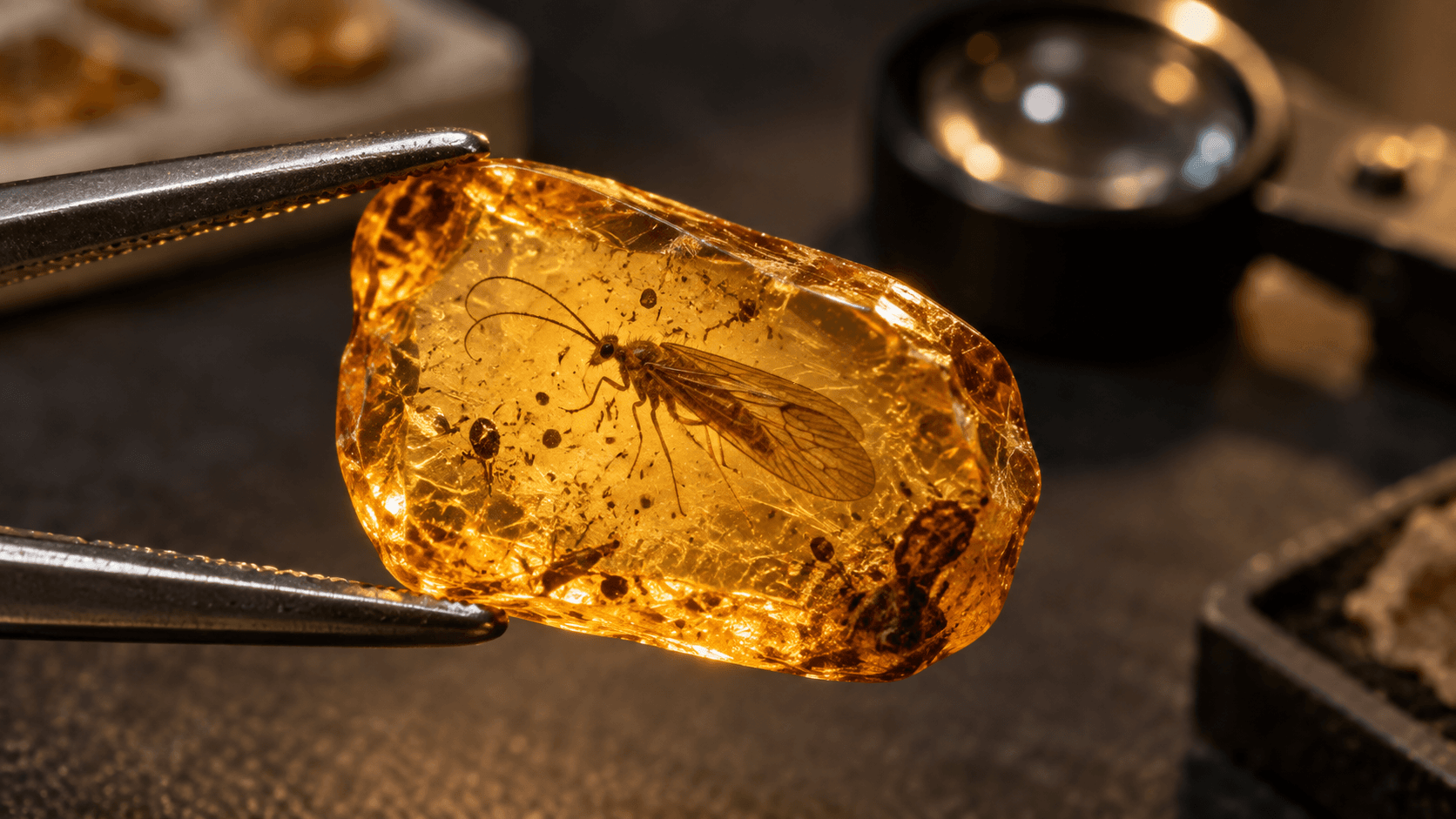
  1. AI-generated illustrative image of a piece of amber containing an invented insect with long antennae and folded wings, held by a pair of tweezers.
    AI-generated illustrative image: invented insect in amber. Not a photograph of the find and not a scientific reconstruction of Phylocentropus alepavlrasnia.KI-Rekonstruktion: Tiefenzeit / GPT Image

    New caddisfly found in 85-million-year-old Taymyr amber

    Trapped in Taymyr amber is a caddisfly that nobody knew about until now. Researchers have now described it as a new species in the journal Mesozoic: Phylocentropus alepavlrasnia.

    The amber comes from the Yantardakh locality in the Kheta Formation. It is around 85 million years old and formed during the Santonian, a stage of the Late Cretaceous. That is how long the insect has survived in the hardened resin.

    With the new find, the list of caddisflies from Taymyr amber now includes 15 species. The new species belongs to the family Dipseudopsidae, a group within the caddisflies. This makes two species from this family known from Taymyr amber.

    Mesozoic · Study published · Original study ↗
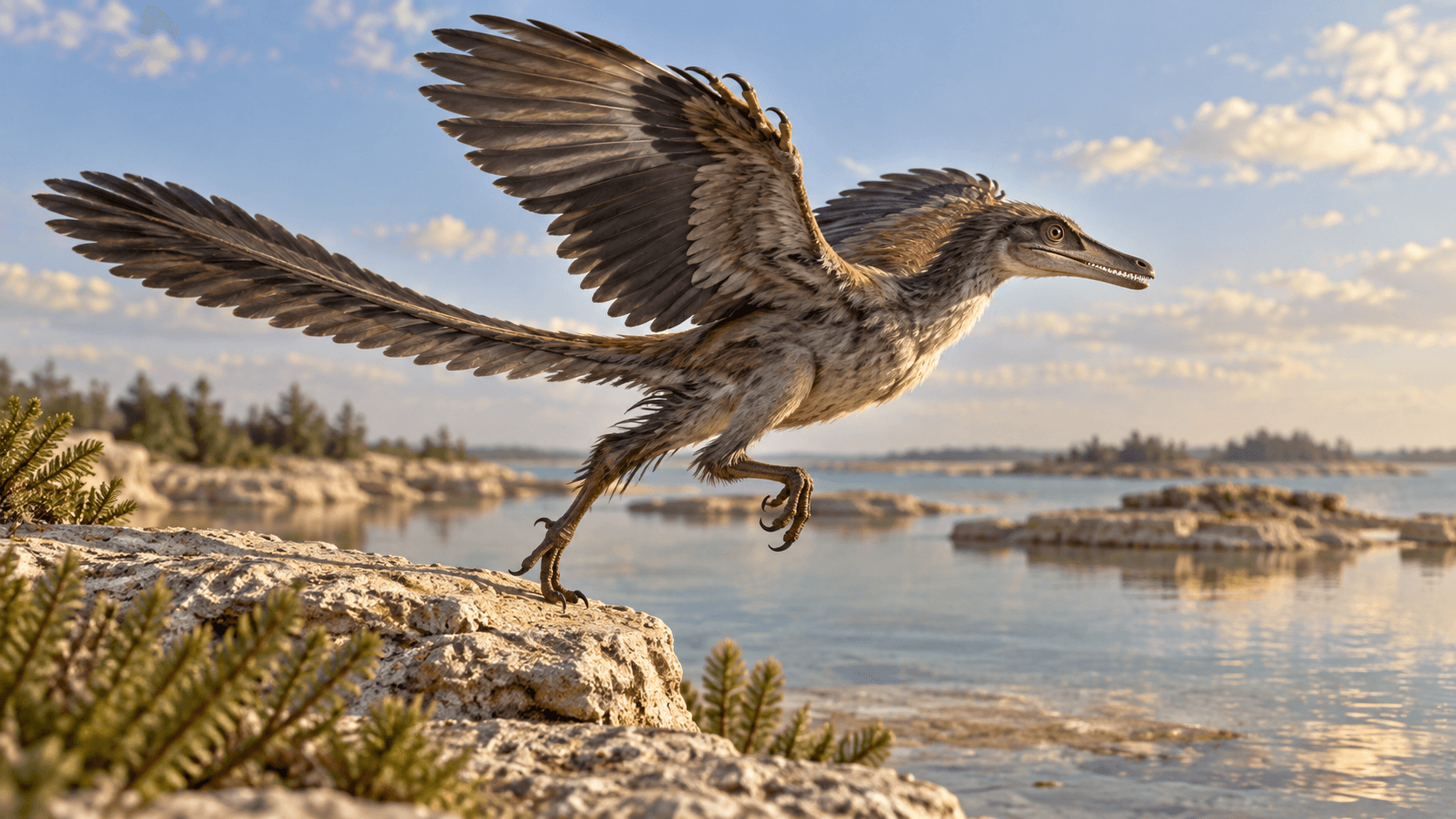
  2. AI-generated reconstruction of a small feathered Archaeopteryx lithographica leaping from a limestone rock into a shallow lagoon, dark brown-grey plumage with darker outer feathers on the wing and tail, long bony tail with paired feathers, toothed snout instead of a beak
    Illustrative image: AI reconstruction of Archaeopteryx lithographica illustrating the genus Archaeopteryx. It does not depict any specific specimen or a species assignment established in the study.AI reconstruction: Tiefenzeit / GPT Image · Anatomical reference: H. Raab (CC BY-SA 3.0)

    Not every Solnhofen early bird is an Archaeopteryx

    The famous Archaeopteryx is regarded as the oldest known flight-capable early bird. But not every find from the Solnhofen Archipelago belongs to it. A new study in Fossil Record compares the proportions of the arms and legs to find out. It also examines relationships on the basis of individual fossil specimens.

    The finds from Maxberg and Karlsruhe, along with the Ottmann and Steil specimen, had so far only been tentatively assigned. In the family tree, they now fall within Archaeopteryx. The Mühlheim specimen, by contrast, drops out. It sits closer to modern birds and supports its own species, Alcmonavis poeschli. For the Haarlem specimen, the assignment remains open. It lacks clear diagnostic features, so it is regarded only as an indeterminate early bird.

    Archaeopteryx probably comprises several species. However, the analyses still contradict one another on this. A decision is still pending.

    Fossil Record · Study published · Original study ↗

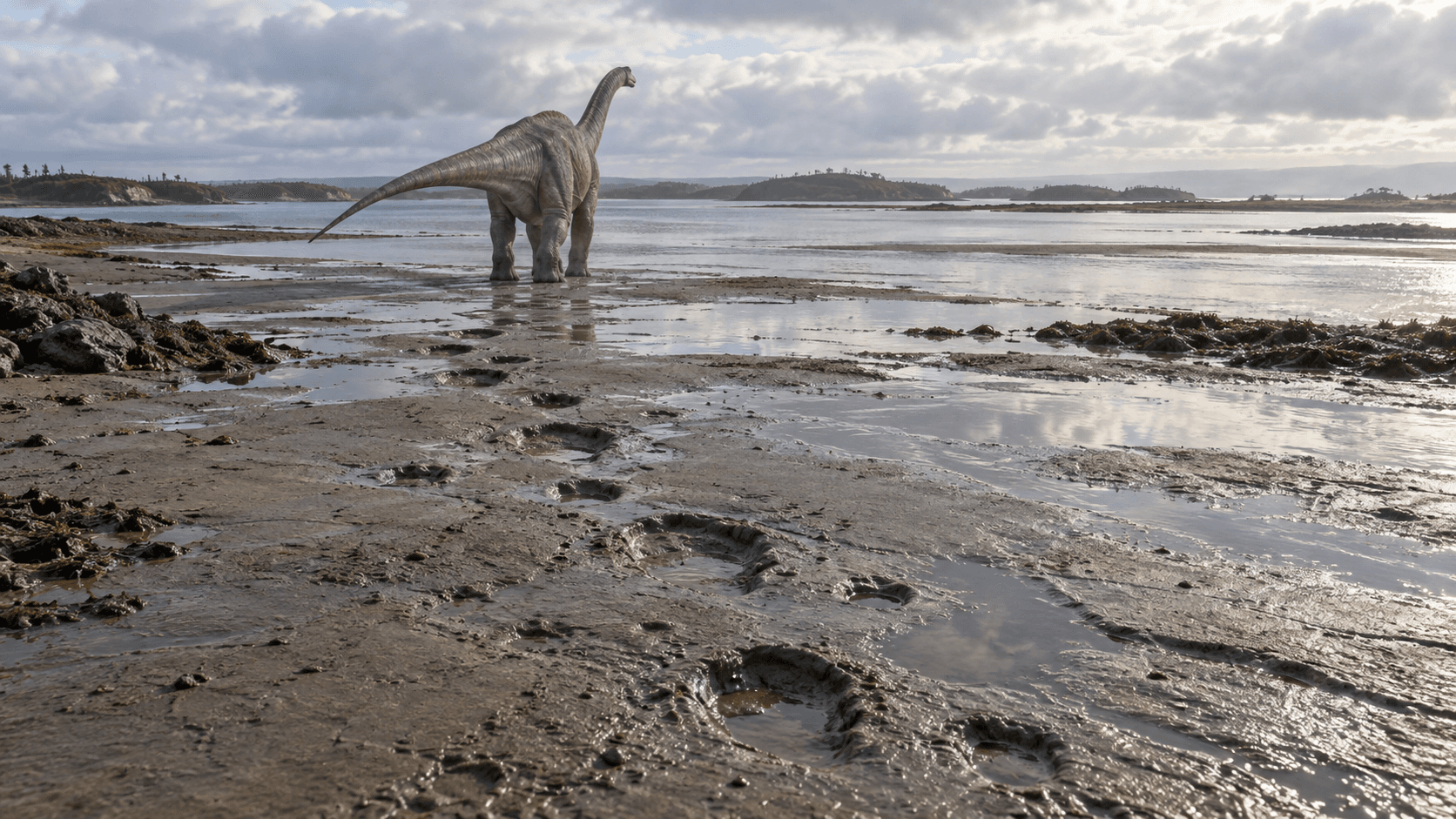
  3. AI reconstruction of a Jurassic lagoon on Skye with clear sauropod footprints in the mud and a dinosaur walking in the background.
    Symbolic AI reconstruction of a Jurassic lagoon. The study interprets the distribution of the footprints as evidence that sauropods preferred lagoonal ground.AI reconstruction: Tiefenzeit / GPT Image

    Sauropods on Skye preferred to walk through the lagoon

    Researchers have fully mapped the Duntulm dinosaur tracksite on the Isle of Skye in Scotland using aerial photographs. The rock dates from the Middle Jurassic and formed in a shallow lagoon. Small to medium-sized sauropod footprints less than 75 centimetres long dominate the site. Several short trackways show that the animals were walking. Nothing points to herds, because the tracks run in many different directions.

    The researchers then statistically analysed all the dinosaur tracks known so far from the island. According to this analysis, the sauropods preferred lagoonal ground. Predatory dinosaurs, armoured dinosaurs and ornithopods, by contrast, left their tracks more often on mudflats that had been exposed to the air. The team considers this pattern to be robust. New track finds on Skye are expected to test it further.

    Papers in Palaeontology · Study published · Original study ↗