The study itself is not new, however. It appeared in the journal *Analytical Chemistry* in January 2025. In August 2026, it made headlines again. Reason enough to examine exactly what the bone contains — and what it does not.
A Bone That Ought to Be Empty
The prevailing assumption goes like this: when a bone becomes a fossil, all organic material decays. Minerals replace what was once alive. Protein surviving for millions of years? Unthinkable to many.
Yet researchers have repeatedly reported the opposite. As early as 1966, a team described collagen-like material in a dinosaur toe or finger bone. Reports of collagen fibres in a *T. rex* bone followed in 1999. Later came collagen fragments from *T. rex* and investigations of a duck-billed dinosaur.
Not everyone was convinced. Some experts maintain that the animal’s own proteins must have vanished during fossilisation long ago. The central suspicion: contamination. Did the protein really come from the dinosaur — or from a later source?
A 20-Kilogram Chunk from the Hell Creek Formation
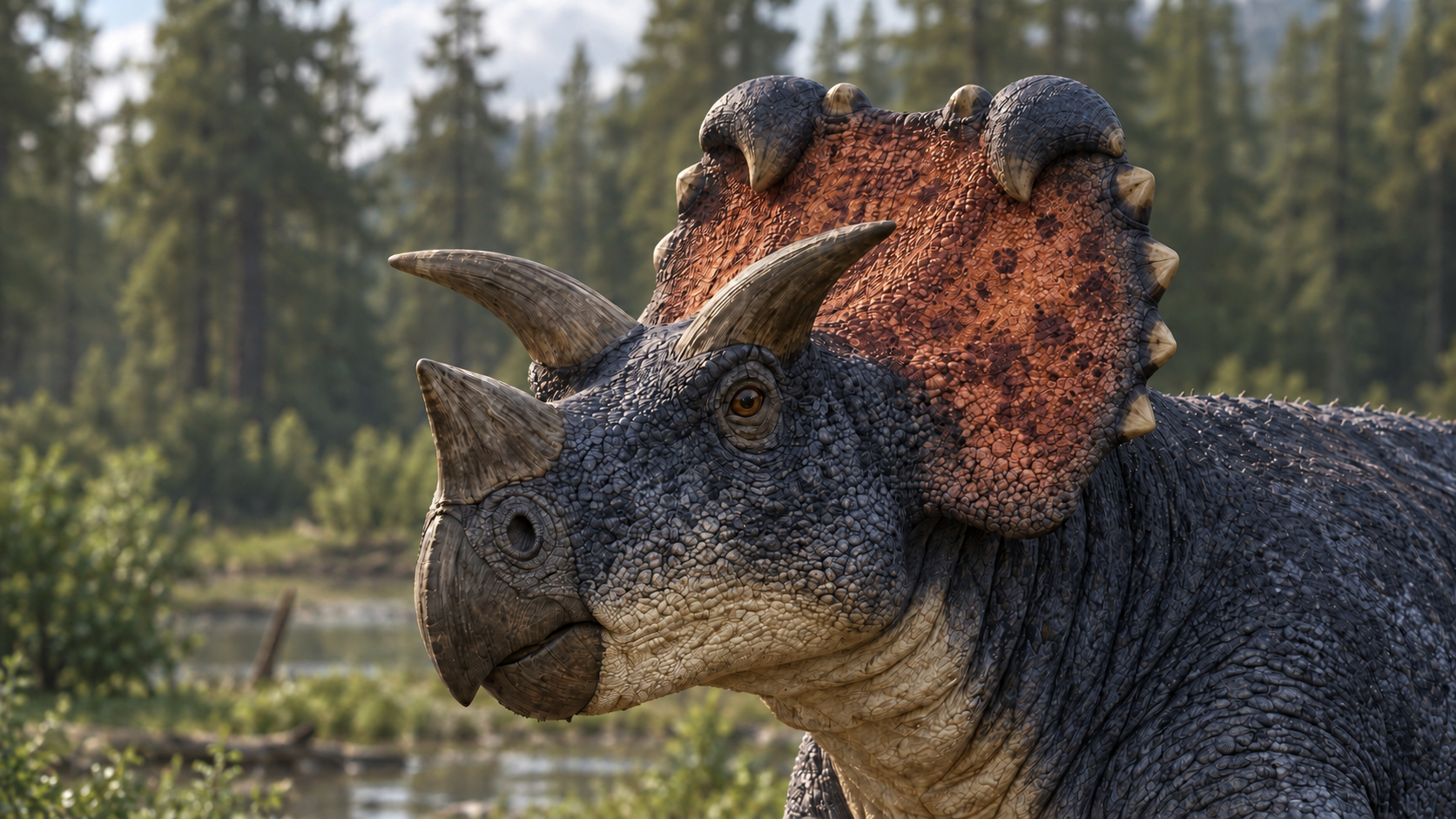
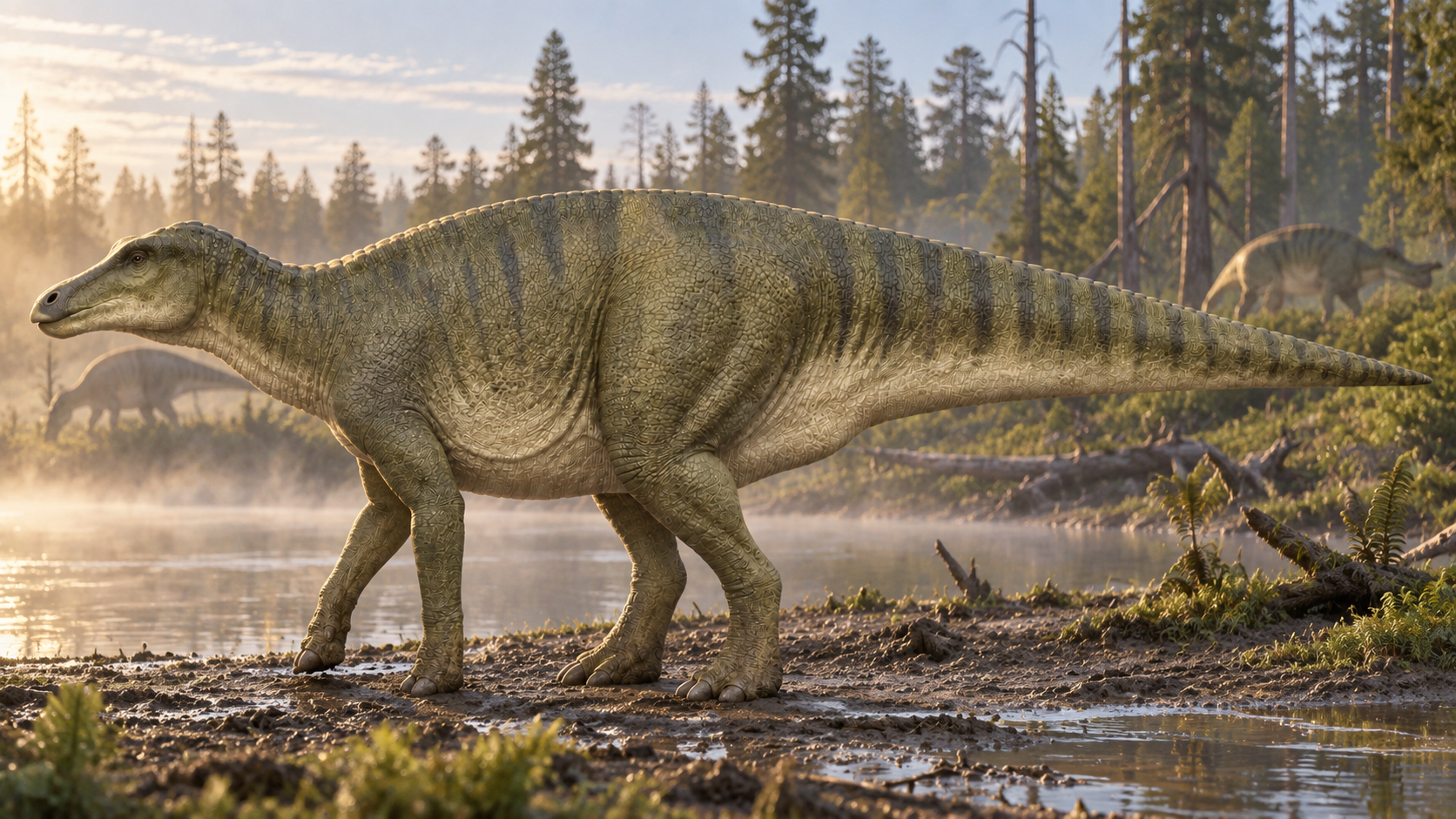
The new candidate comes from Harding County, South Dakota. A sacrum — the bone connecting the spine and pelvis — was excavated there in 2019. It belonged to an *Edmontosaurus*, a herbivorous duck-billed dinosaur from the Hell Creek Formation.
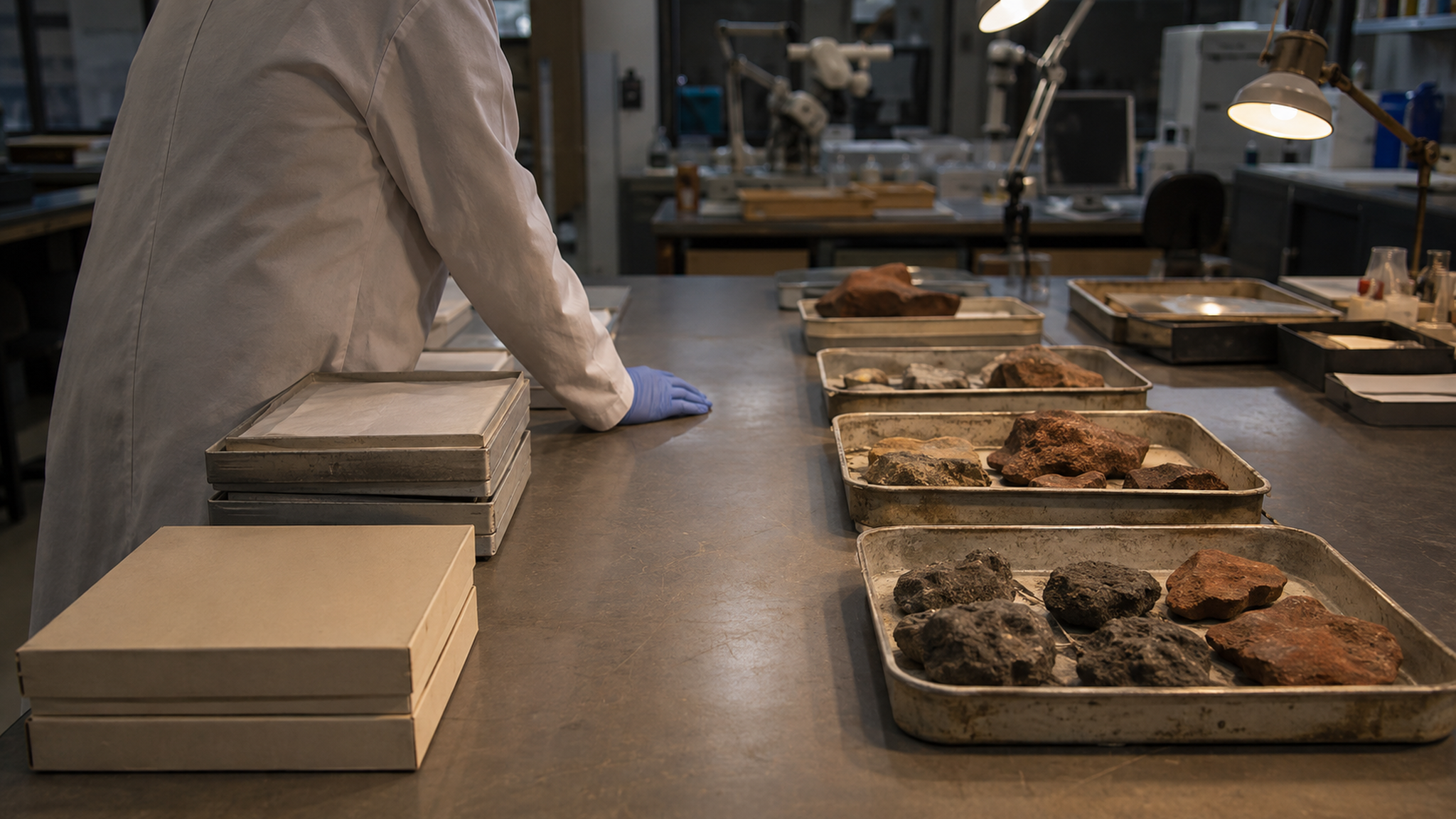
A 20-kilogram piece, together with samples of the surrounding rock, went to the University of Liverpool’s Victoria Gallery & Museum. The fossil is considered exceptionally well preserved. The bone’s sponge-like internal structure is visible to the naked eye.
The team relied on a new combination of methods. Each could be challenged on its own. Together, they were meant to form a chain of evidence.
Evidence One: The Bone Shimmers Gold
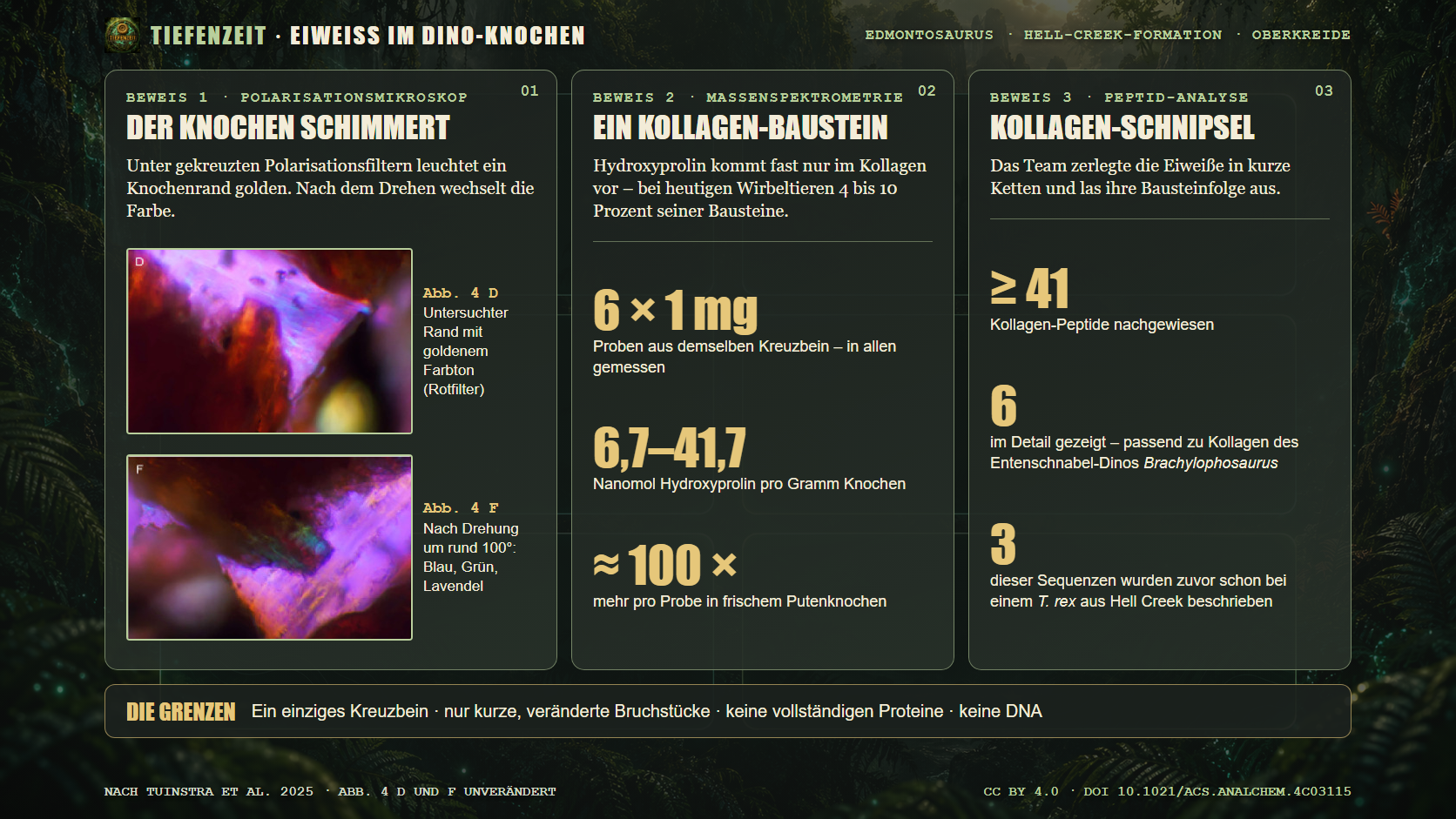
First came the polarising microscope. It sends light through two crossed filters. Fresh bone shimmers reddish-gold under this light because collagen and bone mineral bend the light together in a characteristic way. Experts call this birefringence.
The dinosaur bone showed exactly that shimmer — but only in patches. That fits collagen which has not survived everywhere.
The authors themselves stress that a light pattern provides no molecular data. The microscope raises a suspicion. Other methods must confirm it.
Evidence Two: A Building Block Found Almost Only in Collagen
The researchers therefore dissolved tiny samples in acid and sent them through a mass spectrometer preceded by liquid chromatography, or LC-MS. The instrument separates substances and determines their molecular mass.
They were looking for hydroxyproline. This protein building block rarely occurs in other proteins. In the collagen of modern vertebrates, however, it accounts for about four to ten per cent of the building blocks. Find hydroxyproline and you have a strong lead pointing towards collagen.
The test produced a hit. In six samples weighing one milligram each, the team found 6.7 to 41.7 nanomoles of hydroxyproline per gram of bone. According to the study, this clearly demonstrated the building block in such *Edmontosaurus* samples and measured its quantity for the first time.
For comparison, fresh turkey bone yielded roughly one hundred times more per sample. Pure solvents were run through the instrument between measurements to prevent residues from earlier samples distorting the result.
Evidence Three: Collagen Snippets Like Those in *T. rex*
In the third step, the team searched directly for pieces of the protein. To do so, the researchers broke the proteins into short chains known as peptides and read their sequence of building blocks.
The result: at least 41 collagen peptides. The study presents six of them in detail. They match collagen from the duck-billed dinosaur *Brachylophosaurus canadensis*. Three of these sequences had previously been described in a *T. rex* sample from the Hell Creek Formation.
A different fossil, the same collagen snippets. The authors regard this as independent, partial agreement with earlier findings.
Why Damage Is a Good Sign Here
The suspicion of contamination remains. The team turns it on its head. If the collagen came from a modern source, the chains should be largely complete and the quantities closer to those in fresh bone.
The researchers found the opposite: short fragments and little hydroxyproline. In their assessment, both fit old, degraded collagen — not fresh material. Many peptides from the fossil also show a chemical alteration that occurs far less often in the turkey bone.
The study also cites an argument from earlier research: microbes cannot produce collagen. They therefore cannot be the source of this protein.
What the Discovery Means — and What It Does Not
The team writes that, taken together, the three methods provide experimental evidence that collagen remnants in some dinosaur bones are endogenous. Here, “original protein” therefore means fragments of collagen produced by the *Edmontosaurus* itself. Not complete proteins. And not DNA — the study does not investigate genetic material at all.
The authors openly state the limitations. Their dataset is comparatively small and comes from a single sacrum. Database programs can assign the same sequence to different animal groups because peptides remain similar even between distantly related species. The study provides further evidence in a long-running controversy — but it does not settle the dispute once and for all.
The microscope remains intriguing. If further measurements on the same bone confirm the collagen remnants, polarised light could one day map where collagen has survived and where it has broken down.
The chunk from South Dakota shows that a fossil is not necessarily nothing but stone. Sometimes it still holds a remnant of the animal itself — broken, chemically altered, but measurable.
Source
Lucien Tuinstra, Brian Thomas, Steven Robinson, Krzysztof Pawlak, Gazmend Elezi, Kym Francis Faull and Stephen Taylor (2025): *Evidence for Endogenous Collagen in Edmontosaurus Fossil Bone*. *Analytical Chemistry*, published on 17 January 2025 under CC BY 4.0. DOI: 10.1021/acs.analchem.4c03115. [Primary article](https://doi.org/10.1021/acs.analchem.4c03115)