A team led by Scott Bellotti of the University of Fribourg in Switzerland reports the findings in the journal The Anatomical Record. The researchers placed the fossils in a micro-CT scanner, an X-ray machine that maps tiny structures in three dimensions. They then separated each bone from the surrounding material on a computer.
Mass-produced in a dinosaur river
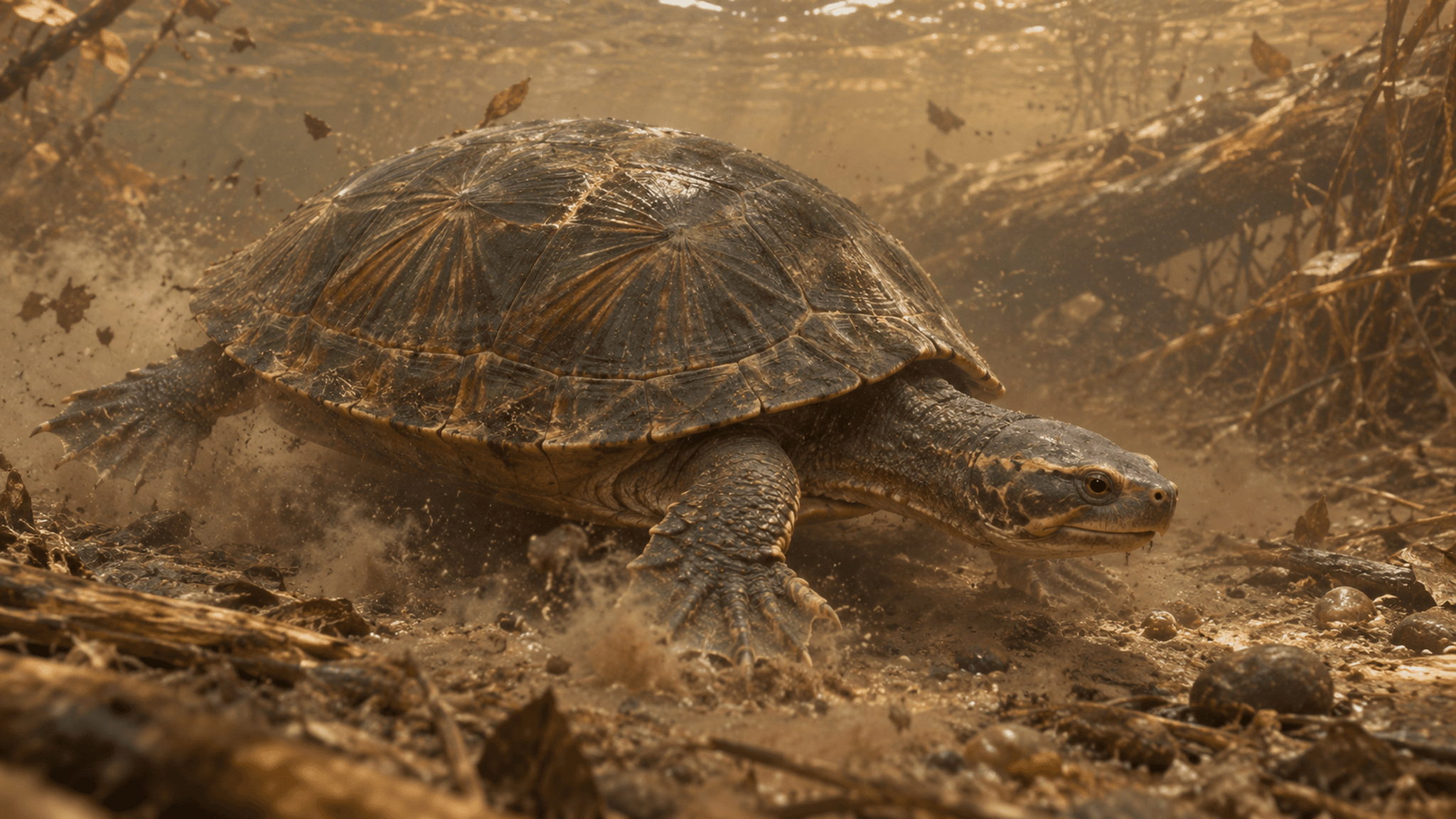
Between 76.5 and 74.4 million years ago, rivers churned through southern Alberta. They deposited organic-rich mud in channels and floodplains. No turtle was more common in these waters than Plesiobaena antiqua.
It belonged to the baenids. This family of freshwater turtles survived from the Early Cretaceous into the Eocene, long after the dinosaurs vanished.
Lawrence Lambe first described the species in 1902. When researchers reorganised the genus in a 2009 revision, Plesiobaena antiqua remained the species that gave it its name.
The cheekbone moves towards the eye
Despite the wealth of fossils, researchers had barely explored how much individual members of this species differed from one another. The team therefore scanned skulls from both small and large specimens. According to the study, most differences stem from inherited traits or individual variation of the kind found within any species.
One bone breaks ranks. As the turtle grew, the jugal, or cheekbone, apparently pushed into the rim of the eye socket. It became part of the frame around the eye.
The turtle’s face was not a finished component. It grew with the animal and changed shape along the way.
The jaws grow towards harder food
The three lower jaws also show striking differences. The team attributes most of them to growth. The pattern fits a shift towards durophagy, the eating of hard-shelled food.
In vertebrates, this diet typically goes hand in hand with sturdy jaw joints and large attachment areas for the chewing muscles. The bones do not, however, reveal exactly what the turtle ate.
One tiny bone remains a mystery
Some skulls contain an epipterygoid, a small bone inside the skull, while others lack it. Is this down to age or chance? Even the CT data cannot settle the question.
A relative had already delivered similar surprises. In the baenid Baena arenosa from the Uinta Formation in the United States, researchers found unexpected differences in the skull and shell. They therefore had to reassess several features previously regarded as defining traits of the species.
Four skulls for the family tree
This is where the new study matters. Without knowing the normal range within a species, researchers can mistake differences between young and old animals for something else. According to the authors, the detailed description of Plesiobaena antiqua should provide fresh impetus for organising baenid species and relationships.
Whether it will actually allow researchers to rearrange the baenids remains for future studies to show.
---