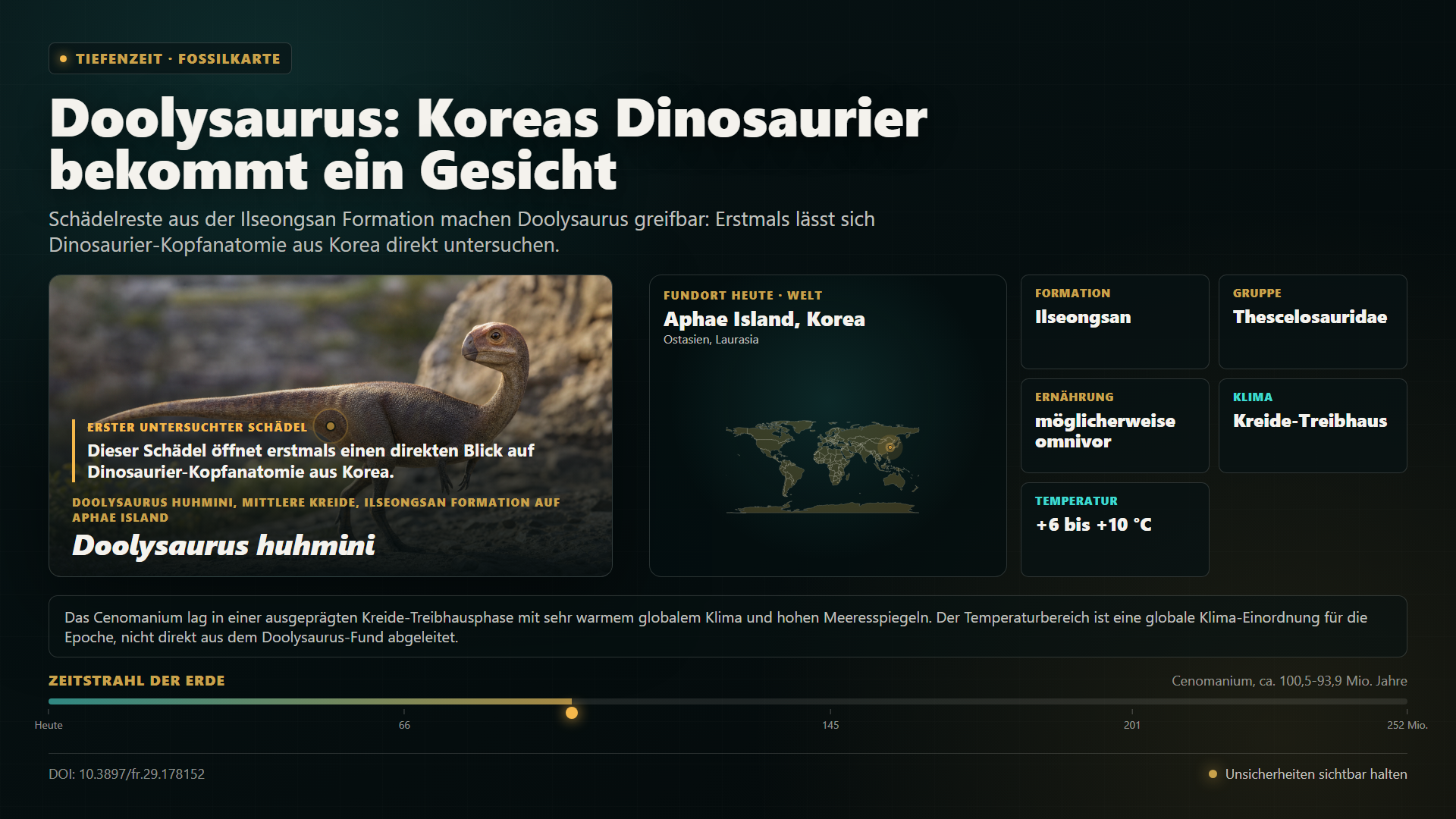
A Small Find in a Large Gap
Korea is rich in dinosaur traces. Tracks and eggs show that these animals were present there during the Cretaceous. Yet body fossils are rare. That is precisely why a small, partially articulated skeleton from Aphae Island appears more significant than it might at first glance.
The paper is entitled ‘A new dinosaur species from Korea and its implications for early-diverging neornithischian diversity’. It was published on 17 March 2026 in the journal Fossil record. The principal authors are Jongyun Jung, Minguk Kim, Hyemin Jo and Julia A. Clarke. It describes a new species: Doolysaurus huhmini gen. et sp. nov.
What Was Described in the Paper?
The researchers report a small, partially articulated dinosaur specimen from the Ilseongsan Formation of Aphae Island, also known as Aphaedo, in Korea. The specimen includes elements of the skull and body skeleton. Gastroliths, meaning swallowed stones, were also found in the body region.
This is the heart of the news: according to the abstract, these are the first studied skull remains of a dinosaur from Korea. Dinosaur species had previously been described there from postcranial elements, but, based on current knowledge, no taxon reported from skull material had been available.
Why Is It Exciting?
The find is not exciting because Doolysaurus was enormous. The supplied abstract gives no specific body length. Something else makes it exciting: it adds an animal with an anatomical body to a fossil record previously dominated by tracks and eggs.
Tracks show movement. Eggs show reproduction. Bones show relationships, growth and body structure. Doolysaurus therefore connects Korea not merely with a trace in the sediment, but with a specific dinosaur whose skull and skeleton could be studied scientifically.
What Was Previously Unclear?
According to the paper, Korea's dinosaur fossil record is exceptionally rich in trackways and eggs but poor in skeletal remains. This creates a gap: we can see that dinosaurs lived there, yet the bodies behind those traces often remain difficult to grasp.
Doolysaurus suggests that the actual dinosaur diversity of Cretaceous Korea may have been richer than the existing body-fossil record indicates. The paper states this conclusion cautiously: similar depositional conditions on Aphaedo or at comparable locations could yield further small dinosaur fossils.
What Does the Paper Specifically Say?
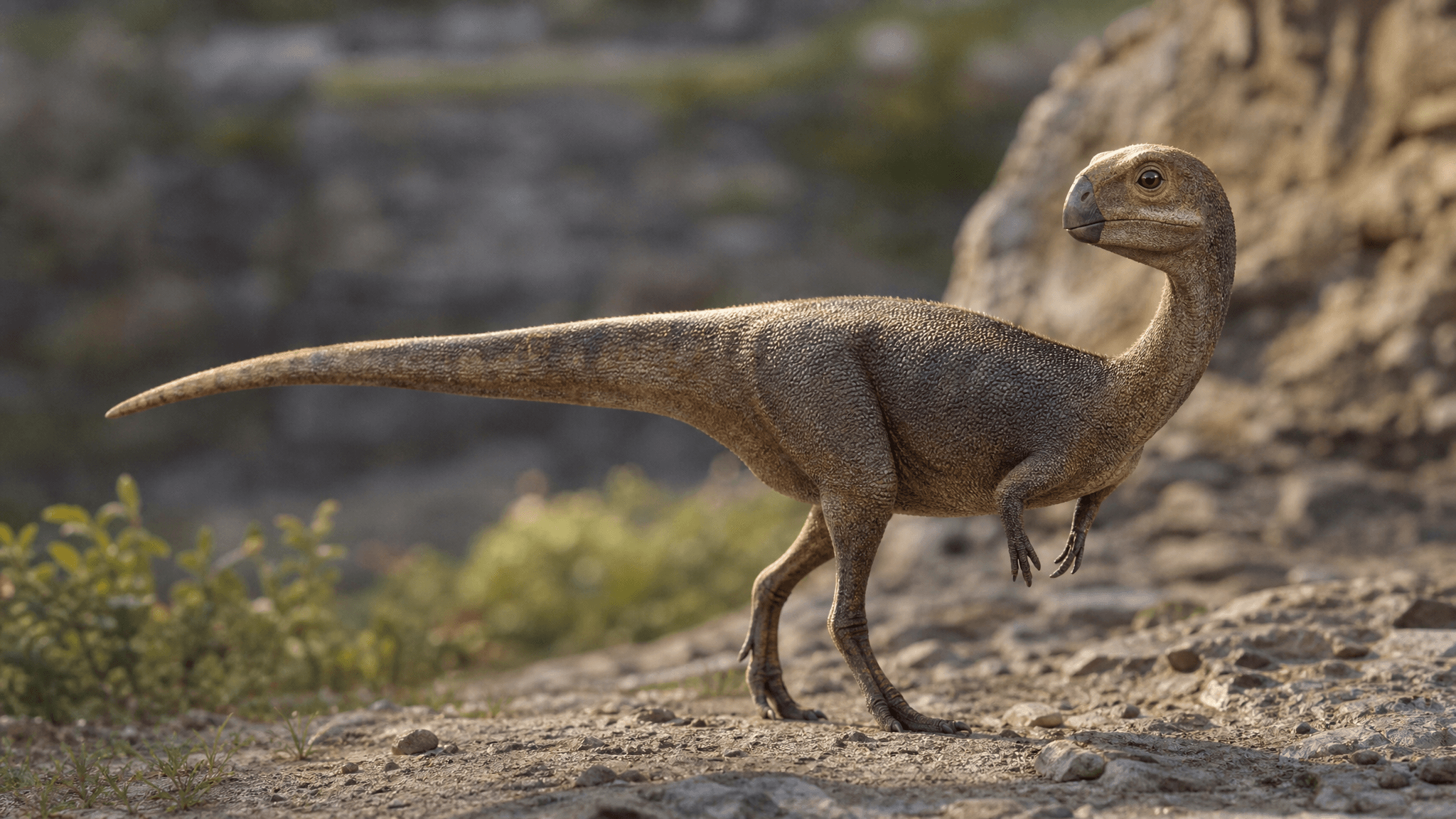
First: Doolysaurus huhmini is a new early-diverging neornithischian dinosaur species. The phylogenetic analyses classify it as a thescelosaurid.
Second: the specimen comes from the mid-Cretaceous Ilseongsan Formation of Aphae Island. It consists of a small, partially articulated skeleton with cranial and postcranial elements as well as gastroliths.
Third: the team used X-ray micro-computed tomography, or micro-CT, to reveal the anatomy of the new animal. This method provides a view inside fossils without requiring them to be fully exposed or damaged.
Fourth: its size, anatomical characteristics and histological analysis suggest that the individual was not fully grown. The paper gives a probable age of 0 to 2 years.
Fifth: according to the abstract, the gastroliths have morphologies and a relative mass proposed as being compatible with a more omnivorous diet.
What Remains Uncertain?
Caution is important. The supplied abstract gives no exact body length, body mass, colours or specific details about skin or behaviour. Such information would be interesting for a reconstruction, but it cannot be reliably inferred from the paper facts available here.
The diet also remains a scientific interpretation. Gastroliths can provide clues, but they do not automatically prove modern omnivorous behaviour. The paper's wording is better: the findings are consistent with a more omnivorous diet.
Tiefenzeit Context
Doolysaurus huhmini is a quiet find with a major impact. Not a gigantic heap of bones or a dramatic predator, but a small, probably very young animal from Korea. That is precisely why it tells a compelling Tiefenzeit story.
Sometimes it is not the largest dinosaur that changes the picture, but the rare skull. Doolysaurus makes a fauna more tangible that previously spoke mainly through tracks and eggs. And it reminds us that fossil records show not only what once lived, but also what happened to be preserved.
Source/Image Note
Source: Jongyun Jung, Minguk Kim, Hyemin Jo and Julia A. Clarke: ‘A new dinosaur species from Korea and its implications for early-diverging neornithischian diversity’, Fossil record, published on 17 March 2026, DOI: 10.3897/fr.29.178152, paper URL: https://doi.org/10.3897/fr.29.178152.
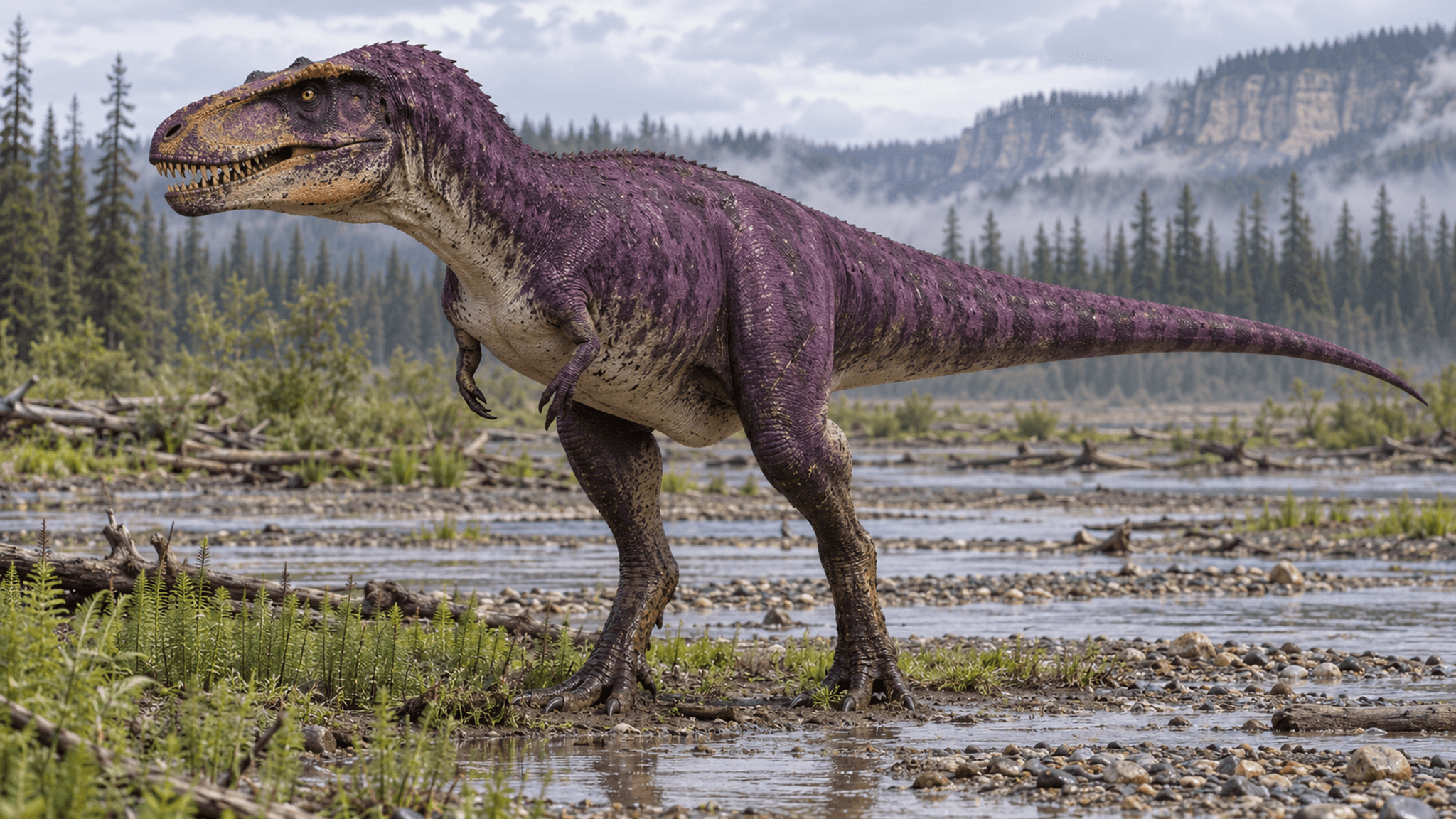
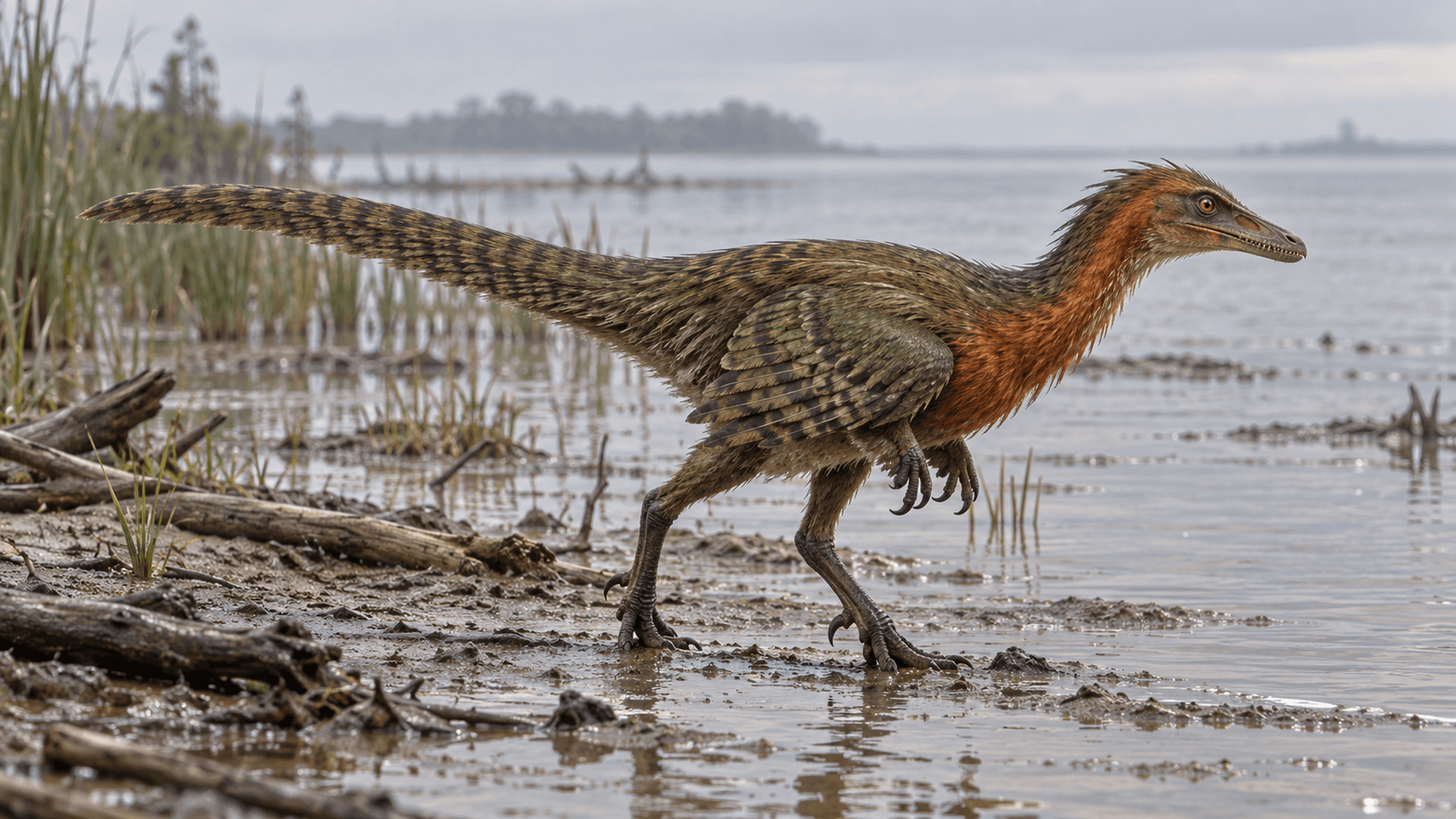
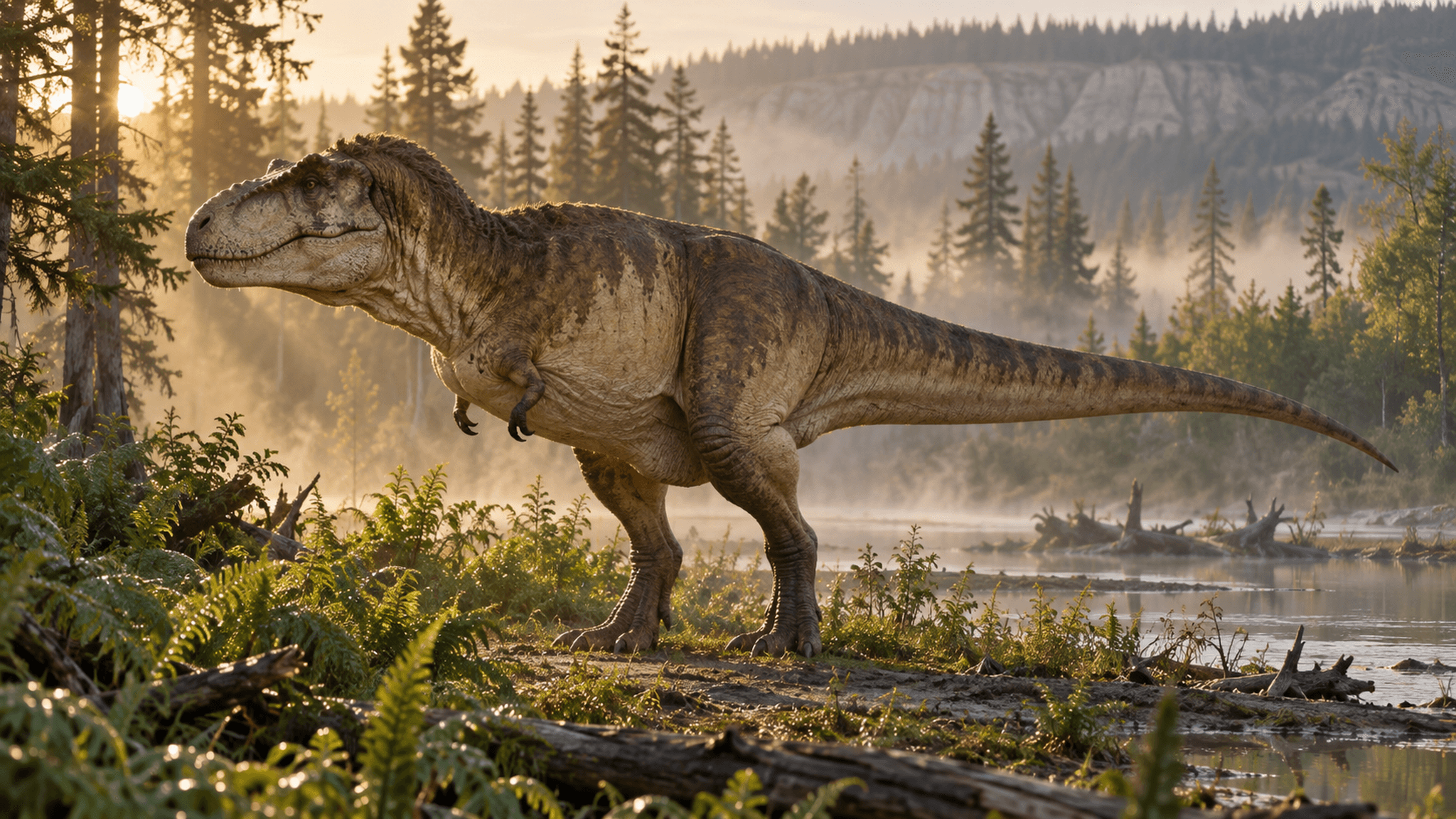
Image note: Reconstruction / artistic approximation based on the paper. Colours, soft tissues and the specific body posture cannot be inferred directly from the abstract and should remain labelled as a plausible visualisation.