A team led by Taia Wyenberg-Henzler of the University of Alberta presents the analysis in the journal Vertebrate Anatomy Morphology Palaeontology. The researchers draw on numerous bones rather than a single spectacular skeleton. Their evidence comes from isolated vertebrae, a type of find that has rarely been systematically recorded.
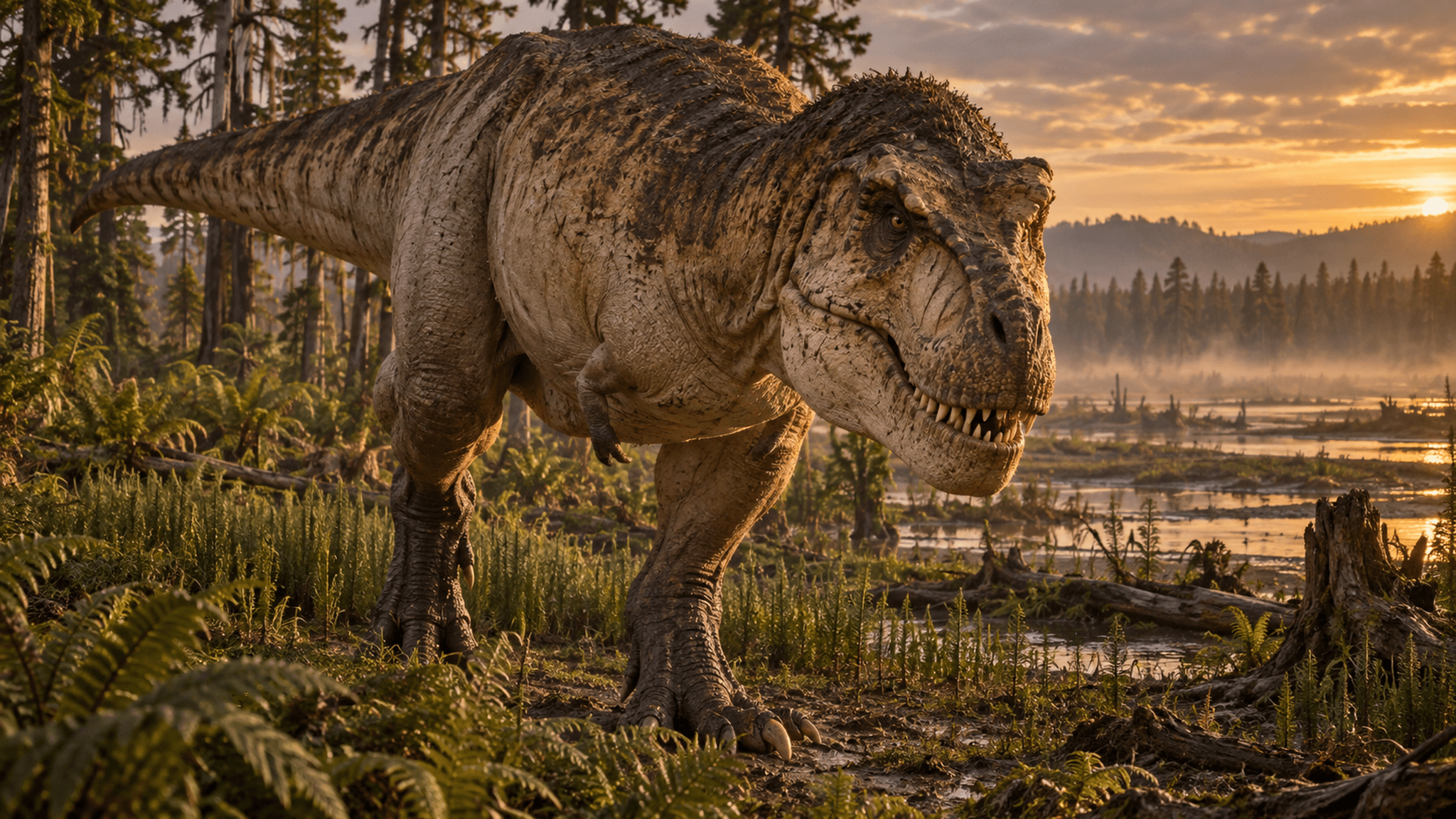
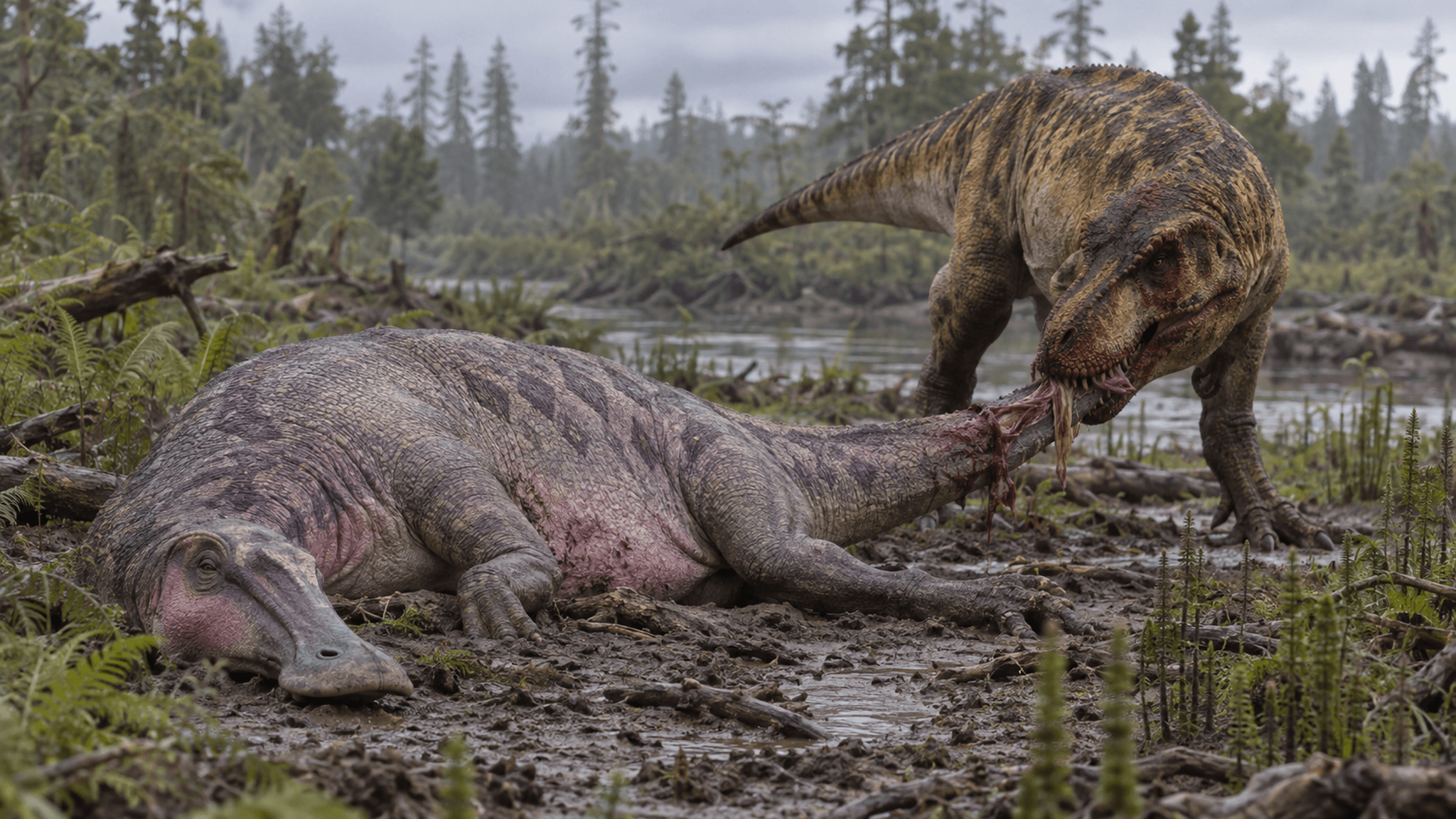
Most of these vertebrae come from the Dinosaur Park Formation. These rock layers formed around 76.5 to 74.8 million years ago during the Late Cretaceous. The scene can be reconstructed like this: a tyrannosaur stands over a fallen duck-billed dinosaur, clamps its jaws sideways onto the tail and jerks its head back. More than 75 million years later, researchers count the scratches.
At the neck: not a single bite
The neck tells a different story. The team also examined the duck-billed dinosaurs’ neck vertebrae, but not one bears a mark. The authors cannot say for certain why the neck was spared.
The marks cluster on the tail instead. More than five out of six bitten vertebrae come from there. The number of marks on each vertebra changes along the length of the tail. Their position on the side surfaces also shifts, and the marks run diagonally.
To the team, this forms a clear pattern. The teeth struck where there was flesh to take. How much flesh was available varied from one section to another.
Tooth spacing points to the culprit
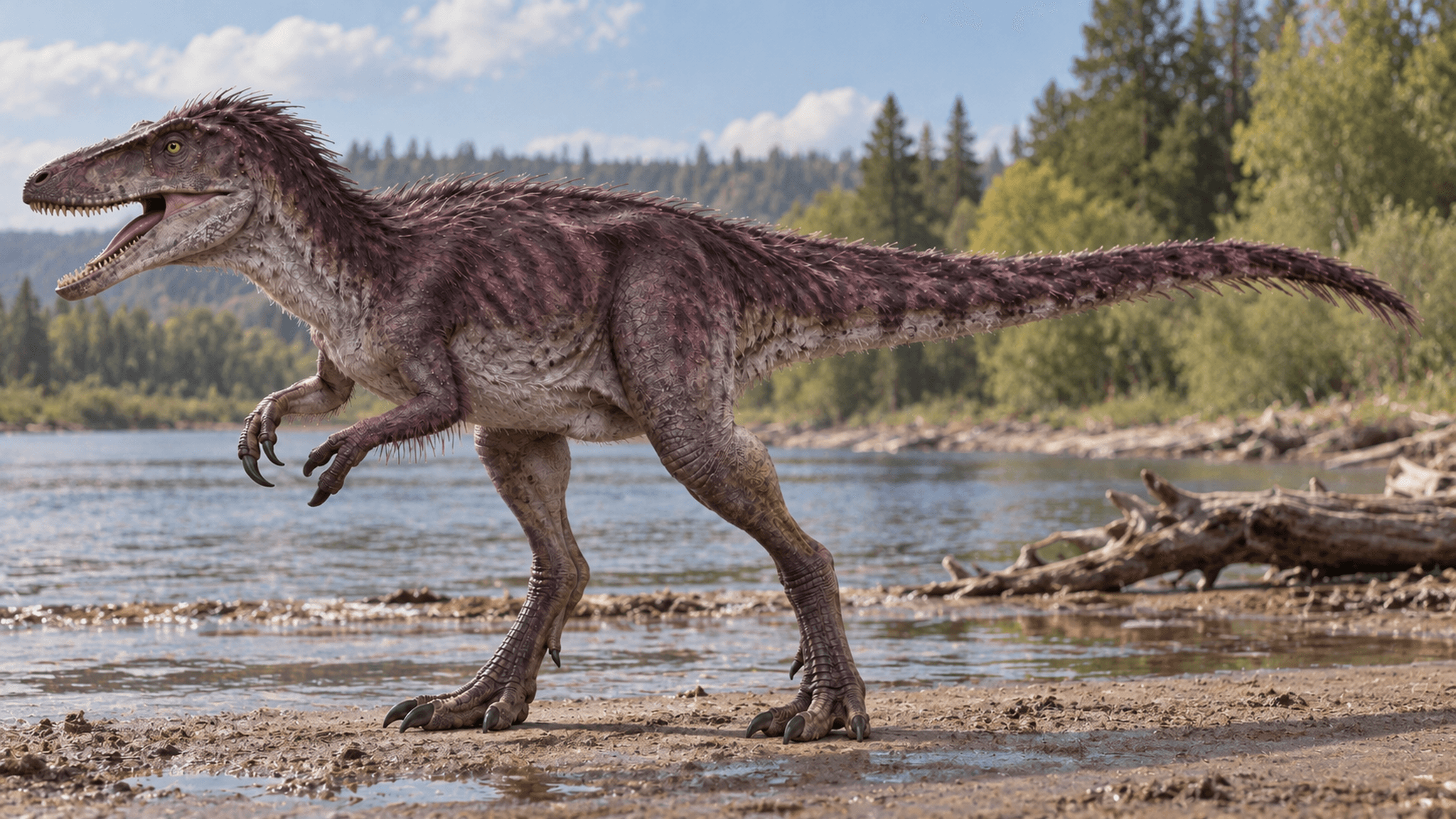
The distance between neighbouring tooth marks offers clues to the size of the culprit’s tooth crowns. Most measured gaps are wider than the bases of dromaeosaur tooth crowns. Dromaeosaurs were a group of smaller predators. The authors see this as evidence that tyrannosaurs left most of the marks.
An older find fits the picture. In 2001, the researcher Varricchio described four tail vertebrae from young duck-billed dinosaurs found as stomach contents inside a tyrannosaur. The authors of the new study regard this as a possible sign that the tails were deliberately bitten off. They call this “tail-nipping”.
Another find also shows what tyrannosaurs ate. In 2023, researchers described a young Gorgosaurus from the same park. The hind legs of two young Citipes were lodged inside its ribcage. The discovery demonstrates how dramatically these predators’ diet changed between youth and adulthood.
Flesh shapes the bite more than the species
A Komodo dragon tears at a goat carcass, leaving mostly shallow scratches. Feeding experiments with eleven captive Komodo dragons showed this. Their blade-like teeth strip flesh from bone effectively, but they are poorly suited to crushing bone. Experts use comparisons like these to interpret fossil tooth marks.
The team compared its marks with various individual cases from the scientific literature and found similarities. From this, the researchers infer what determines where a carnivore bites: above all, it depends on how muscles and other soft tissues are distributed across the prey’s body. The identity of the predator and the animal on the menu play a smaller part.
The authors therefore challenge a 2020 analysis by Drumheller and colleagues. That study treated the entire tail as a single, low-yield meat region. The new study instead divides the tail into several sections, each offering a predator a different amount of flesh.
The bone itself matters too. Some marks merely scrape the surface; others cut deeply. Alongside the amount of available flesh, the authors explain this difference through bone density and the thickness of its hard outer layer.
The treasure was hidden in the collections
At the study’s cut-off date, the Royal Tyrrell Museum held 1,500 registered fossils bearing tooth marks. Of these, 1,106 came from dinosaurs. The authors believe this is probably the world’s largest collection of its kind.
The history of these finds stretches far back. In 1884, Joseph Tyrrell discovered Alberta’s first dinosaur. Researchers have collected fossils in Dinosaur Provincial Park for more than 110 years and documented over 166 vertebrate species there. Until the Royal Tyrrell Museum opened in 1985, many finds had to be sent to museums around the world.
With more than 51 described dinosaur species, the park is considered the most species-rich known dinosaur site in the world. In the late 1970s, it produced the first published evidence that dinosaurs lived in groups.
Many small bones build a bigger picture
For the authors, this is only the beginning. To capture predator feeding behaviour as a whole, they call for larger studies involving many specimens.
The work shows how valuable unremarkable isolated bones become when researchers examine them in large numbers. Together, they reveal where predators tore into carcasses 75 million years ago.
---