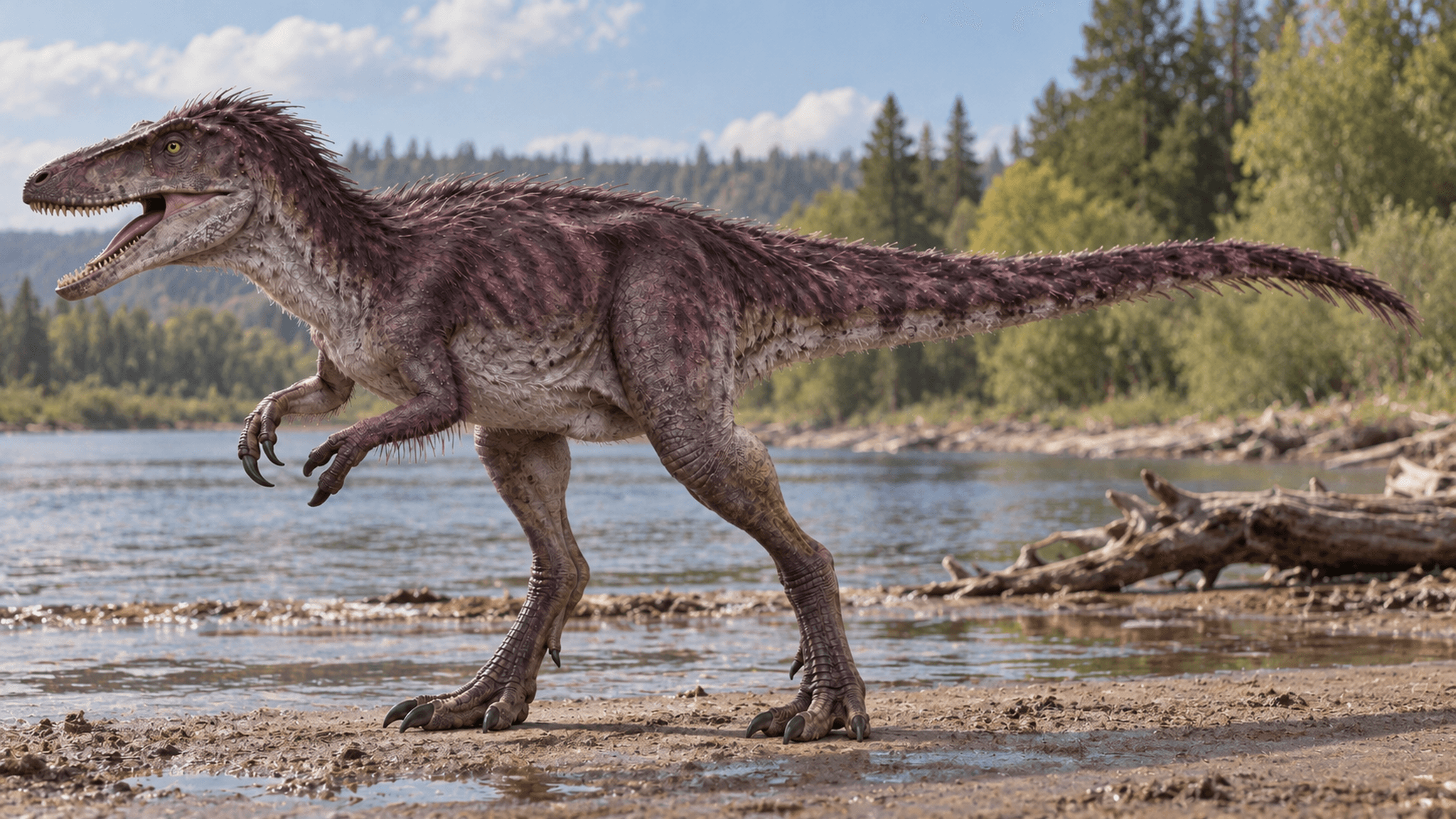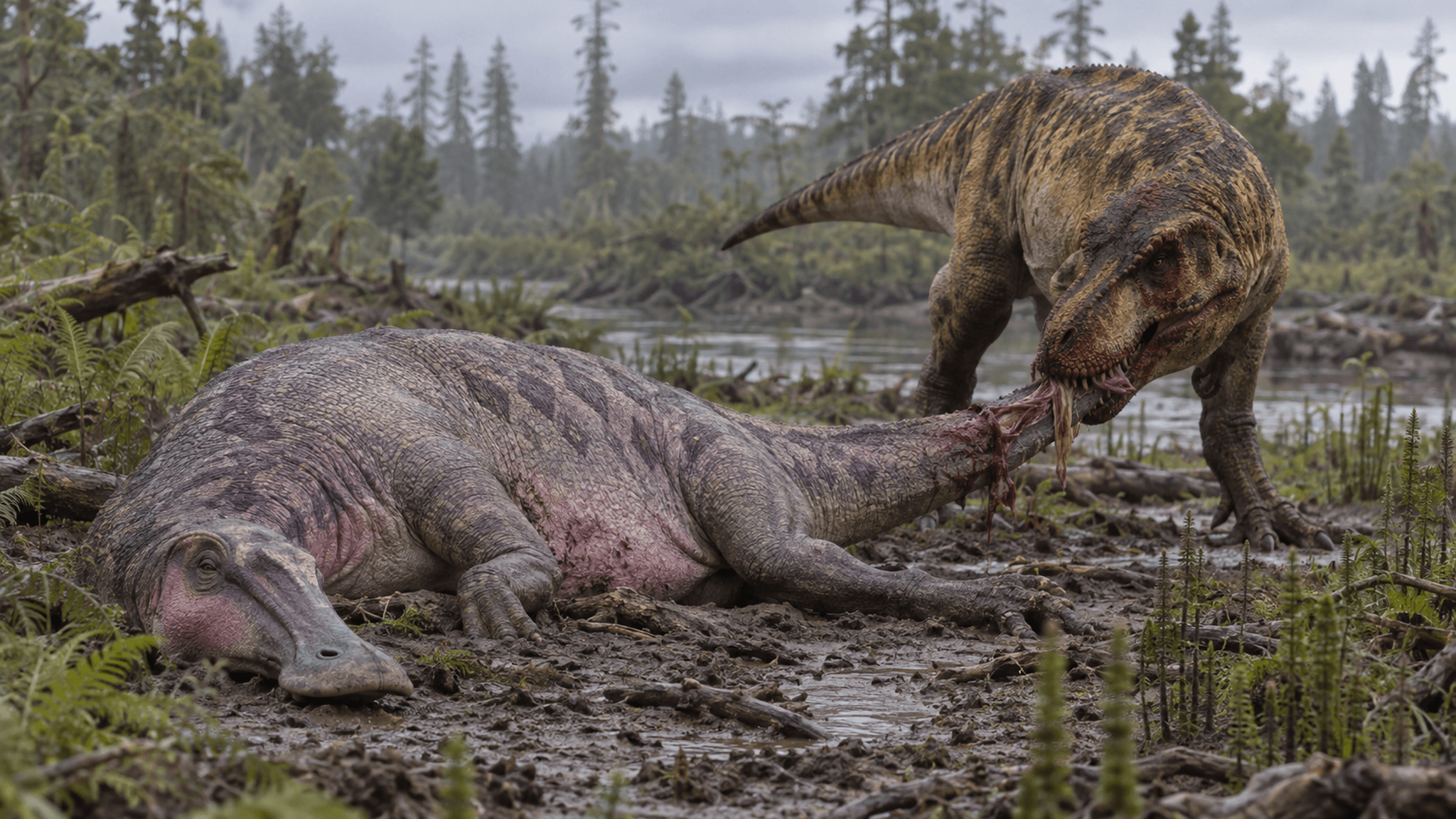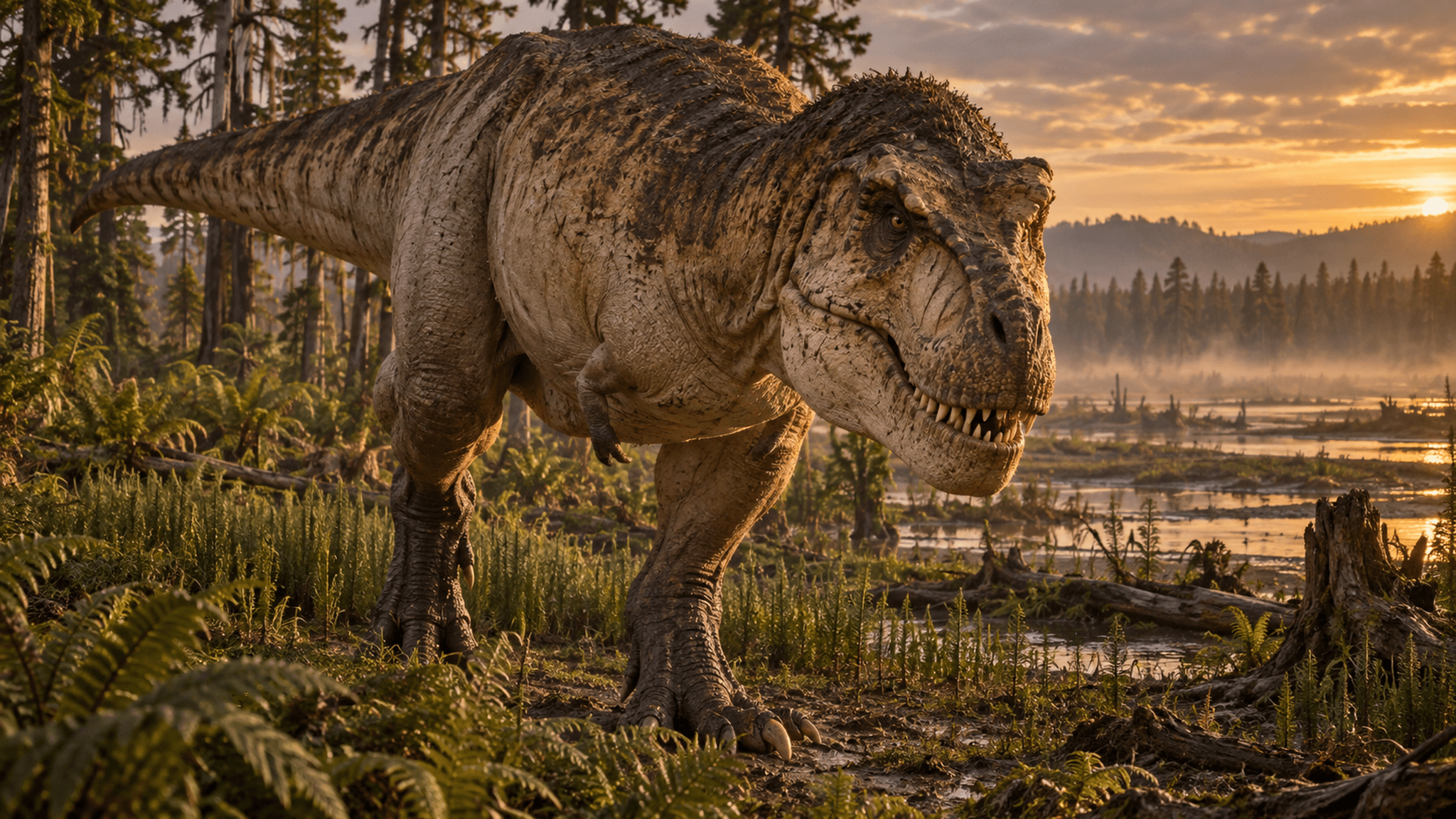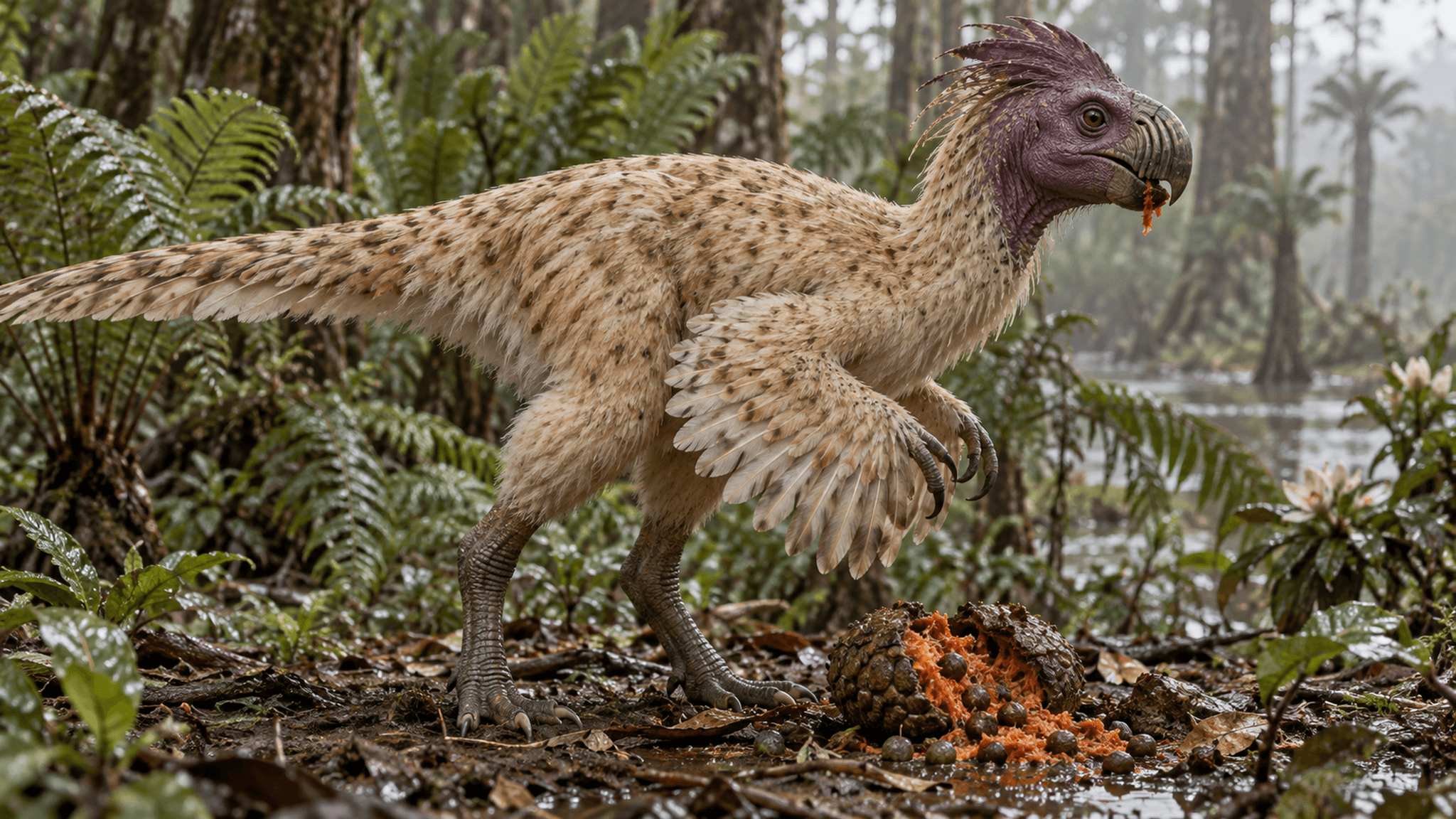
A team led by Gregory F. Funston presents the new species in the journal “Nature Communications”. Their research is based on an almost complete skull whose bones still lie together as they did in the living animal. It is the first such well-preserved skull from the caenagnathids, a family of toothless, beaked theropods.
The lower jaw worked like a grater
The animal could slide its lower jaw up to 15 millimetres forwards and backwards, around one seventh of the skull’s length. The ridges in the upper and lower jaws interlocked as it moved. Anything caught between them was thoroughly crushed.
A completely remodelled set of chewing muscles made this possible. Among theropods and their relatives, this arrangement is unique. Today, it is found in parrots that live on fruit.
An opening in the skull behind the eye also breaks the mould. It measures only around one tenth of the skull’s length, making it unusually small.
A modern parrot chews in exactly the same way
The researchers name Pesquet’s parrot as a living comparison. This bird, with its long hooked beak and bare face, lives almost entirely on a handful of fig species. It scrapes the flesh from the fruit with its beak and drops the seeds.
It did not copy the dinosaur: dinosaur and bird evolved the chewing trick independently. But where the same tool appears, the same food is a likely explanation.
Twelve kilos and already fully grown
Infernogallus jamesi weighed around twelve kilograms, with estimates ranging from nine to 15. The researchers calculated this from the circumference of its thigh bone. Growth rings inside the bone also reveal its age: at least six years, and more likely seven. The animal was sexually mature — despite its small size, it was fully grown.
Small adults are not unique in this family. In 2024, researchers described Eoneophron infernalis from the Hell Creek Formation in South Dakota. It, too, was initially mistaken for a juvenile until a look inside the bone revealed a fully grown animal. Alongside the large relative Anzu wyliei, as many as three species of different sizes may have lived there.
Chewing machinery and fruit arrived at the same time
Using the family tree and the ages of the fossils, the researchers calculated when this group of fruit chewers emerged. The answer: in the middle of the Late Cretaceous. That was precisely when fleshy fruits became more common among flowering plants. As the beaked dinosaurs spread, fruit grew larger and more diverse, according to the study.
Another study, published in “Science” in 2026, shows the scale of this leap. In a fossil forest in New Mexico dating to around 74.6 million years ago, fruits were on average more than a hundred times larger than those in older Cretaceous forests. Even those researchers do not know what triggered the growth spurt.
Why its diet remained a mystery for so long
This family has fooled experts before. In 1940, one of its lower jaws was described as a bird bone. Only later discoveries, including Anzu wyliei in 2014, showed that these animals were not birds.
Opinions about their diet also differed sharply. A toothless beak can handle many things and reveals little on its own. Only the skull, with its remodelled chewing muscles, shows what this jaw was built to do.
Its role in the fruit boom remains uncertain
The study leaves open whether animals such as Infernogallus jamesi themselves helped fleshy fruits spread so dramatically during the Late Cretaceous. Yet this very fruit boom continued to shape the plant world long after the dinosaurs disappeared.
---