
The Famous Joke Did Not Go Far Enough
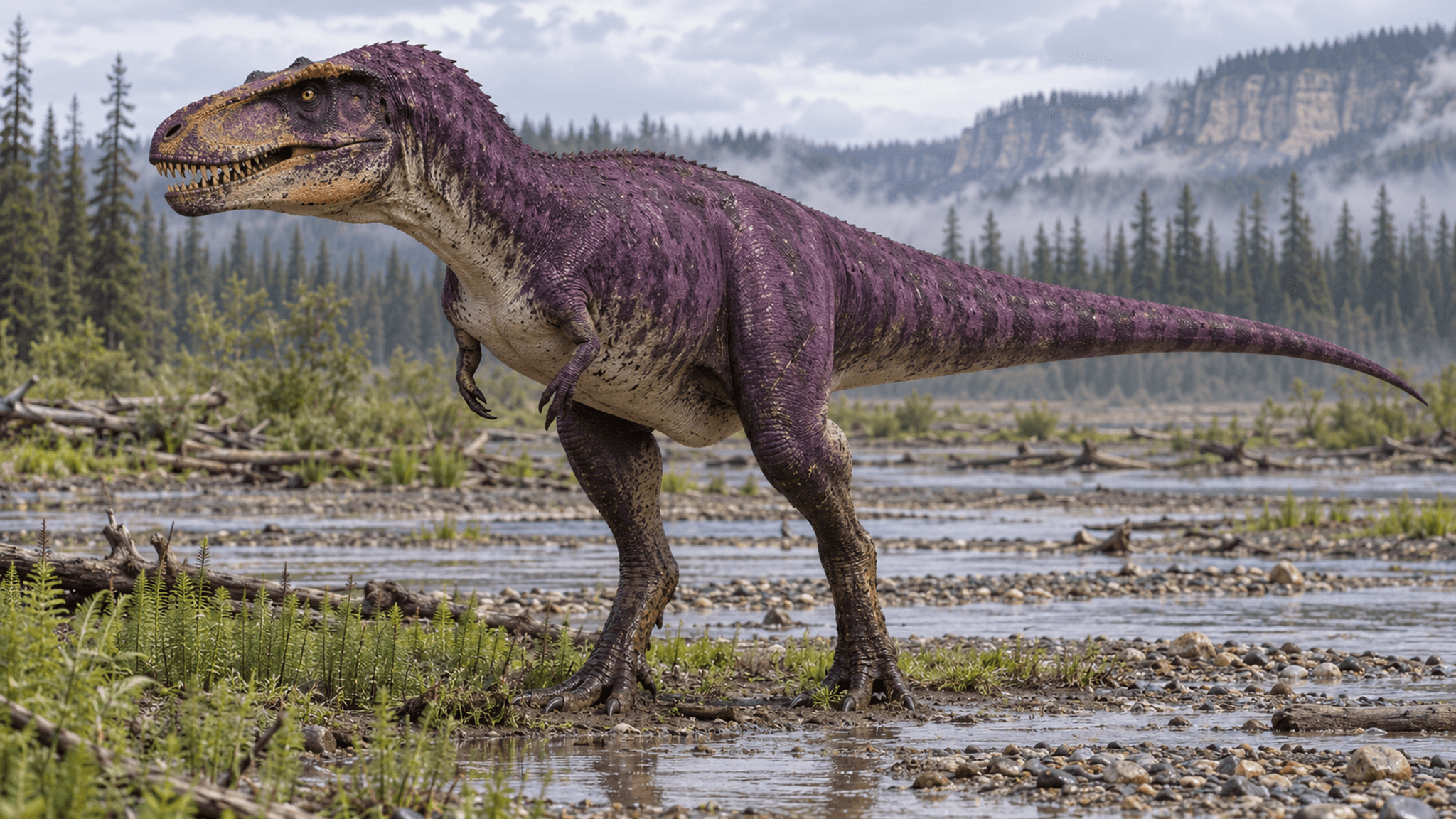
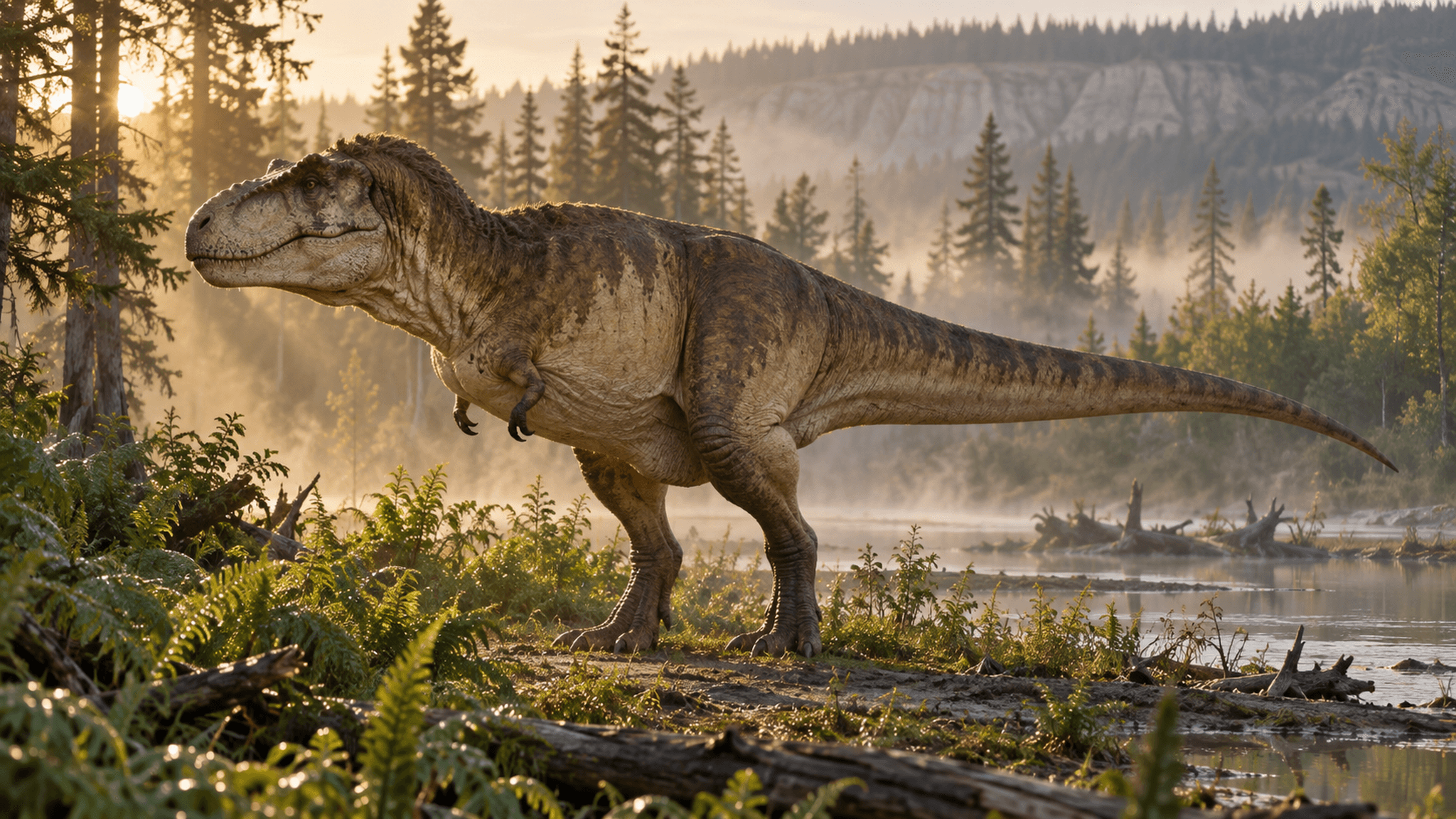
Tyrannosaurus rex is the best-known example. A huge predatory dinosaur, a massive skull, but strikingly short forelimbs. For decades, these arms have seemed like an anatomical contradiction. But the new paper shows that anyone looking only at T. rex is probably seeing merely the most prominent part of a much larger pattern.
The study is titled “Drivers and mechanisms of convergent forelimb reduction in non-avian theropod dinosaurs”. It was published on 20 May 2026 in Proceedings of the Royal Society B: Biological Sciences. The principal authors are Charlie Roger Scherer, Elizabeth Steell and Paul Upchurch. Their focus is not on a single species, but on forelimb reduction across non-avian theropods.
What Was Described in the Paper?
The team examined the extent to which forelimbs were reduced in different theropods. According to the abstract, the researchers provided a new quantification of forelimb reduction across Theropoda. They also developed and used a scoring system for cranial robusticity, meaning skull robustness.
These data were evaluated using bivariate and comparative phylogenetic analyses. The crucial point is that the paper does not consider reduced forelimbs in isolation. It links them to skull structure and body size, and therefore to the entire functional body plan of large predatory dinosaurs.
Why Is This Exciting?
The story is stronger than the old mockery of tiny arms. According to the results, forelimb reduction is strongly correlated with skull robusticity and gigantism. This means that, in several lineages, small or vestigial forelimbs do not appear alongside powerful skulls and large bodies merely by chance.
This is not a direct scene from the Cretaceous. But it points to a recurring evolutionary relationship. As skulls and bodies became larger and more robust, forelimbs in certain lineages apparently played a smaller role in grasping prey.
What Was Previously Unclear?
Reduced forelimbs have often been presented as a curiosity of individual groups, especially tyrannosaurids. The paper takes a different approach: when similar proportions appear in distantly related theropod lineages, convergent evolution must be considered.
Convergence here means that similar anatomical solutions evolve independently. This is precisely the hypothesis addressed by the study. It tests whether reduced forelimbs repeatedly appeared together with more robust skulls and gigantic body size.
What Does the Paper Say Specifically?
First, according to the abstract, reduced or vestigial forelimbs evolved in at least five theropod lineages. This supports the idea of repeated, convergent forelimb reduction.
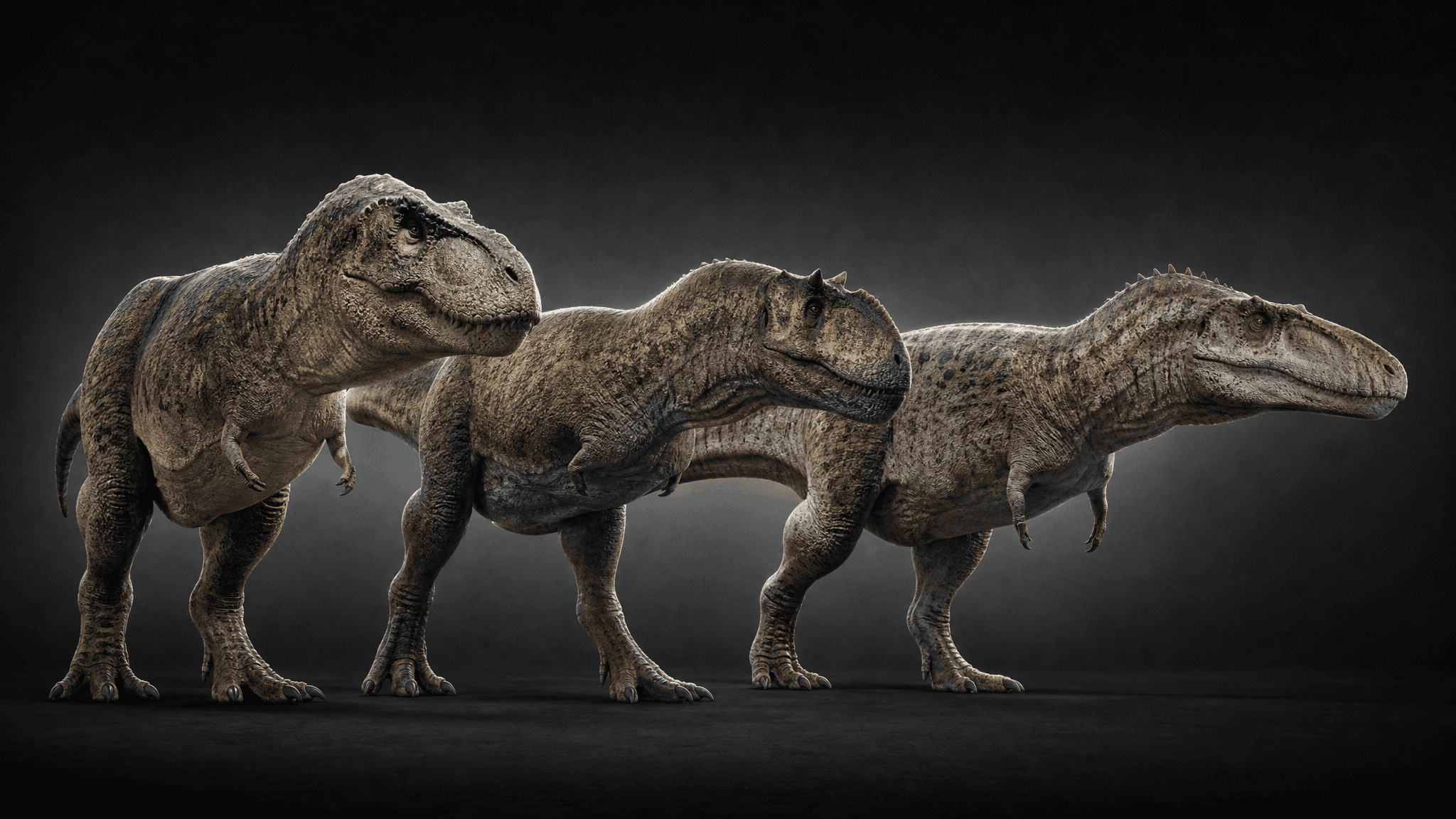
Second, abelisaurids, carcharodontosaurids and tyrannosaurids show the greatest forelimb reduction relative to the skull. T. rex therefore remains prominent, but it is not alone.
Third, the results show a strong correlation between forelimb reduction, skull robusticity and gigantism. This is the study’s central conclusion and should not be misunderstood as a simple cause affecting an individual animal.
Fourth, according to the paper, repeated forelimb reduction was facilitated by increased skull robusticity and larger body size. An upward trend in prey body size may also have played a role.
Fifth, the authors describe a resulting shift: away from subduing prey with grasping forelimbs and towards powerful bites and robust skulls.
What Remains Uncertain?
The study does not prove why an individual T. rex used or did not use its arms in a specific situation. It provides an overarching evolutionary pattern. Correlation is important here, but it is not a simple story of cause and effect.
The possible role of larger prey animals must also be phrased cautiously. The abstract says that they may potentially have had an influence. It likewise remains unclear which residual functions reduced forelimbs still performed in individual theropod lineages.
Tiefenzeit Context
The point is not that T. rex had useless arms. The stronger point is this: several large theropod lineages apparently shifted their functional emphasis. The skull became more robust, the body more gigantic and the forelimbs relatively smaller.
Evolution does not think in terms of symmetry or elegance. It remodels bodies when another part performs more. In these theropods, the paper suggests that robust skulls and powerful bites moved to the forefront. The small arms are therefore not a joke on the sidelines, but an indication of a profound transformation of the predatory dinosaur body.
Source/Image Note
Source: Charlie Roger Scherer, Elizabeth Steell and Paul Upchurch: “Drivers and mechanisms of convergent forelimb reduction in non-avian theropod dinosaurs”, Proceedings of the Royal Society B: Biological Sciences, published on 20 May 2026, DOI: 10.1098/rspb.2026.0528, paper URL: https://doi.org/10.1098/rspb.2026.0528.
Image note: Reconstruction / artistic approximation based on the paper. The visualisation should show the comparative pattern: robust theropod skulls and reduced forelimbs. Specific colours, habitats, individual scenes or hunting behaviour cannot be inferred from the abstract.