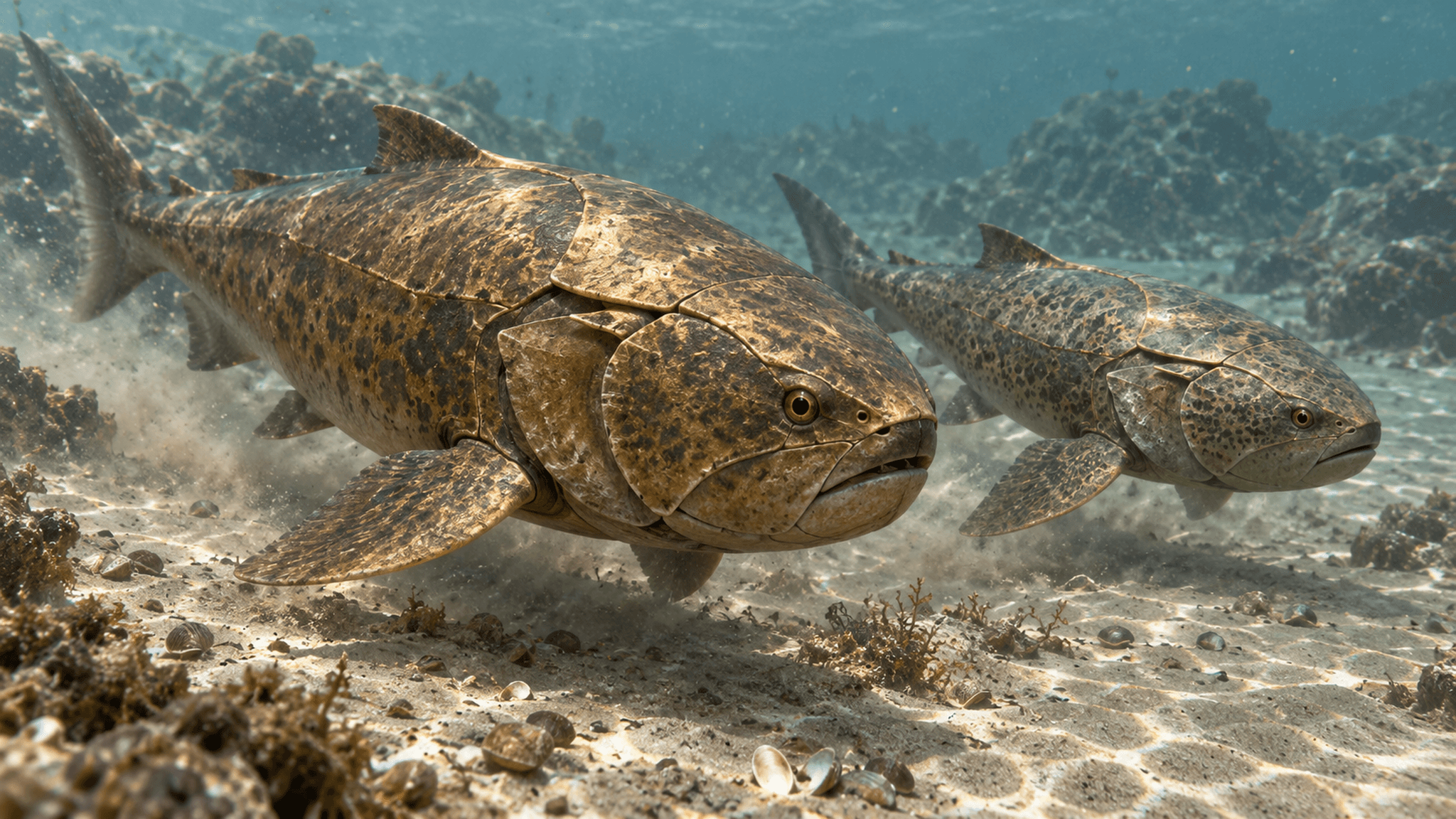
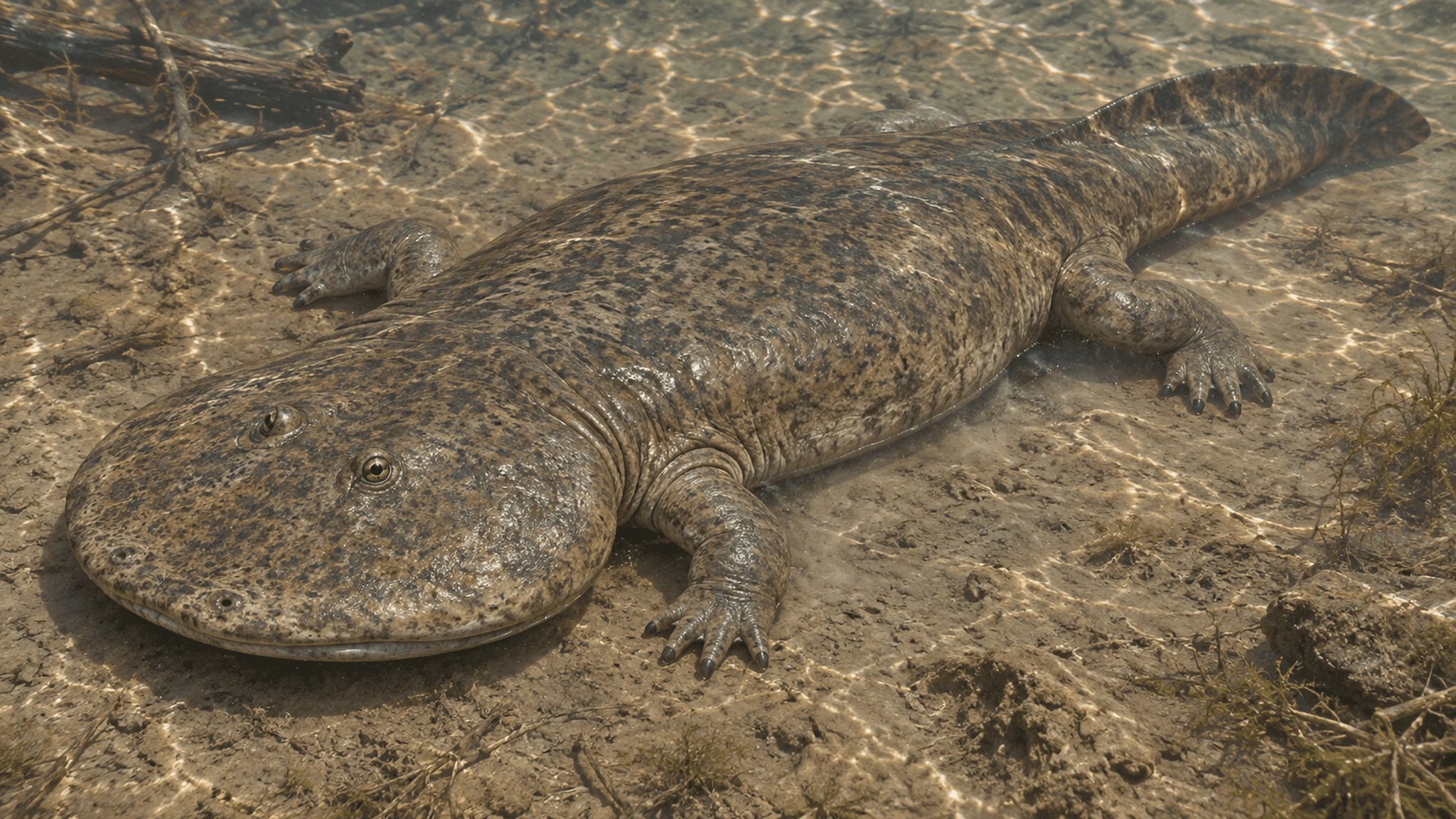
How does a team reach that verdict about animals from the Late Triassic? And why did differences between skulls from the same group of animals shake the old species boundaries?
Entire bone beds packed with Triassic amphibians
The animals are called metoposaurids. They belonged to the temnospondyls, an extinct group of early amphibians, and lived in water. Their remains lie in rocks formed away from the sea: across the Northern Hemisphere, in India and on Madagascar.
At some North American sites, their bones pile up in huge numbers. Several of these bone beds contain just one species apiece. That gives researchers a rare advantage: they can compare many animals of the same species side by side.
The suspicion: Same species, different skulls
Earlier work at precisely these sites exposed an awkward problem. Within an assemblage treated as a single population, the skulls differ from one another. Some features apparently vary even within one group.
That matters because those very features had previously separated one species from another. If a feature no longer works as a boundary, every species description built upon it begins to wobble.
North America provides plenty of material for the test. Several bone beds, each containing its own species, create a large sample. Three names faced scrutiny: Anaschisma browni, Buettnererpeton bakeri and Apachesaurus gregorii.
Every fossil gets its own case file
The team started with each individual specimen rather than with the finished definition of a species. It built a character matrix in which every fossil receives its own entries. The dataset includes all the name-bearing specimens that anchor each species, alongside numerous other assigned finds.
The assessments remain open to scrutiny. Photographs and, where they improve clarity, explanatory drawings reveal how every included specimen was interpreted.
First hit: The catch-all name collapses
According to the analysis, the fossils from Texas, New Mexico and Arizona previously assigned to Anaschisma browni cannot be united under that single name. The data do not sustain the assignment.
The team wants to avoid a tangle of repeated renaming. It therefore gives two previously described species from Texas a separate new genus each: Paranaschisma howardensis and Tecovaserpeton perfectum.
The study’s title turns that choice into a programme. It makes the case for single-species genera in vertebrate palaeontology, aiming to stop the classification of an animal group from becoming even more unstable.
The real twist: The dwarf may simply be young
The story becomes especially intriguing with Apachesaurus gregorii. The species was considered small-bodied until more recent work suggested that most known specimens came from juveniles. Until now, nobody had tested whether they were the young of an already known large species or formed a distinct species after all.
The new analysis brings a crucial specimen into play: a presumed adult Apachesaurus gregorii.
The team also compared how Buettnererpeton bakeri and Apachesaurus gregorii changed as they grew. From this, it develops scenarios for heterochrony — shifts in the timing of growth among metoposaurids. These are proposals for future studies to test, not settled proof.
What is still missing: Medium-sized animals
A gap yawns across the western United States. Between the large and small metoposaurids of the Late Triassic, medium-sized fossils are missing.
Only when such specimens are recovered, described and individually entered into the same character matrix can the unanswered questions about these animals’ growth be resolved. Until then, the true identity of the ‘dwarf’ remains open.
The study reveals a fundamental lesson: a species name is only as strong as the individual bones carrying it.