A predator from a poorly illuminated phase
Some dinosaur finds are important not because they are enormous or almost complete. They matter because they appear precisely where the fossil record has previously been sparse. Yuanmouraptor jinshajiangensis belongs in this category.
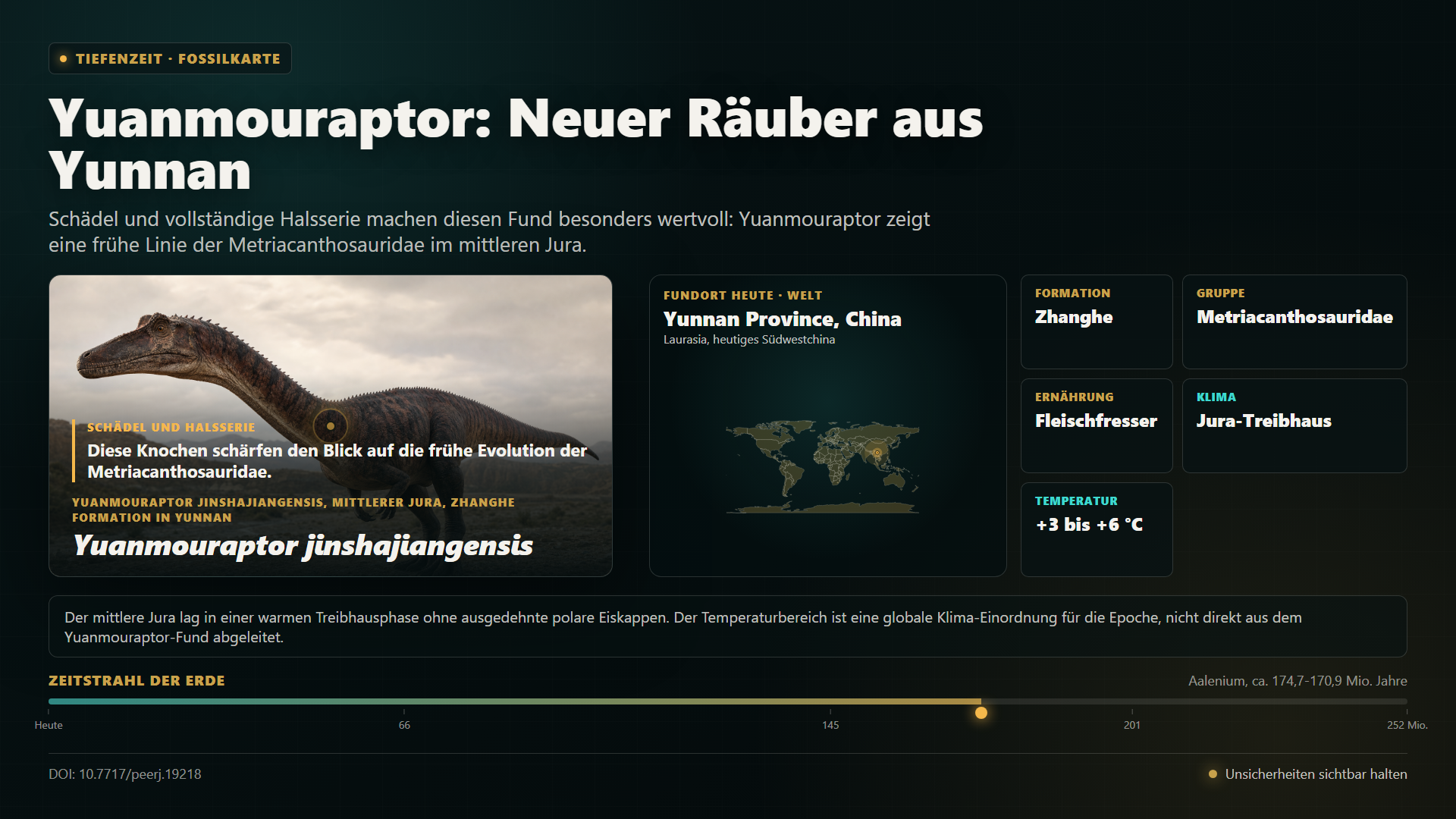
The paper is entitled ‘A new metriacanthosaurid theropod dinosaur from the Middle Jurassic of Yunnan Province, China’. It was published in the journal PeerJ on 2 April 2025. Its principal authors include Yi Zou, Li Chen, Tao Wang, Guofu Wang, Weigang Zhang, Xiaoqin Zhang, Zhenji Wang and Xiaochun Wu. It describes a new genus and species: Yuanmouraptor jinshajiangensis gen. et sp. nov.
What was described in the paper?
The study describes a new metriacanthosaurid theropod from the Zhanghe Formation in Yunnan Province, China. The find dates from the Middle Jurassic. It has not survived as a complete skeleton, but it preserves crucial regions of the body: a skull and the front section of the vertebral column.
According to the abstract, the preserved material includes the complete series of cervical vertebrae and the first dorsal vertebra. This is particularly valuable for classification because many Middle Jurassic members of the Metriacanthosauridae are known only from incomplete remains.
Why is it exciting?
Metriacanthosaurids are a basally branching lineage of tetanurans. According to the paper, members of this group were generally medium-sized to large and lived in Laurasia from the Middle Jurassic to the Early Cretaceous.
Later forms are documented much more clearly. The abstract names Sinraptor dongi, Sinraptor hepingensis and Yangchuanosaurus shangyouensis from the Late Jurassic as taxa well represented by nearly complete specimens. The problem lies earlier: the incomplete Middle Jurassic taxa make it harder to understand the origin and early evolution of the Metriacanthosauridae.
What was previously unclear?
When the later forms of a group are well known but earlier ones remain fragmentary, a distorted picture emerges. We can see where a lineage developed, but less clearly how it began.
This is precisely the gap addressed by the paper. Based on current knowledge, the early history of the Metriacanthosauridae was harder to assess because Middle Jurassic finds were incomplete. Yuanmouraptor therefore provides not only a new name, but also anatomical data from a crucial earlier phase.
What does the paper say specifically?
First: Yuanmouraptor jinshajiangensis is a new genus and species of Metriacanthosauridae from the Middle Jurassic Zhanghe Formation of Yunnan, China.
Second: the find consists of a skull and the front section of the vertebral column, including the complete cervical series and the first dorsal vertebra.
Third: the diagnosis is based on several autapomorphies. These include a leaf-shaped anterior process of the postorbital, a laterally twisted trough on the ventral ramus of the postorbital, strongly posteriorly elongated epipophyses on the anterior cervical vertebrae and deeply excavated pneumatic openings on the third cervical vertebra.
Fourth: the phylogenetic analysis identifies Yuanmouraptor as the most basally branching member within the Metriacanthosauridae. The paper also provides a new alternative phylogenetic topology for non-coelurosaurian tetanurans.
What remains uncertain?
The supplied abstract gives no specific body length, body mass or information about colour. Nor can behaviour, hunting methods or precise environmental conditions be reliably inferred from it.
The term ‘predator’ should therefore be understood cautiously within the context of its classification as a theropod, not as evidence of a specific hunting scene. Yuanmouraptor does not resolve every question about the early evolution of the Metriacanthosauridae either. However, the paper makes an important early position within the group easier to grasp.
Deep-time context
Yuanmouraptor reminds us that palaeontology often works with gaps. Not every fossil needs to be spectacularly complete. Sometimes exactly the right parts are enough: a skull, a complete cervical series, a first dorsal vertebra.
Such details create a clearer picture of deep time. The new theropod from Yunnan pushes our view deeper into the Middle Jurassic and shows that the early history of large predatory dinosaur lineages has not yet been fully told.
Source/image note
Source: Yi Zou, Li Chen, Tao Wang, Guofu Wang, Weigang Zhang, Xiaoqin Zhang, Zhenji Wang and Xiaochun Wu: ‘A new metriacanthosaurid theropod dinosaur from the Middle Jurassic of Yunnan Province, China’, PeerJ, published on 2 April 2025, DOI: 10.7717/peerj.19218, paper URL: https://doi.org/10.7717/peerj.19218.
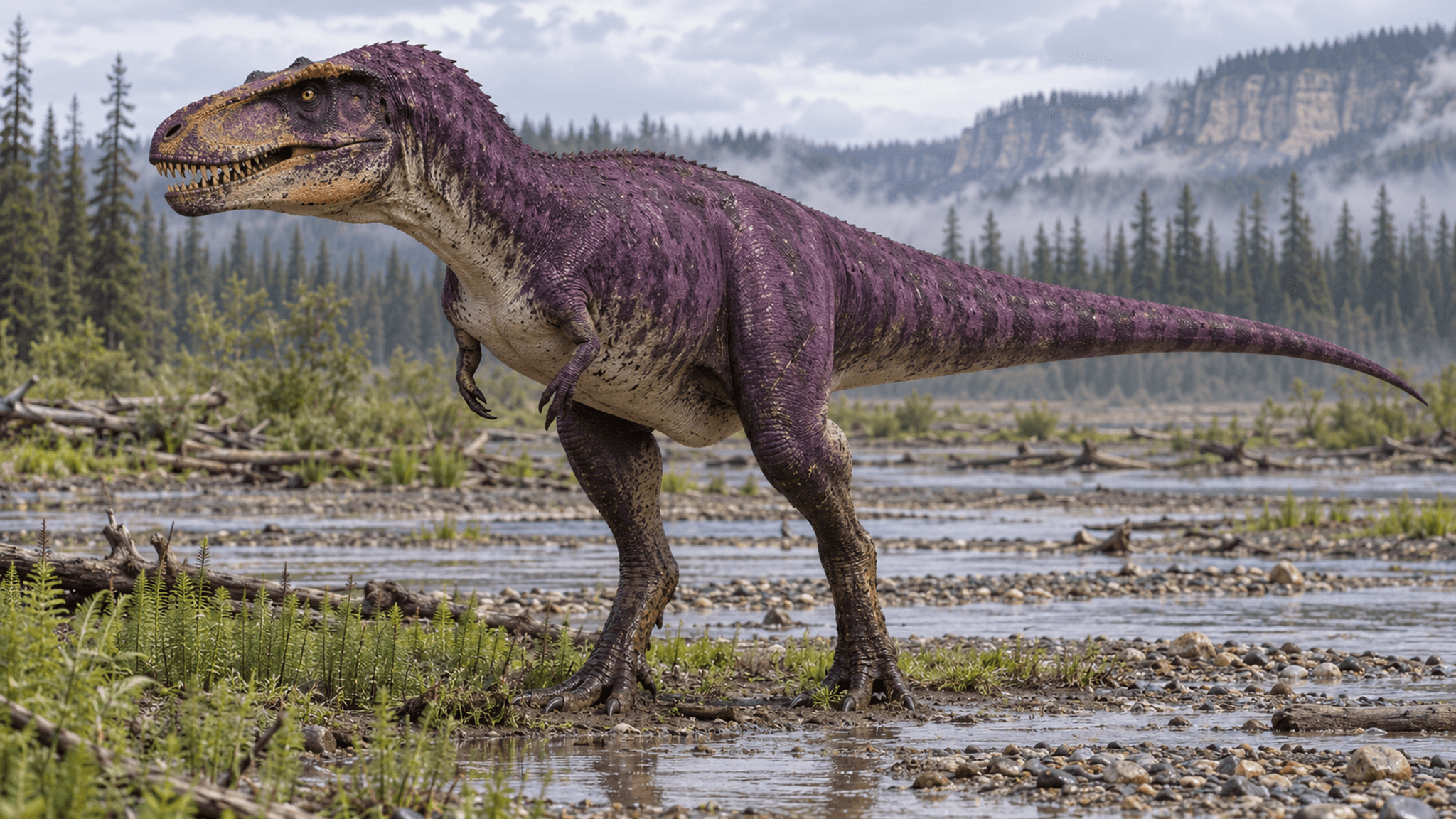
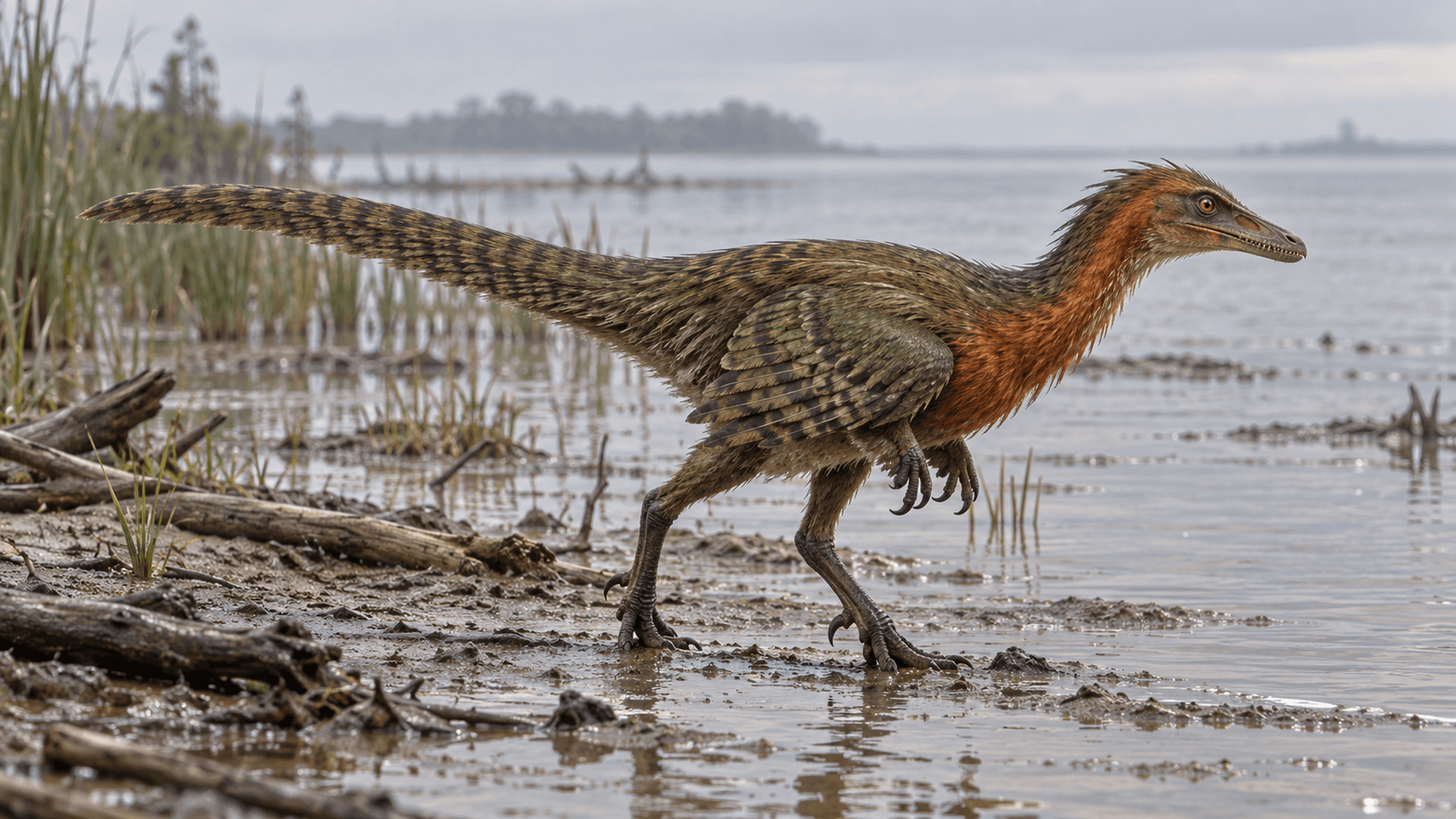
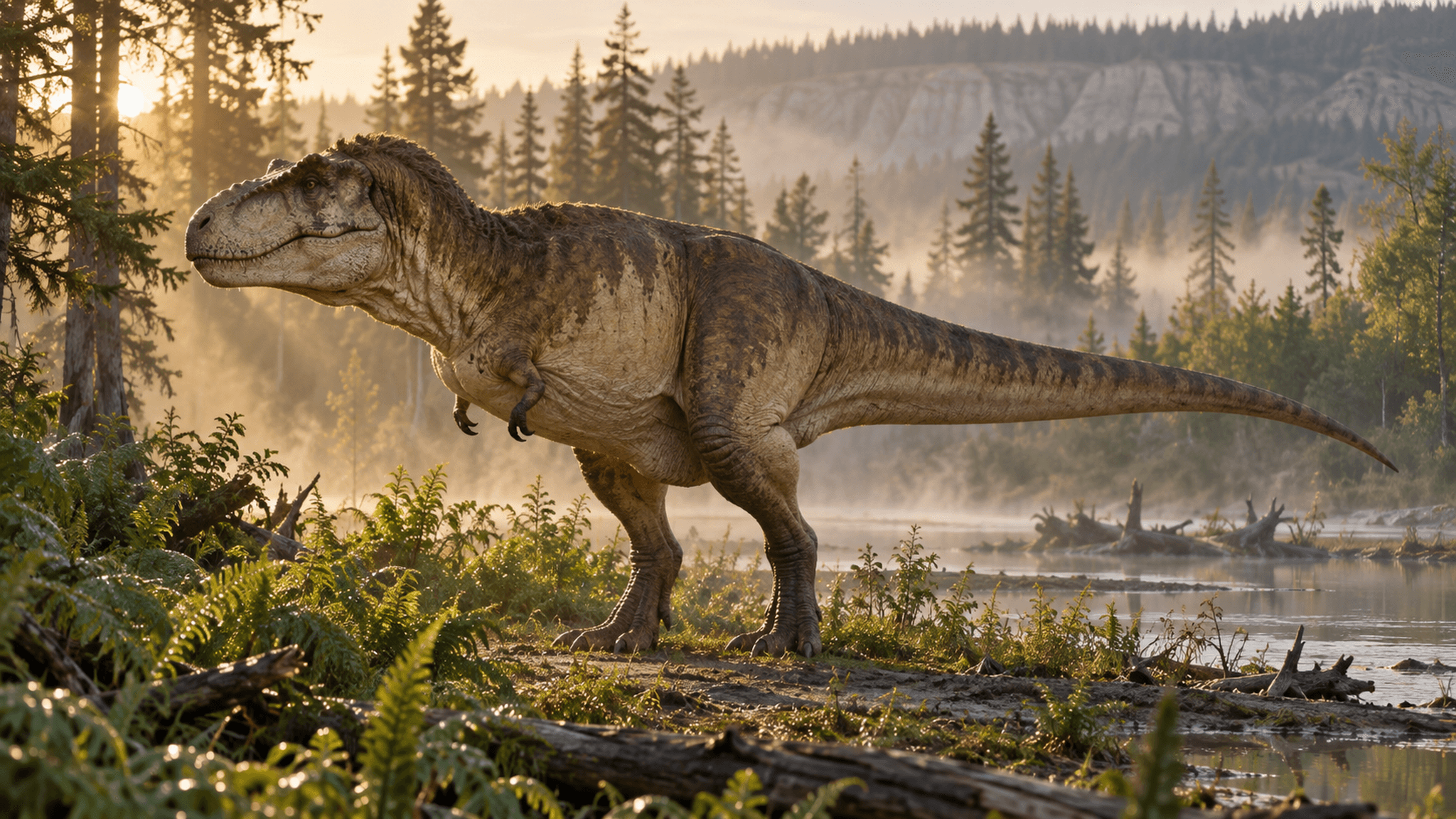
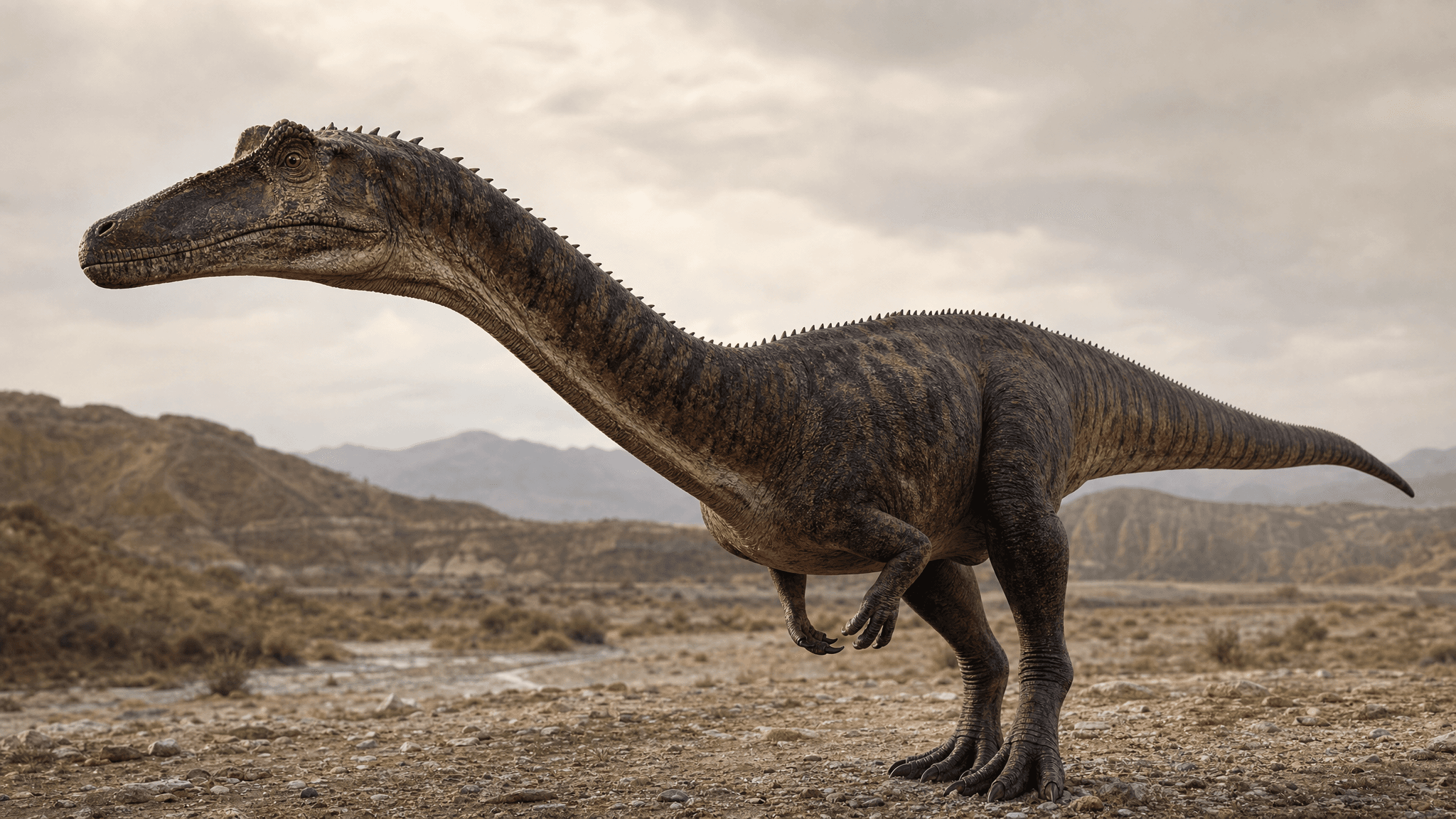
Image note: Reconstruction / artistic approximation based on the paper. Body length, colouration, soft tissues, posture and behaviour cannot be reliably inferred from the supplied abstract and must remain labelled as a plausible visualisation.