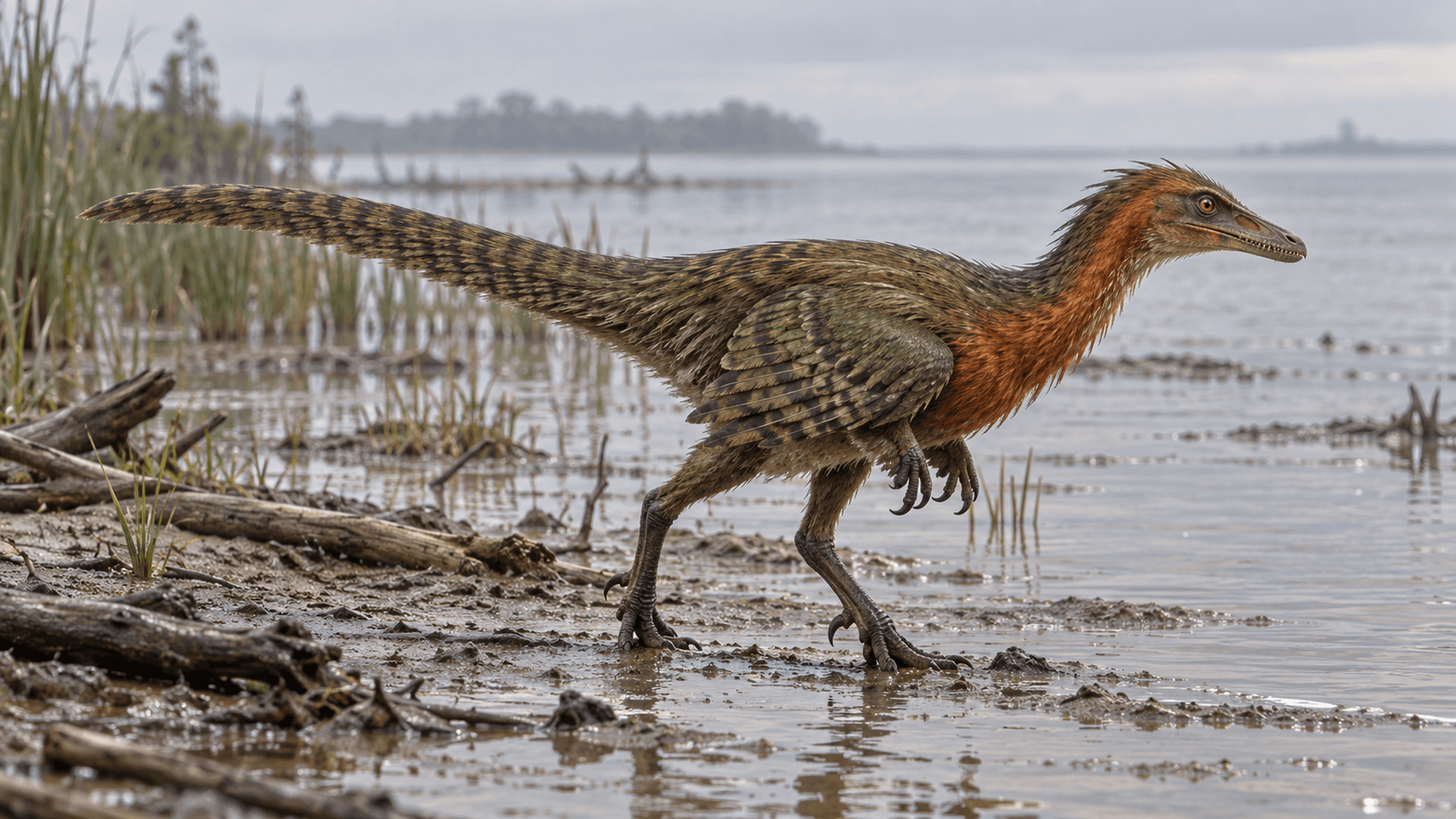
A team led by Joshua Adam Doyon of the University of Alberta presents the find in the Journal of Paleontology. The researchers narrow down the most likely culprit: a dromaeosaurid, a small two-legged predatory dinosaur.
The skull lay at the foot of a mudslide on the valley’s eastern slope, five kilometres north of Morrin Bridge. It is the smallest associated Albertosaurus skull known to date. Yet researchers have known these predators since 1884, when Joseph Burr Tyrrell found the first partial skull, and in 1910 Barnum Brown even discovered a mass grave containing 26 animals of different ages.
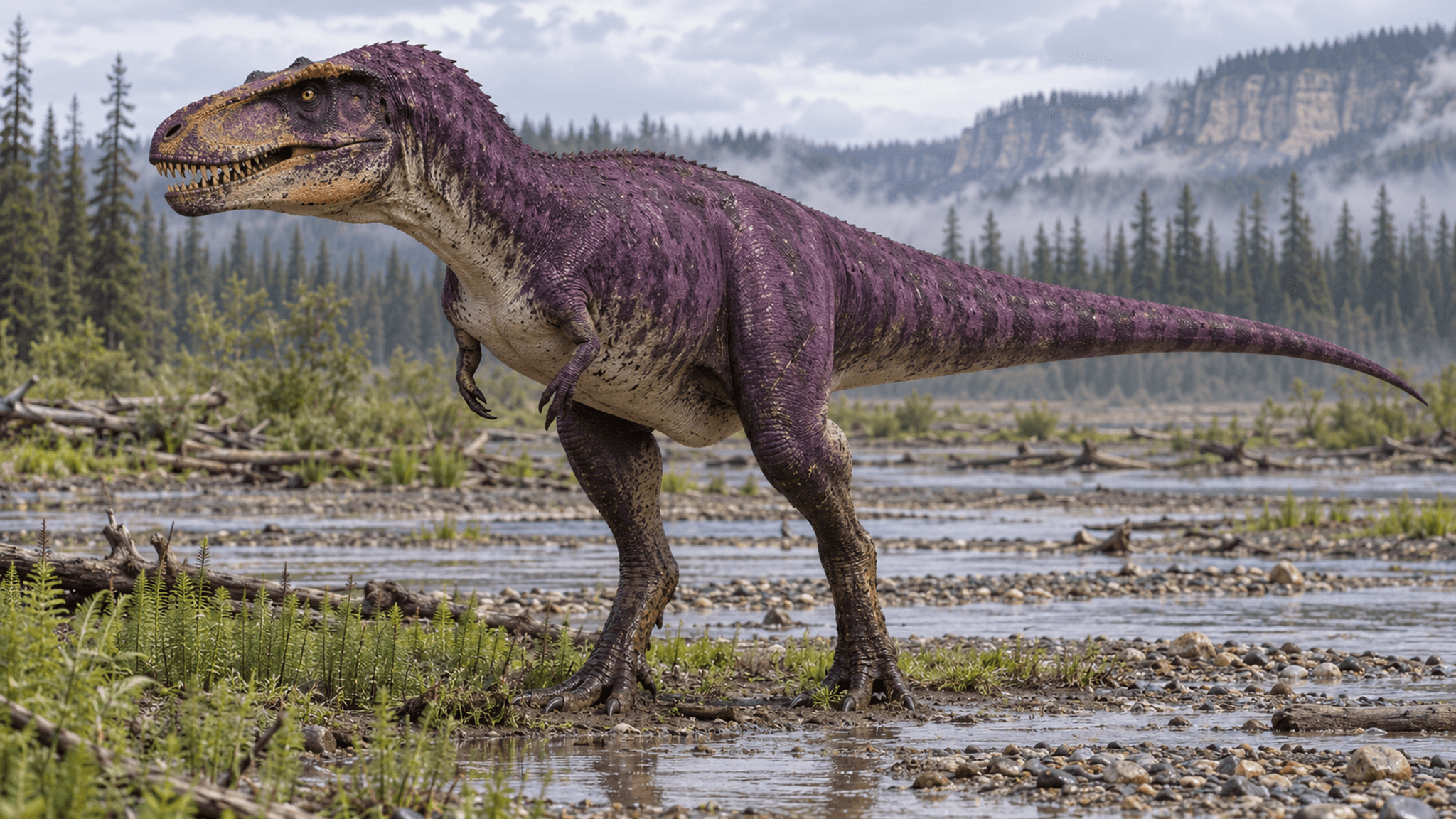
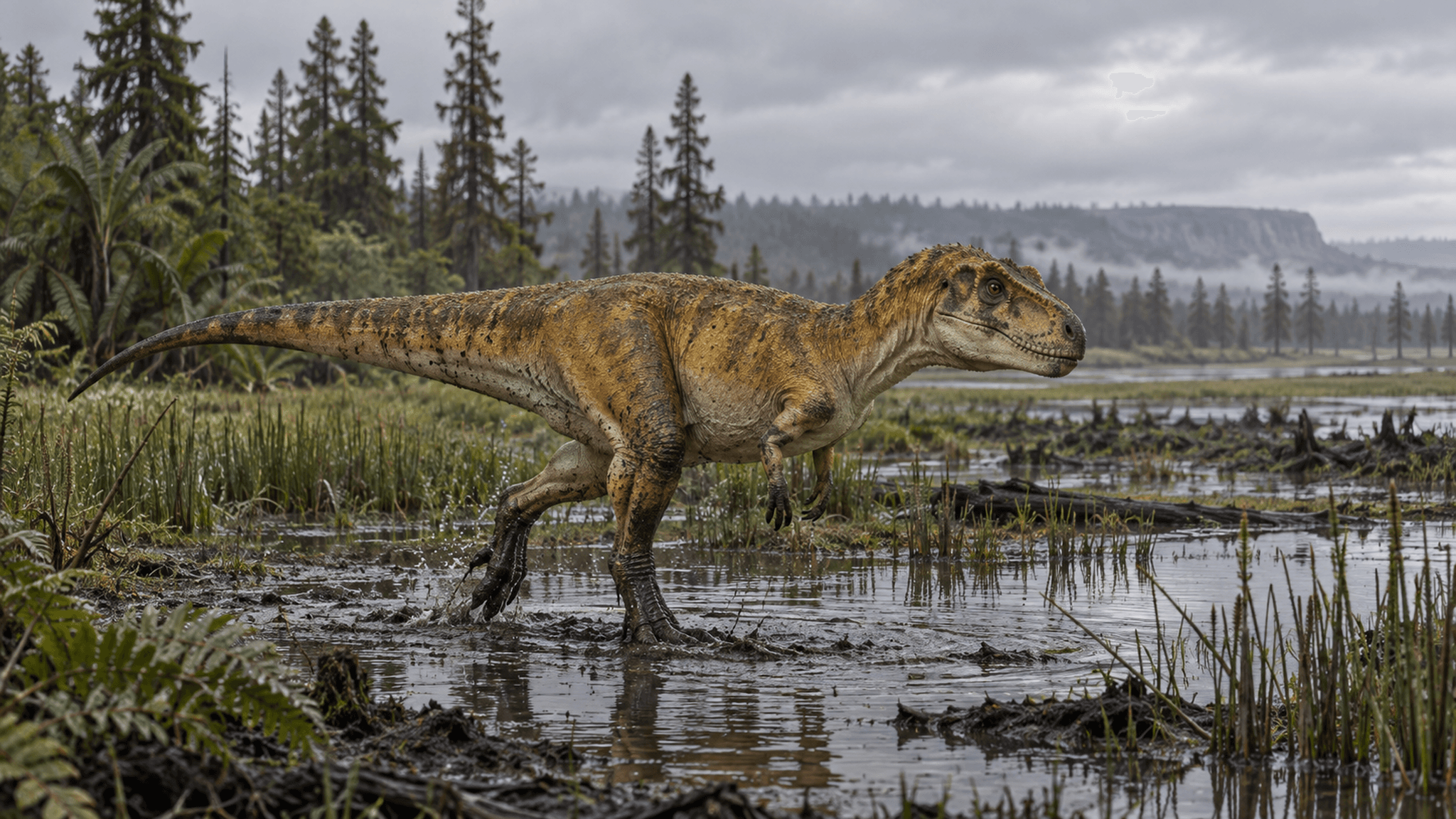
A young tyrant trudged through the marsh
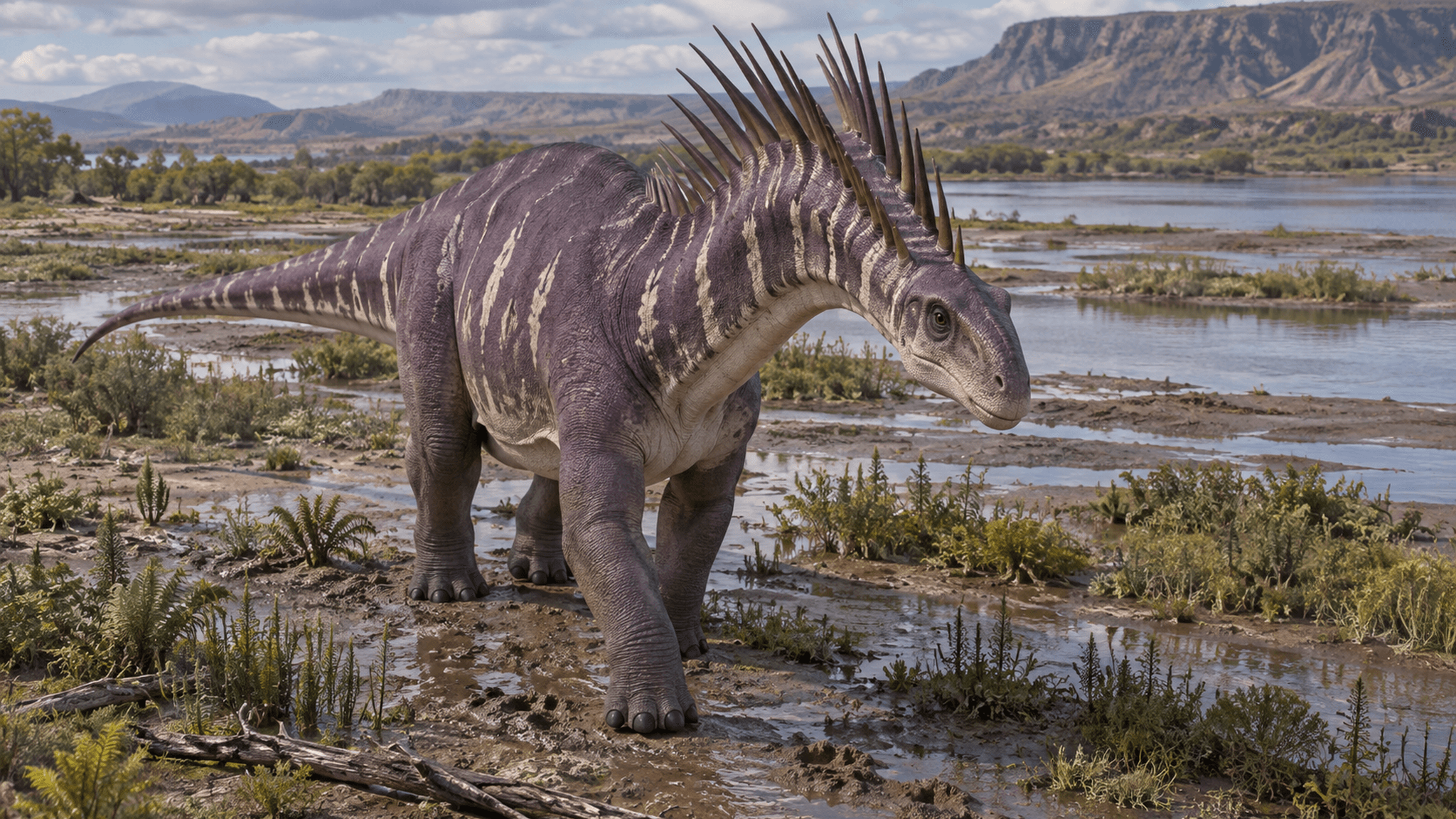
Between 73 and 68 million years ago, a river delta with broad floodplains and coal swamps covered what is now the Red Deer River area. The young Albertosaurus trudged through this wet landscape, past dark pools and muddy banks. Two coal seams remain in the rock near the site, remnants of this marshy world.
The researchers estimate that its skull measured 63 centimetres, slightly longer than a cabin suitcase. The animal was at least eight years old, as shown by the fine tissue in one of its limb bones. Even so, it still had a long way to go before reaching full size.
Adult Albertosaurus grew eight to nine metres long and weighed up to three tonnes, as much as two small cars. Even then, they remained markedly more slender than Tyrannosaurus rex.
At some point, the young tyrant lay motionless in the mud, and small predators sank their teeth into its jaw. The marks do not reveal whether they had attacked it beforehand or scavenged the carcass.
The bite mark is barely larger than a grain of rice
One mark sits on the surangular, a bone at the rear of the lower jaw. The researchers measured it to hundredths of a millimetre: 8.2 millimetres long, 3.8 millimetres wide and just 0.57 millimetres deep. That is roughly the size of a grain of rice.
No new bone grew around the edges of the bites. The young Albertosaurus therefore did not survive them for long, or it was already dead when the predators struck. The unhealed marks show that something fed here.
Serrated teeth expose the culprit
Predatory dinosaur teeth carry tiny serrations, called denticles, along their cutting edges, much like a steak knife. When dragged across bone, they score fine grooves into it. The spacing between these grooves identifies the teeth like a fingerprint.
Tyrannosaurs leave grooves spaced 0.3 millimetres apart or more. The scratches on the young Albertosaurus lie much closer together. That rules out another Albertosaurus or a different large tyrant as the culprit.
A tooth, however, rarely strikes bone at a right angle. When it drags across at a slant, the angle of impact distorts the measured spacing. The team used a new method to remove the effect of that angle and determine the spacing more accurately.
The other suspects then fell away too. Crocodiles, mammals and champsosaurs, crocodile-like aquatic reptiles from the Cretaceous, would have left different kinds of marks, such as fractures or hook-shaped notches. Dromaeosaurids were the best match.
Proven for the first time: small predators at the tyrants’ table
A well-known North American dromaeosaurid shows just how unequal their sizes were. It grew 1.3 to 1.8 metres long and weighed no more than 22.5 kilograms, roughly as much as a medium-sized dog. The young Albertosaurus on which the predators fed, by contrast, measured several metres.
Feeding traces made by tyrannosaurs are documented far more often than those left by dromaeosaurids. Bite marks from these small predators were previously known on other animals, including the shinbone of a giant pterosaur. Until now, no such mark had ever been documented on a tyrannosaur.
The authors draw a clear conclusion. Dromaeosaurids and young tyrannosaurs probably ate one another, sometimes as prey and sometimes as carrion. Today’s hunter could land on the menu tomorrow.
The food chain ran both ways
Direct feeding traces are among the few pieces of evidence showing who ate whom in an extinct world. This jaw adds a young tyrannosaur to the known diet of dromaeosaurids while also revealing how the head of a young Albertosaurus was built. Two groups of tiny tooth marks show that, in Cretaceous Alberta, the small also fed on the great.
---