A team led by Yuichiro Nishioka of the Museum of Natural and Environmental History presents the find in the Swiss Journal of Palaeontology. The skeleton comes from rock layers in Gifu Prefecture.
Buried Among Seashells
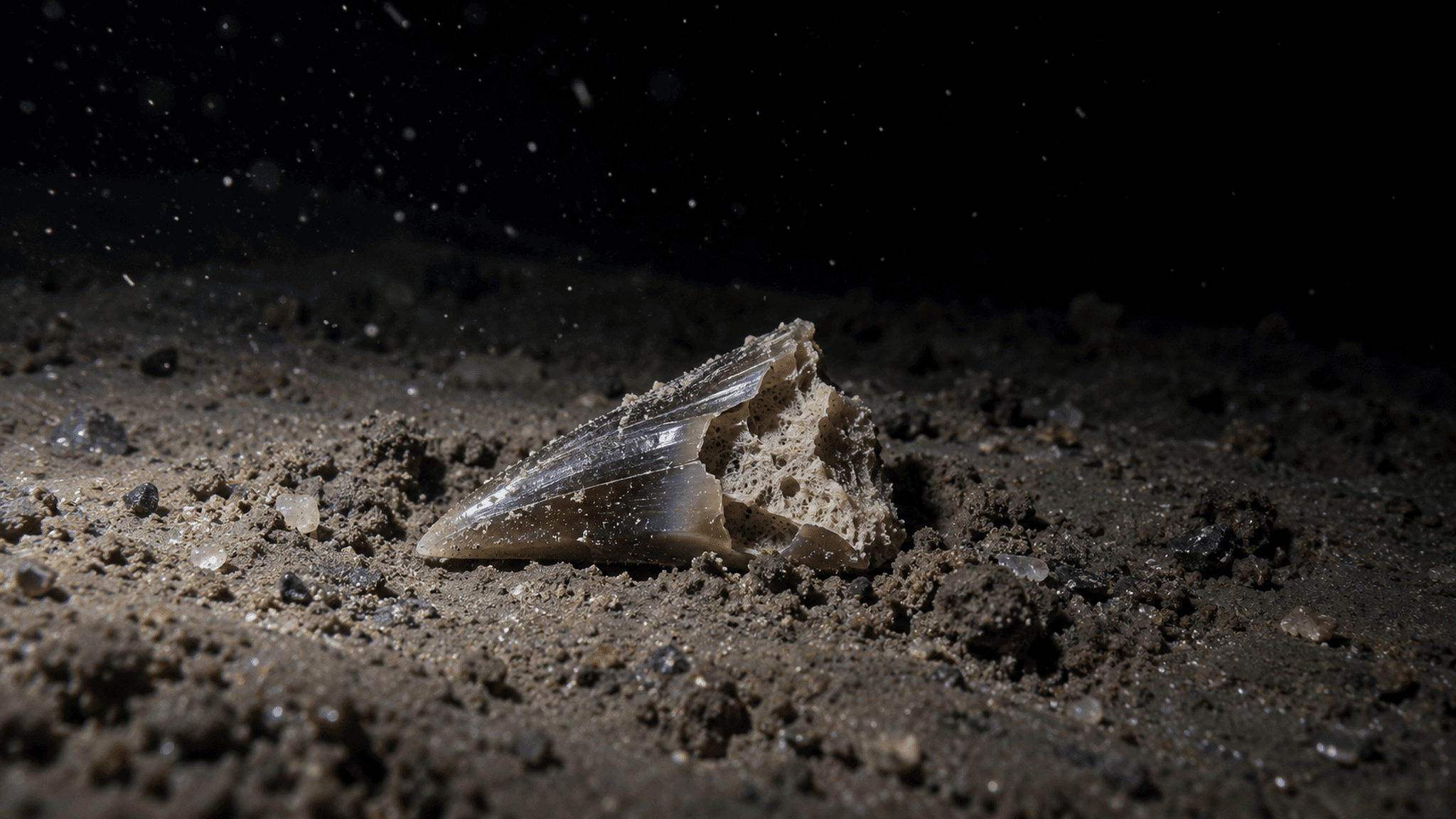
The bones lay in a shell bed. The same block of rock contained the skull with both antlers and the upper molars. Bones from the torso and legs were also preserved.
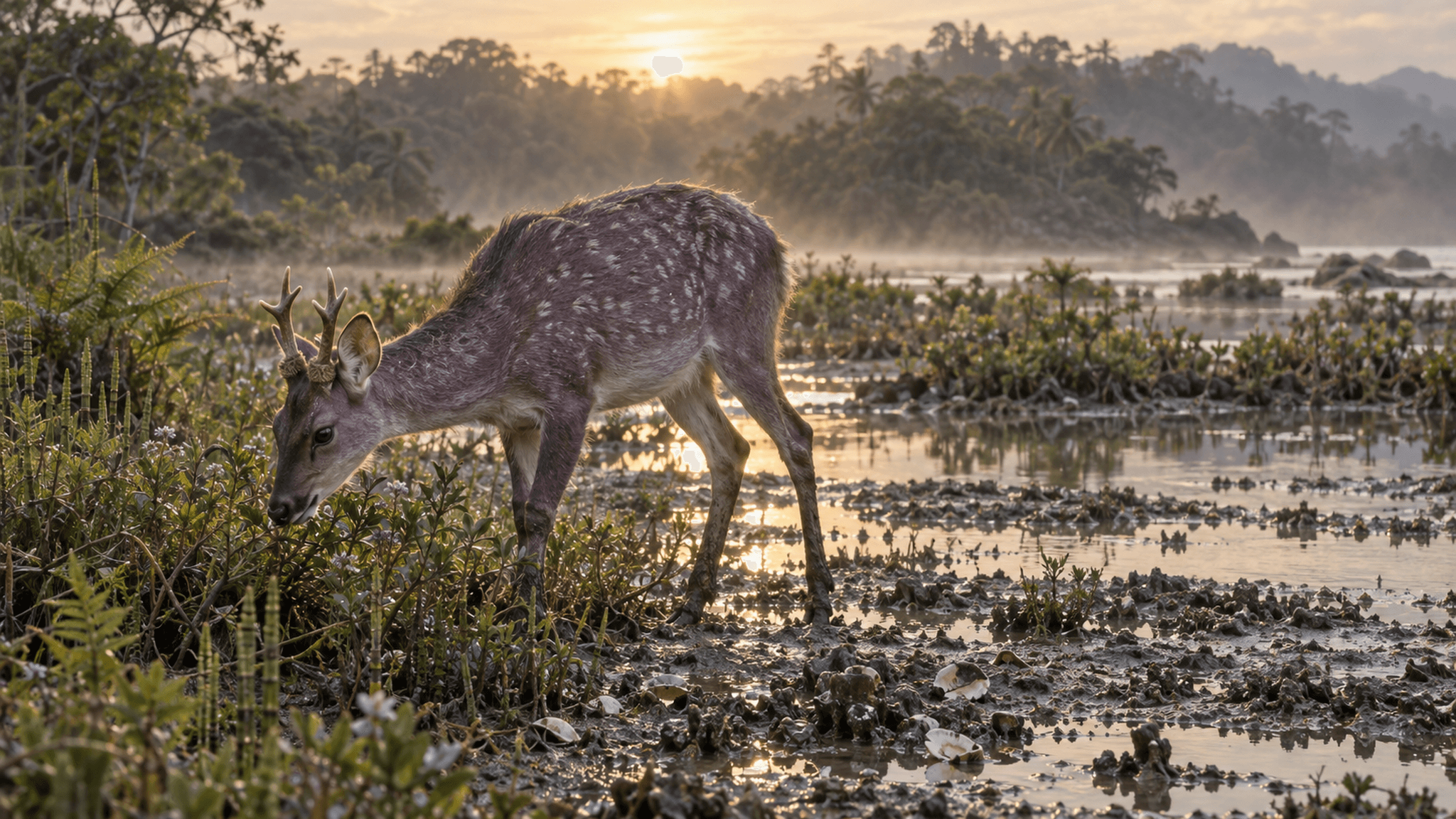
Together, they reveal the living animal: two short bony projections rose from its forehead. Each carried an antler that forked into two points. The foot bones of the front legs were strikingly short, much shorter than the corresponding bones of the hind legs.
The evidence does not reveal how the animal ended up in the shell bed. Its skeleton remained sealed in stone there for 18 million years.
Not a Juvenile, but a Deer in Its Prime
The rearmost molars had already erupted and showed wear. On every leg bone, the joint ends had fused firmly to the shaft — something that happens only in fully grown animals.
Even so, the deer was not very old. Its teeth are less worn than those of the comparative specimen of the European species Procervulus dichotomus. The researchers describe it as a middle-aged animal.
A Pedicle as Short as a Thumb
Deer antlers grow from a permanent bony base on the forehead called the pedicle. In the Japanese deer, this base measures only around 6.5 centimetres, roughly the length of a thumb. In Procervulus dichotomus, it measures between 12 and just under 14 centimetres.
This stub is exactly what makes the newcomer unmistakable: no other known species in its genus has such a short pedicle. Its antler also has a proportionally broader base.
Procervulus praelucidus has similar frontal projections. Its teeth and pedicles, however, are smaller and thinner.
Europe’s Deer Family — in the Heart of Japan
The Japanese deer matches Europe’s earliest deer surprisingly well. It carries the same forked antlers. Its upper molars bear the same prominent enamel ridge on the inner side.
Other early European deer developed swellings and small additional projections at the antler base. The Japanese deer lacks this decoration entirely. The researchers therefore place it in the genus Procervulus.
That creates a problem: not a single deer with forked antlers was known from Asia during the same period. So how did this deer reach Japan?
A Comparison with the Proboscidean Gomphotherium
A comparison with a proboscidean offers a clue. At the same time, this animal used a major land connection. Around 20 to 15 million years ago, the African-Arabian plate collided with Eurasia. After roughly 75 million years of isolation, Africa was connected to the rest of the world again.
Animals crossed this new land bridge in both directions. Among them was the proboscidean Gomphotherium, an early relative of elephants.
According to the authors, Gomphotherium travelled from Africa to East Asia between 20 and 19 million years ago. If a proboscidean covered that distance so quickly, the researchers expect other land mammals to have done something similar. They identify a crossing of Beringia during the Early Miocene or earlier as one possible route for mammals. The find does not prove which route this deer took.
The First Deer Were in a Hurry
The Japanese deer carries many primitive features known from the oldest deer. For the researchers, this suggests that the first deer spread rapidly across Eurasia. This apparently happened before the familiar European forms diverged from one another.
The authors deliberately leave one question open: where did the migration begin? In Asia or Europe? The Japanese find allows both answers.
A Fossil Site Packed with Prehistoric Treasures
The skeleton now belongs to the collection of the Mizunami Fossil Museum. The museum opened in 1974 and houses around 250,000 fossils from the region.
An early toothed whale has already been recovered from the same geological formation. Today, the museum preserves both witnesses to this prehistoric world.
The new ancient deer shows that early deer with forked antlers lived not only in Europe around 18 million years ago, but had also reached East Asia. Where this expansion began remains unknown.
---