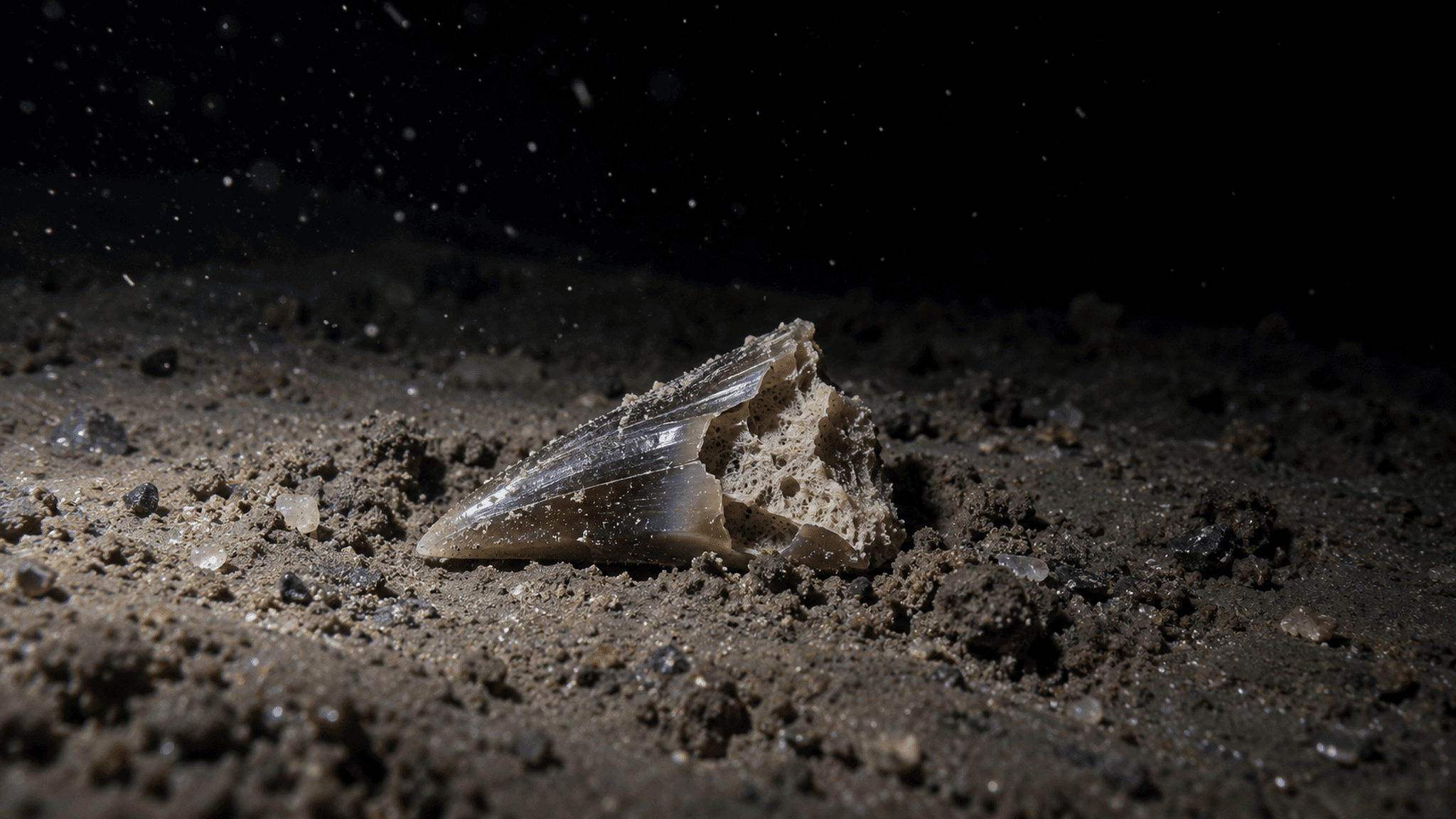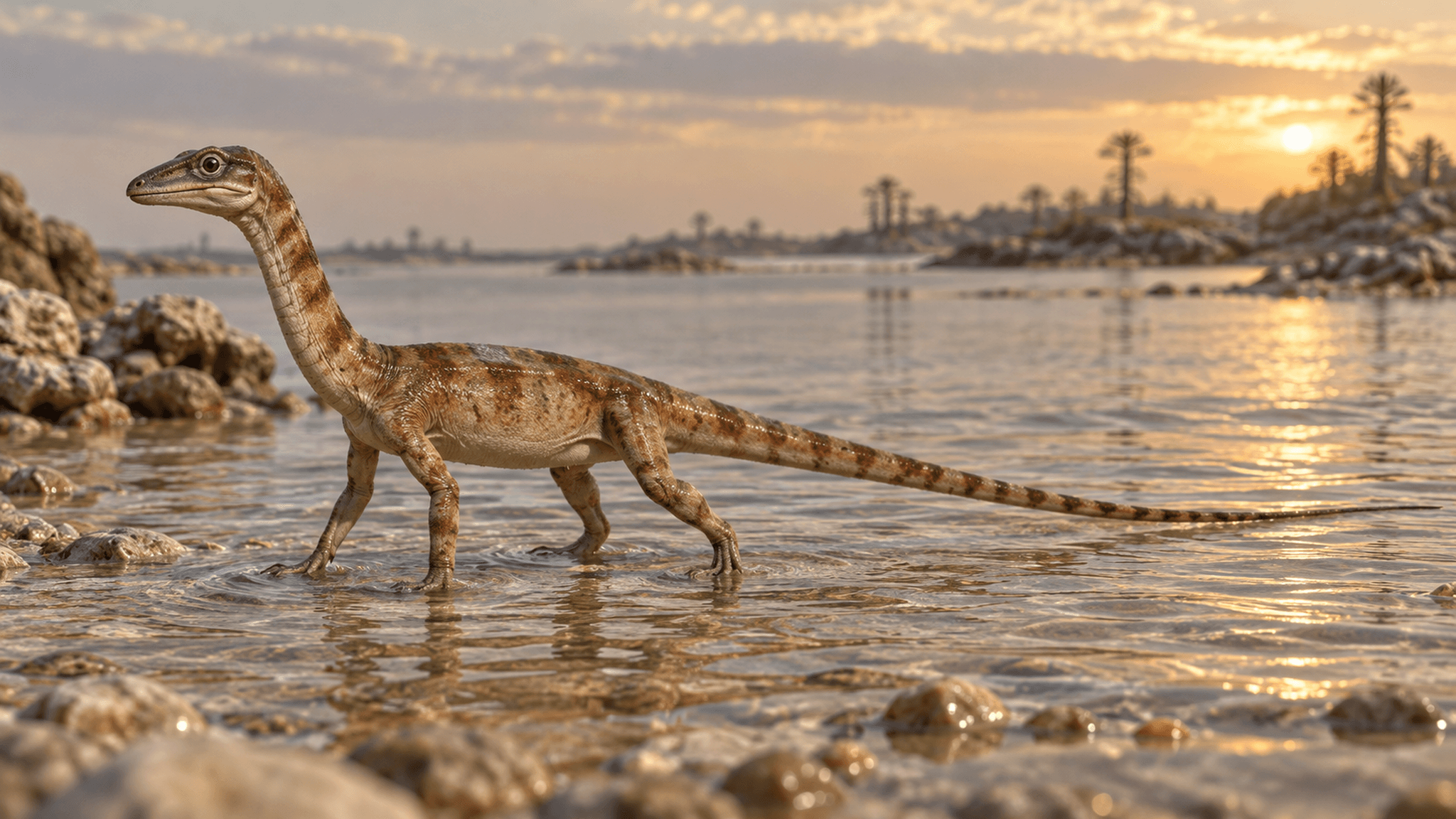
A team led by Sulagna Sen from the Department of Geology and Geophysics at the Indian Institute of Technology Kharagpur presents the discovery in the journal “The Anatomical Record”. The bones come from the Tiki Formation in the Indian state of Madhya Pradesh. Rivers deposited these rock layers during the Late Triassic, the geological period that also produced the first known dinosaurs.
Three teeth jut out of its mouth
Five teeth sit at the very front of the upper jaw. The first three are rounded like small pegs and jut out of the mouth at an angle.
The rest of the teeth are unusual too. The upper tooth row is shorter than the lower one in relative terms, while the tip of the lower jaw lies almost level with the remaining tooth margin. No other known silesaurid displays this combination. That is precisely what makes the find a separate genus and species.
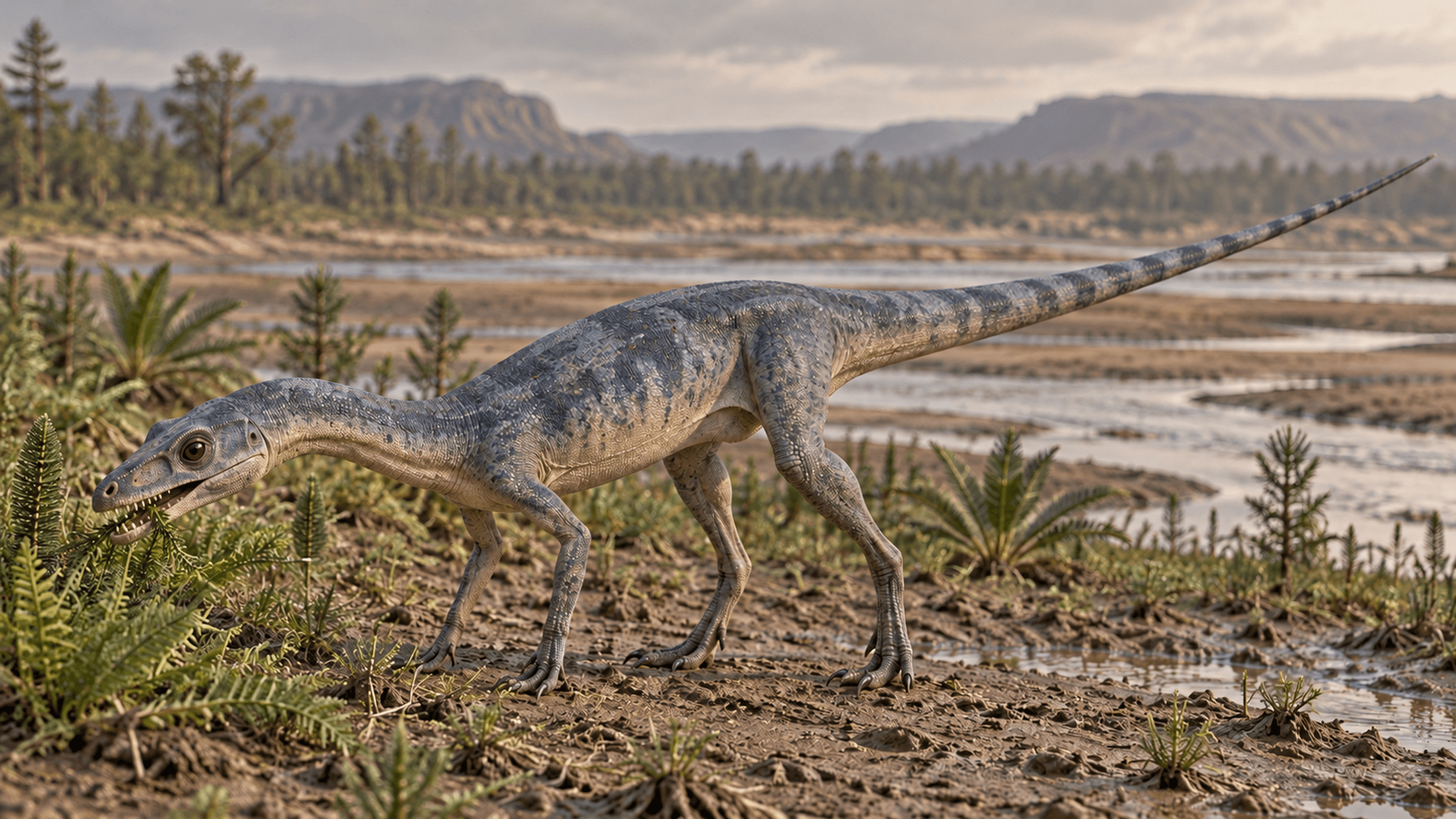
The researchers interpret these teeth as a pair of gripping pincers. Rewasaurus minori used them to seize soft, easily processed prey and plant matter from the river plains of the Tiki landscape.
A gripper among crocodile relatives
In the reconstruction, the animal walks across the damp floodplain, pushes its snout into the greenery and plucks out soft morsels with its front teeth. Its neighbourhood was far from peaceful.
The same formation has yielded phytosaurs, armoured reptiles resembling crocodiles, including Parasuchus. Large primitive amphibians such as Metoposaurus and early relatives of mammals lived there too.
Silesaurids did not all eat the same food. Early representatives such as Lewisuchus carried serrated blade-like teeth and probably ate meat. Later forms such as Kwanasaurus had leaf-shaped teeth and a horny beak for plants. Fossilised droppings from Silesaurus even point to insects, and the gripping teeth from India fit neatly into this range.
Two thigh bones, and neither certainly belongs
Two isolated, partly preserved thigh bones emerged from the same rock layer. The analysis also identifies them as belonging to a silesaurid. Suddenly, an animal with both head and legs seemed almost within reach.
But the bones lay at a different site. The finds also lack skeletal parts preserved in both specimens that could be compared directly. Whether the legs belong to Rewasaurus minori therefore remains unresolved.
One animal, two places in the family
The team calculated the relationships using two large character matrices that record bone features from many species. In the first, Rewasaurus minori sits among the silesaurids without an identifiable closest relative.
In the second, it is an early ornithischian dinosaur and therefore belongs to one of the major dinosaur lineages. Its closest relative would then be Diodorus scytobrachion.
This split runs through the entire field. Some studies place silesaurids as the sister group directly beside dinosaurs; others put them at the base of the ornithischian dinosaurs. If the second view prevails, animals such as Rewasaurus minori rank among the oldest known representatives of that lineage.
Silesaurids lived across many parts of Pangaea, the supercontinent that then united almost all landmasses. In southern Brazil, researchers described Itaguyra occulta in 2025. It is around 237 million years old and known only from pelvic bones.
The move east began late
The researchers also placed the family tree on a timeline. It reveals two major bursts during which silesaurids produced new forms. The group spread eastwards and northwards, although the eastward movement began considerably later.
During the Rhaetian, the very last stage of the Triassic, silesaurids and confirmed ornithischian dinosaurs become conspicuously rare. The authors consider a possible connection with global environmental disruption during the transition into this stage.
Half a skull from India closes part of a gap on the prehistoric map. Where this animal belongs in the dinosaur family remains open for now.
---