A team led by Michelangelo Bisconti of the Università degli Studi “Gabriele d'Annunzio” Chieti-Pescara reports the find in the journal Geosciences. The newcomer is called Quasibalaena portisantuerpiae. Parts of the skull, including the ear bones, have survived, and their combination of features matches no other known fossil right whale.
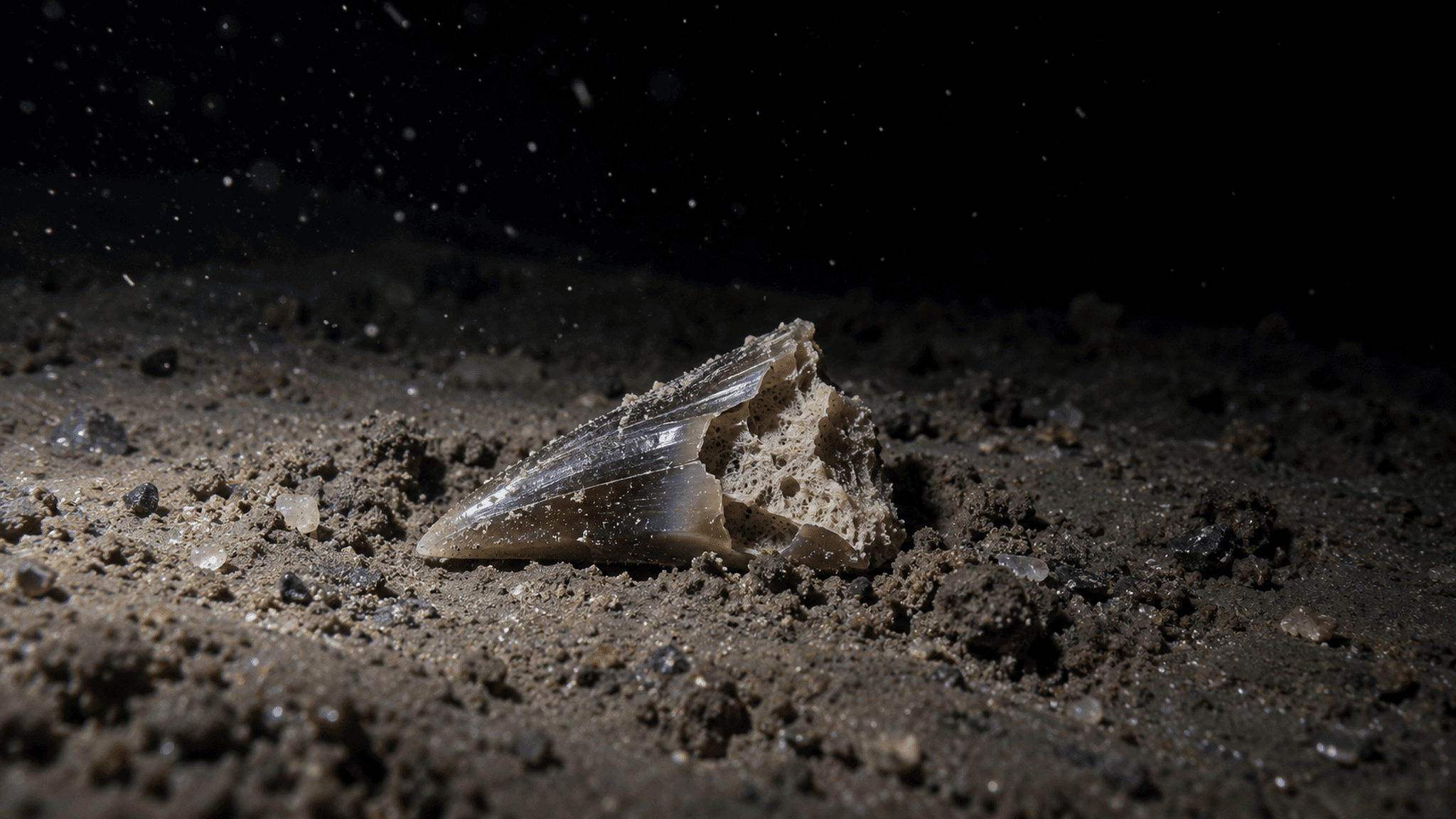
A shark tooth is lodged in the skull
A tooth from the sixgill shark Hexanchus gigas was embedded in the bone. For the authors, this shows that scavengers tore into the whale’s carcass after its death. The skull suffered further damage only millions of years later: during recovery, a construction crane struck it from the side and across the upper front.
The whale lived in the sea that once covered present-day Antwerp.
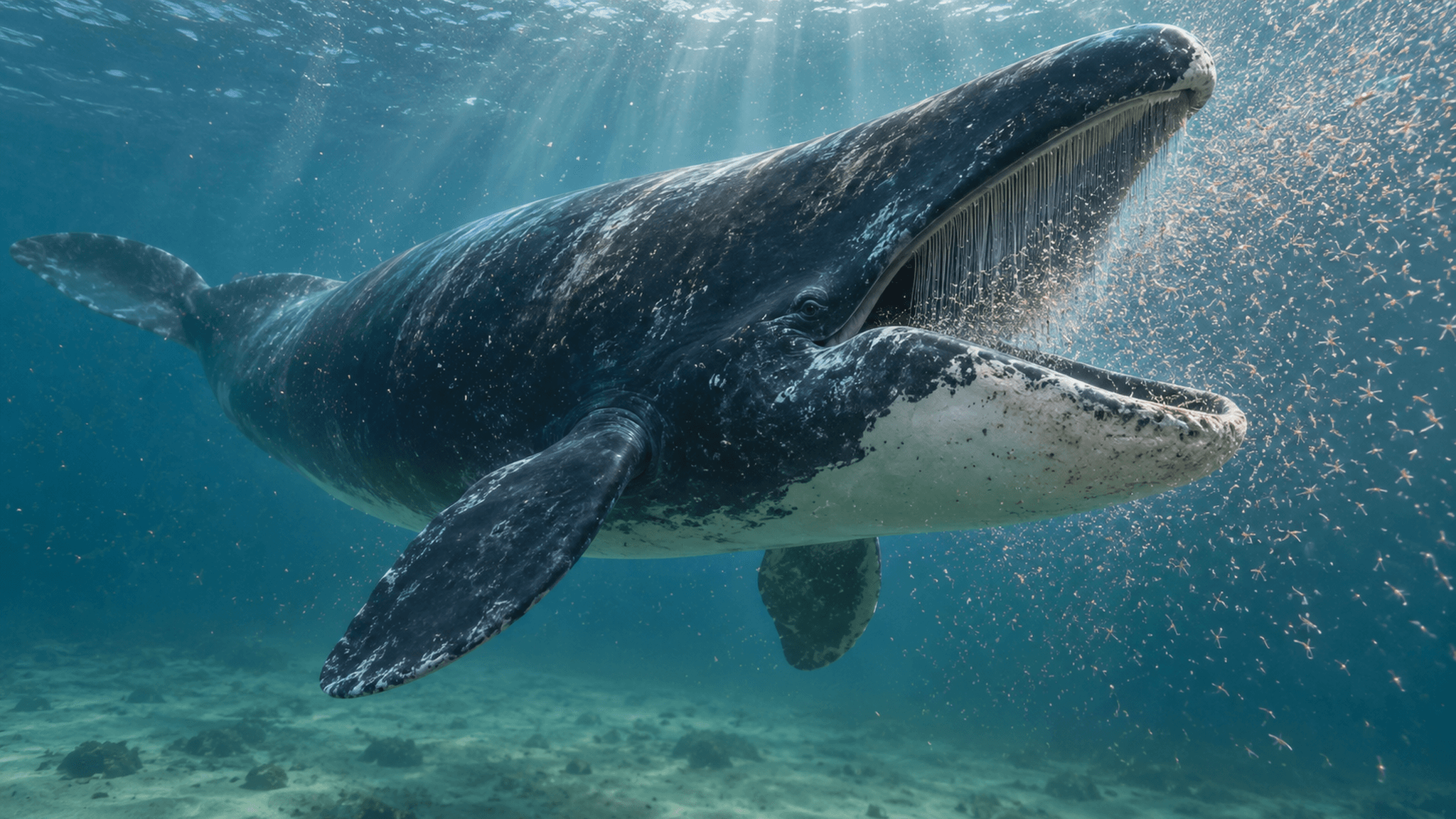
Modern right whales and bowhead whales use their baleen to sieve tiny crustaceans from the water. They swallow vast quantities of copepods, making them key species in the ocean. The ancient sand now forms a dark, greenish-grey layer beneath Antwerp, and pollen preserved within it dates the whale to between 5.0 and 4.4 million years ago.
The ear reveals the family
The strongest clue comes from the petrosal, the hard bone surrounding the inner ear. It resembles that of the modern bowhead whale (Balaena mysticetus) so closely that the authors call the similarity “striking”. The back of the skull also separates the groups: in the bowhead whale, it rises more steeply than in modern right whales of the genus Eubalaena.
The researchers placed the newcomer alongside every known right whale species. They then sorted the animals into a family tree according to shared physical features. Several early branches and two major limbs emerged.
One limb leads to the bowhead whale, the other to Eubalaena. Quasibalaena portisantuerpiae falls on the bowhead limb. Until now, bone comparisons and genetic analyses have produced conflicting family trees for right whales, and every fossil carrying new features can shift the picture.
Small first, colossus later
The modern bowhead whale shows how immense this lineage eventually became. It grows up to 19 metres long and weighs around 90 tonnes, as much as 60 medium-sized cars. Its arched skull accounts for more than a third of its body length and breaks through sea ice up to 20 centimetres thick.
The lineage began with the opposite trend. According to the size reconstruction, animals at the origin of the bowhead limb shrank, while most other right whale branches probably began at a medium body size. The authors interpret the gigantic build of today’s bowhead whale as a separate, recent development.
When that growth spurt began remains unknown. The authors consider the Ice Age a possibility, meaning roughly the past two and a half million years. Bowhead whales and Eubalaena therefore became giants along separate paths.
An ancestor from Patagonia points the same way
The 2017 redescription of Morenocetus parvus had already identified this double rise to gigantism. It is the oldest recognised right whale: around 20 million years old, found in Patagonia, Argentina, and comparatively small.
Its place in the family tree has long been disputed. The 2017 study placed it alongside all other right whales, but warned that the result had weak support and many missing features. Other studies pushed it outside the family altogether; the new analysis positions it as an early side branch near the family’s root.
The Antwerp skull now gives the double rise to gigantism support from another fossil. What drove both lineages to such immense sizes remains unknown. Today’s largest right whales do not descend from a single giant ancestor, and at least one of their lineages first became smaller before growing into a colossus.
---