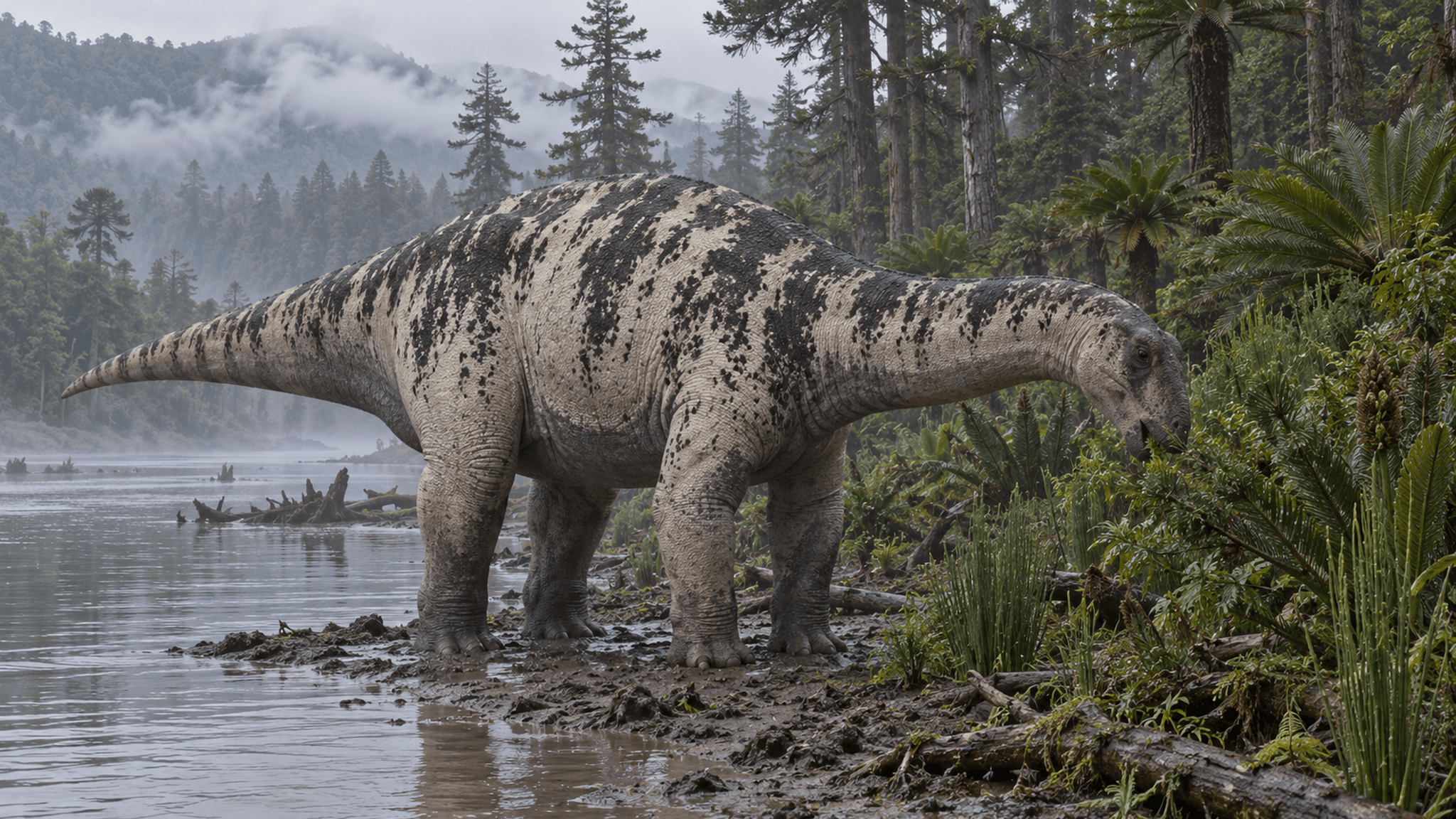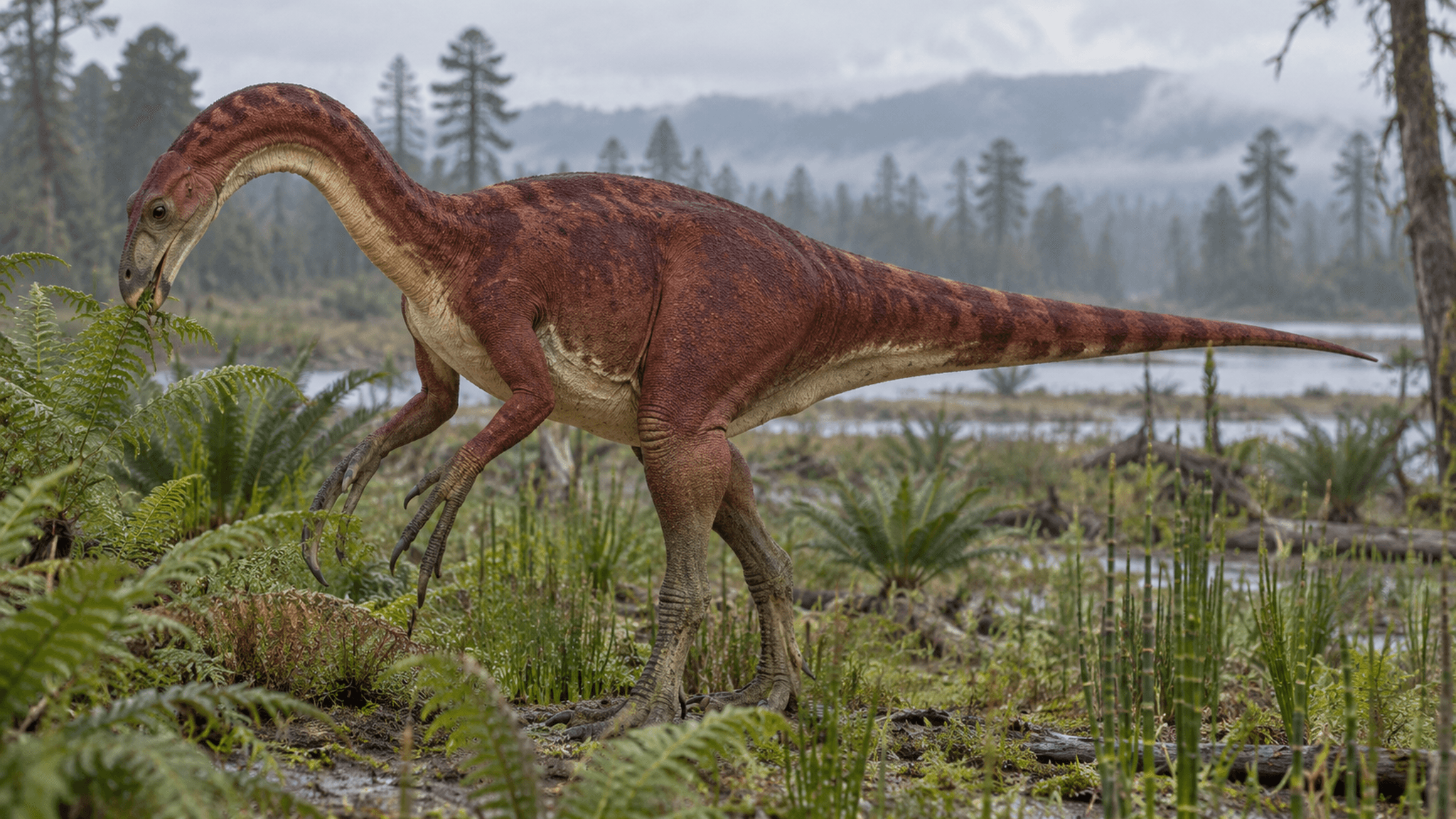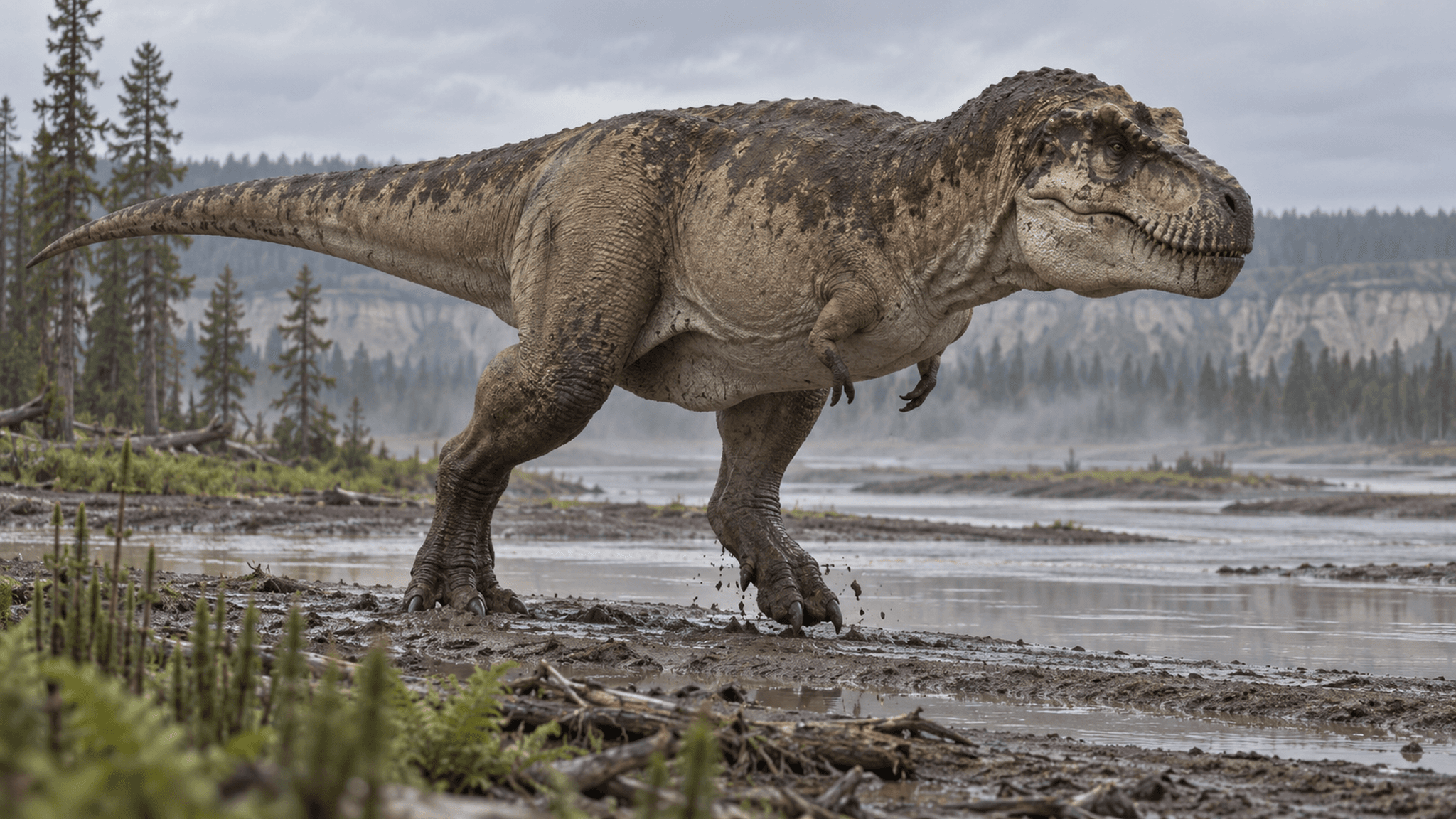
A suspicion immediately takes hold: were the small predators following the giant? First, a tougher question must be answered. How can a print in rock reveal when it was made?
Tracks in Abundance, Shared Appearances Far Rarer
Yorkshire’s Cleveland Basin is a treasure trove for track researchers. During the Middle Jurassic, dinosaurs roamed here in large numbers and pressed their feet into the ground.
That abundance comes with a catch. A print shows what kind of animal walked here. By itself, it does not show when that happened.
Two tracks on the same rock surface may have been made at the same moment or a long time apart. Any claim that animals were present simultaneously therefore needs more than two prints lying side by side.
A Giant Foot Among Predator Prints
The new site breaks the familiar pattern. It holds a single print from a large ornithopod. That is the name for a group of herbivorous dinosaurs.
Immediately beside it are several prints from smaller theropods. This group includes the carnivorous dinosaurs.
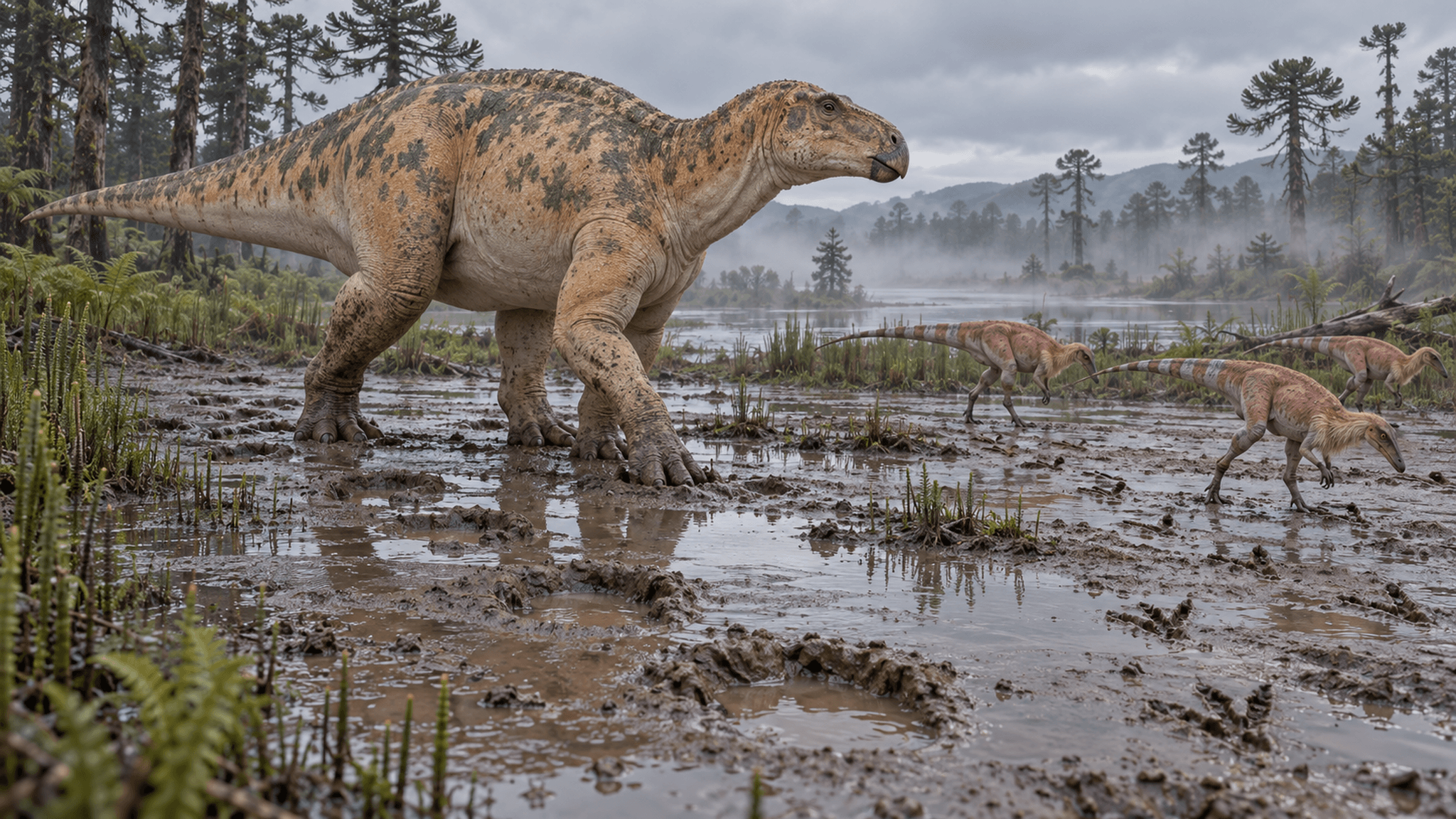
The footprints are not scattered somewhere across the landscape. They lie close together within the same area. The contrast could hardly be greater: a large herbivore on one side, several smaller carnivores on the other, all on the same patch of ground.
Two Dinosaur Types, Probably One Window in Time
Now comes the finding that makes this site stand out. According to the researchers’ evidence, the prints were probably made at around the same time. The giant and the smaller animals were therefore probably moving through this place during the same period.
That gives the surface a new meaning. A collection of isolated footprints becomes probable evidence of which dinosaurs shared the same habitat at the same time.
One possible reconstruction looks like this: the large herbivore plants its foot in damp ground, and the surface yields beneath its weight. Shortly before or afterwards, smaller predators cross the same ground and drive their footprints into the mud.
A Jurassic Hunt? Here the Tracks Fall Silent
Why did the giant and the smaller dinosaurs converge here? The authors offer a cautious interpretation of their behaviour. It includes a possible predator-and-prey scenario.
The idea is electrifying: smaller carnivores closing in on a large herbivore. The prints do not prove it, and the researchers explicitly present the idea only as a cautious suggestion.
Footprints can give us no more. They record who walked where and remain silent about everything that happened afterwards.
One Patch of Ground Shows Who Probably Shared the Same Place
Bones show how a dinosaur was built. Tracks from the same window in time can show which animals shared a habitat and which other creatures an animal might have encountered there.
Evidence like this is much rarer in Yorkshire than isolated trackways. That is why this discovery carries weight: it offers a brief glimpse of herbivores and predators living alongside one another during the Middle Jurassic.
Somewhere in this ancient Yorkshire landscape, a large herbivore put its foot down, and smaller predators were probably nearby at the same time. The tracks cannot tell us whether they actually met or how any encounter ended.
---