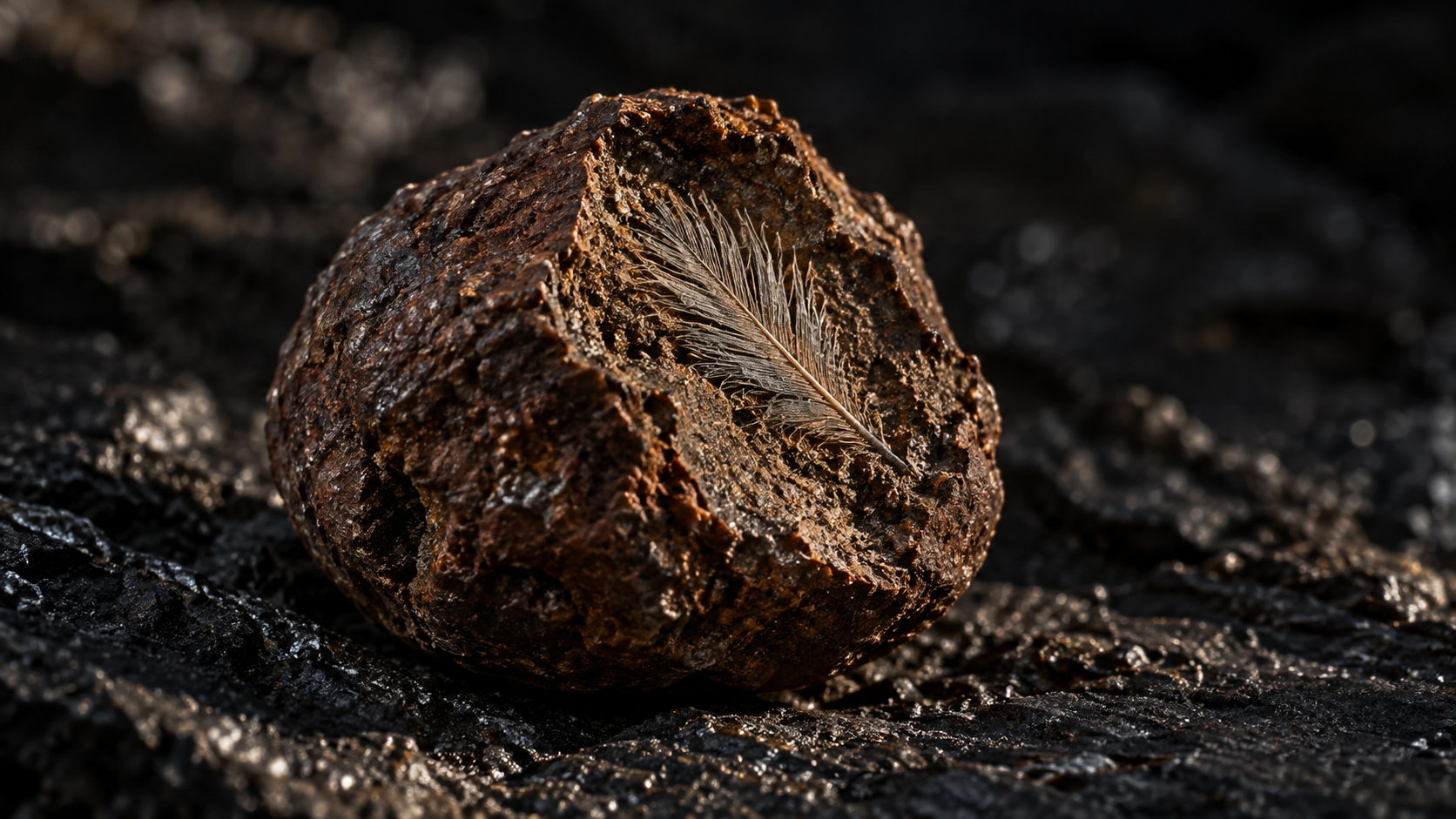
David DeMar Jr. was looking for fish fossils in 2016. In the Hell Creek Formation of eastern Montana, he spotted a dark reddish-brown object about half the size of a golf ball. He picked it up and examined its surface through a hand lens.
There was a tiny feather. A delicate piece of a bird's plumage had survived inside this unremarkable lump. Its broken surface had exposed it – a lucky discovery that changed how the whole object looked.
The surprise was in the poop
The object turned out to be fossilised dung, or a coprolite. The research team examined its mineral composition and scanned it using computed tomography, or CT. That allowed them to look inside, beyond the exposed feather.
As the images came together, more appeared: additional feathers, tiny fish scales and a bird's leg bones. This small lump held a whole collection of different remains. What first caught attention on the surface continued within.
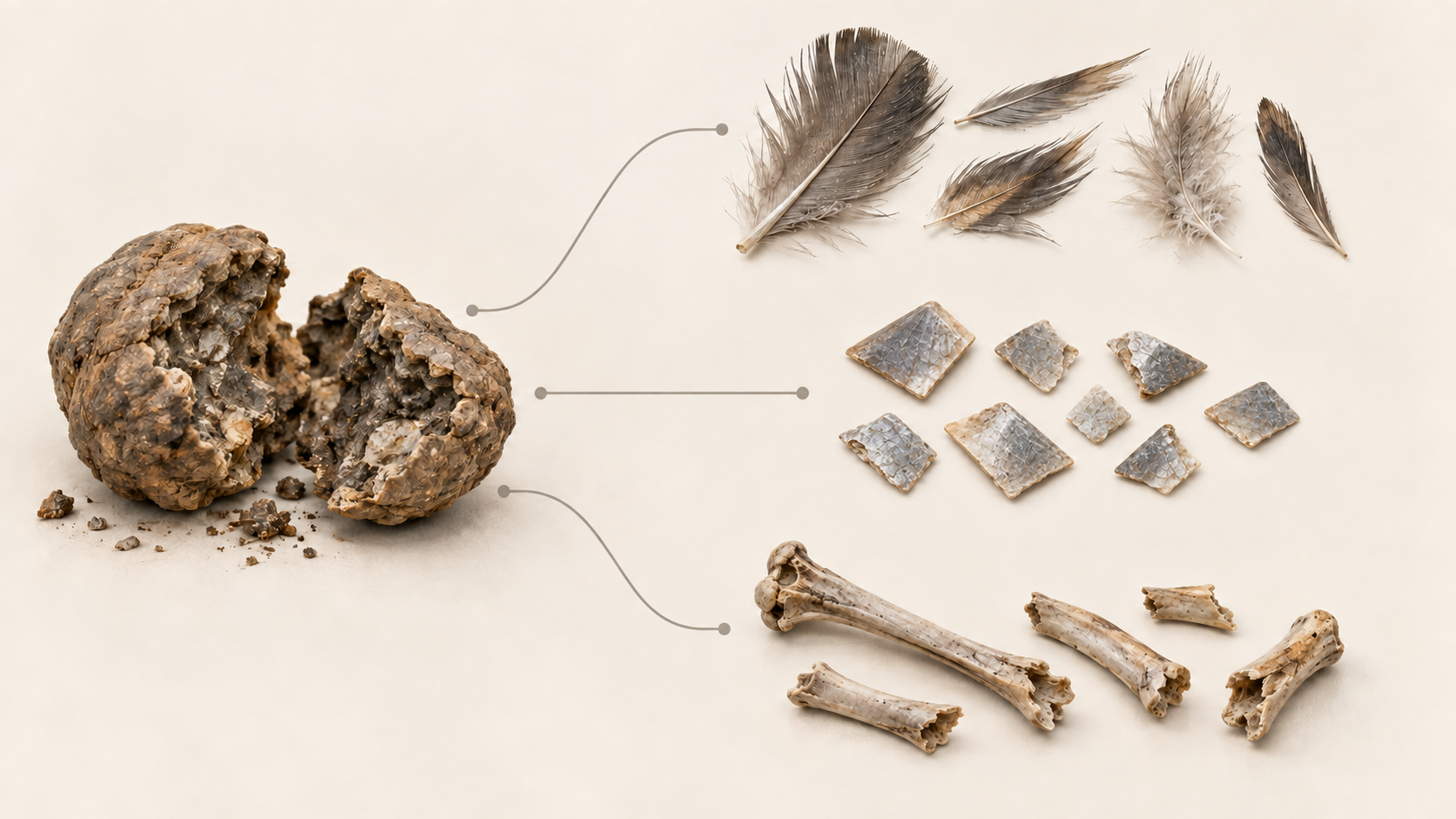
The scales came from a gar. The team identified the leg bones as belonging to a hesperornithiform, a member of an extinct group of aquatic birds. From those associated remains, the researchers infer that the feathers belonged to that bird too.
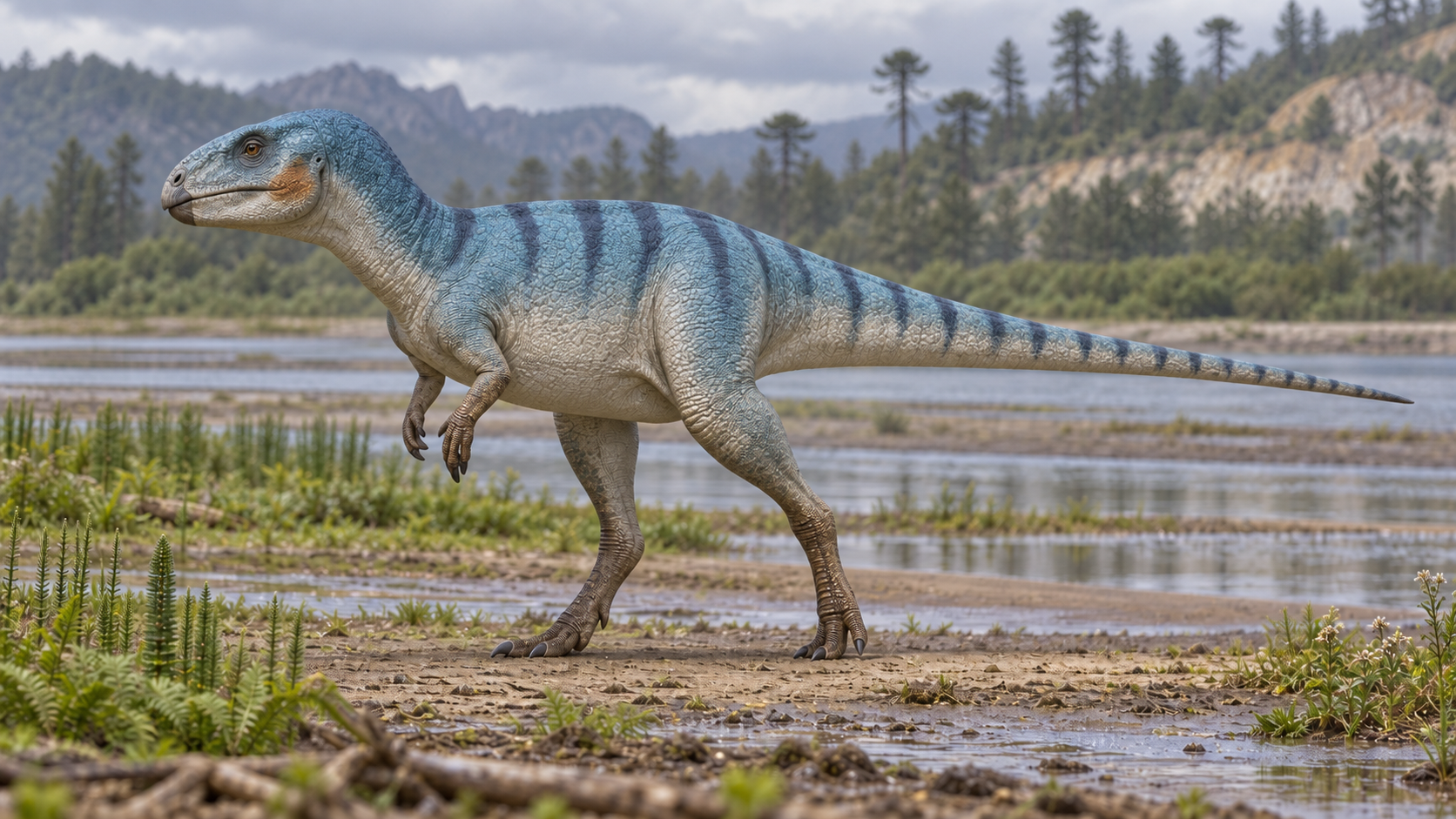
The animal that left the dung has not been securely identified. The Field Museum mentions T. rex and Nanotyrannus as possibilities. The remains do not establish a particular predator.
A meal becomes a fossil
The combination of dung and bird remains points to a bird having been eaten. The lump therefore preserves traces of a predator-prey relationship. The additional fish scales do not, however, establish a definite sequence in a food chain.
For Field Museum researcher Jingmai O'Connor, those small pieces were part of the attraction. She is lead author of the study published in Current Biology on 10 September 2026. The team described the discovery in releases from the Field Museum and the University of Washington.
They did not have a complete bird skeleton in front of them. Instead, feathers and individual bones had to provide the clues together. Those remains led to a first: according to the team, these are the first known feathers of hesperornithiforms.
A look inside the feathers
Two feathers show a striking combination. Their shafts have a square cross-section and a sponge-like centre. The team recognises these features in living birds and their immediate ancestors.
This combination had not previously been known in a feather from the Mesozoic era. Looking inside therefore reveals more than a beautiful outline. It exposes the structure of the material that formed part of this ancient bird's plumage.
But its feather coat apparently included more than modern-looking feathers. The dung also contains smaller, simple, fuzzy body feathers. Modern and more primitive features occur together here.
Some feathers appear, in the researchers' assessment, to have suited life in water and may have been waterproof. Alongside them are the simpler body feathers. That mixture makes the find relevant to a much bigger question.
Living by water was not enough
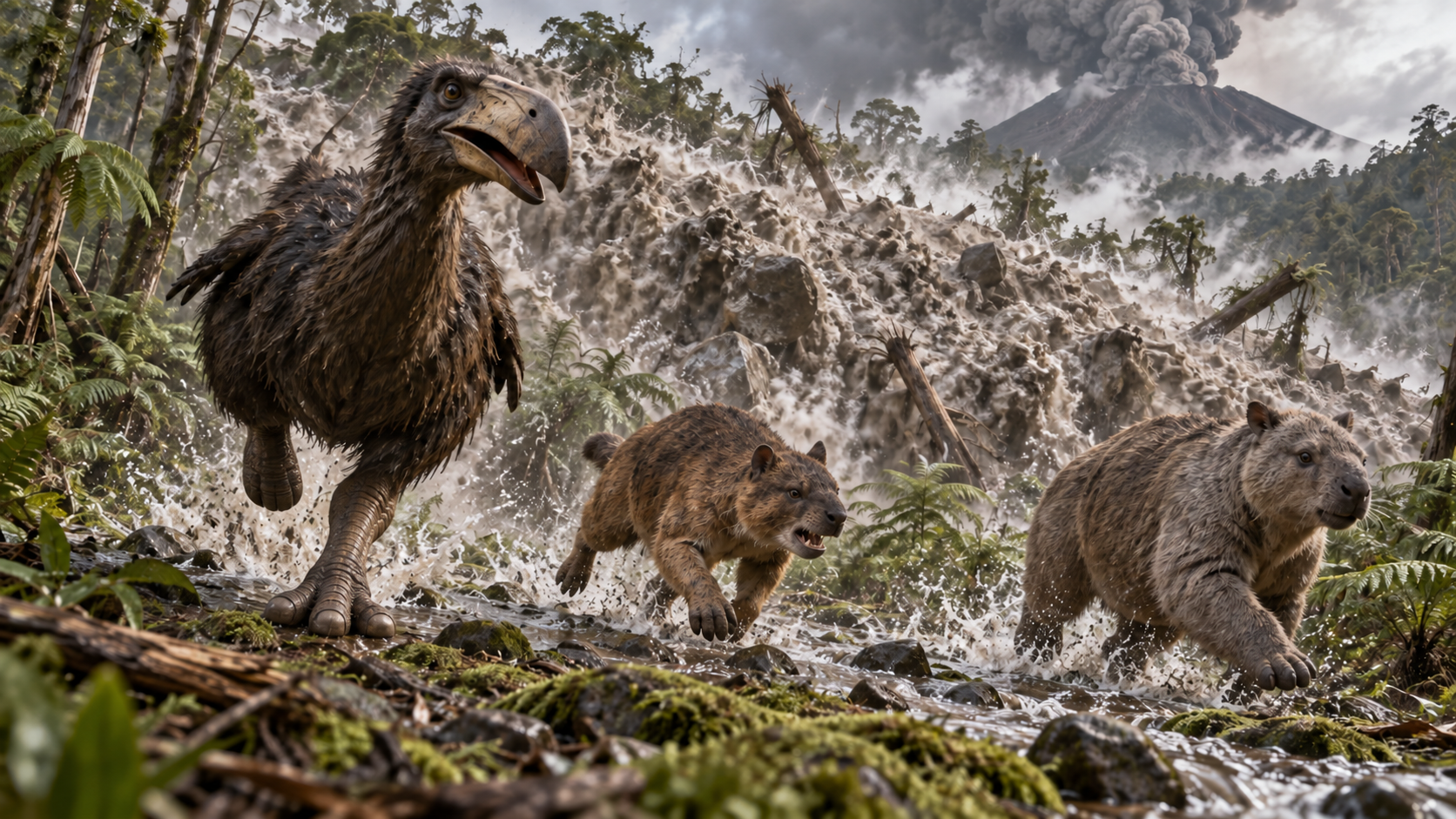
Hesperornithiforms lived around water – yet their group died out at the end of the Cretaceous. Other birds survived the mass extinction. Every bird alive today belongs to the group Neornithes.
Living near water has been proposed as a possible advantage for the birds that survived. But these extinct aquatic birds show that the habitat alone does not provide a complete explanation. O'Connor and her team are therefore looking at plumage.
The crucial idea concerns insulation. Body feathers help birds retain warmth. Simpler feather types might have been less effective than the corresponding plumage of living birds.
Small feathers, a huge survival question
After the asteroid impact, poorer insulation could have become a disadvantage during the cold impact winter. The team also considers differences in moulting as a possible factor. Feather structure and feather replacement might therefore have helped determine which bird groups made it through.
This remains a hypothesis: the dung fossil neither proves poorer insulation nor explains the different survival outcomes on its own. It supplies preserved feathers that can help researchers investigate those questions more closely. Nor is the bird in the lump a demonstrated individual victim of the asteroid impact.
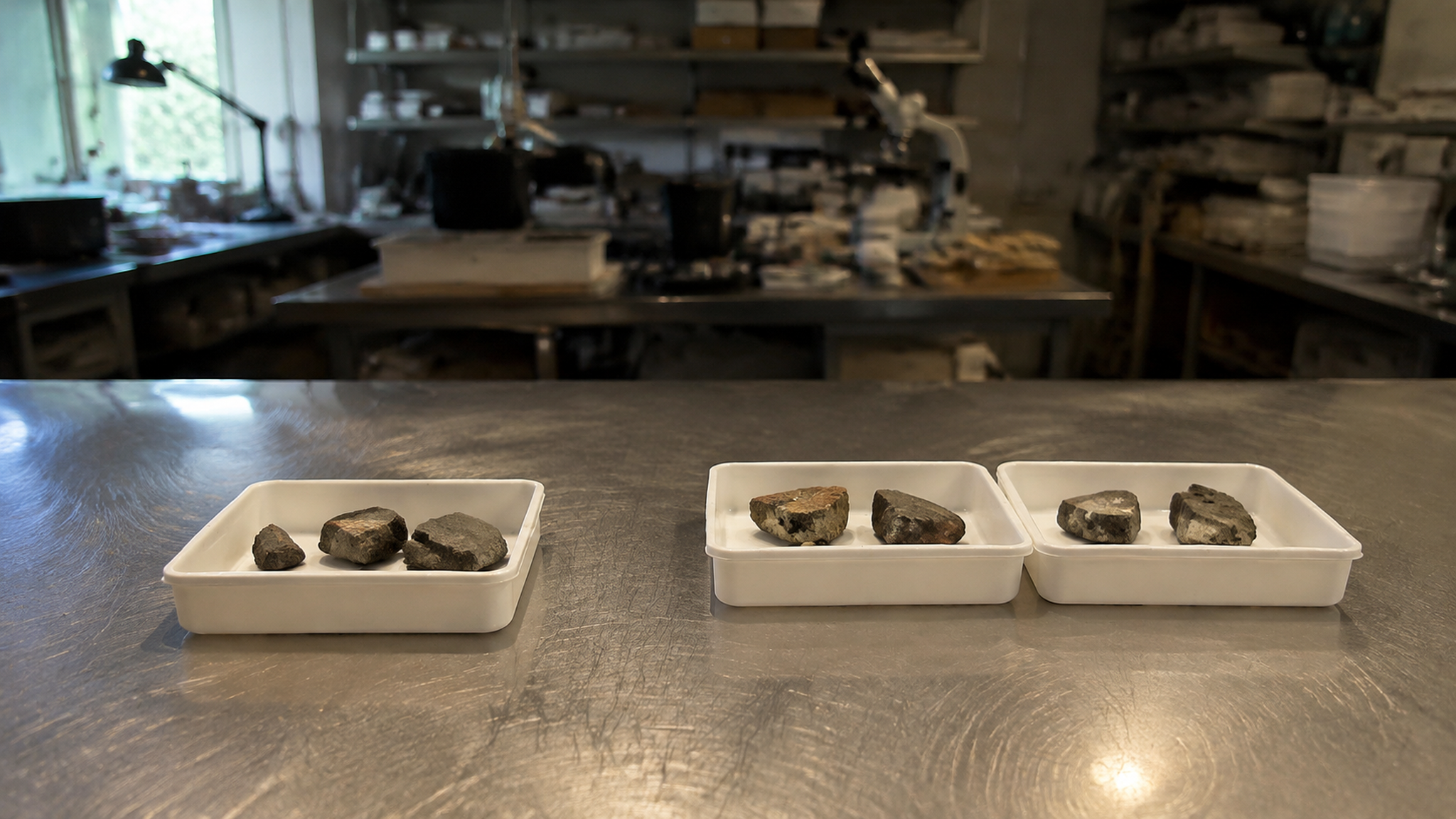
The discovery itself is remarkable enough. A piece of dung among other stones preserves feathers right down to their internal structure. The little feather on its surface led to bird legs, fish scales and a fresh clue in the much larger mystery of survival.