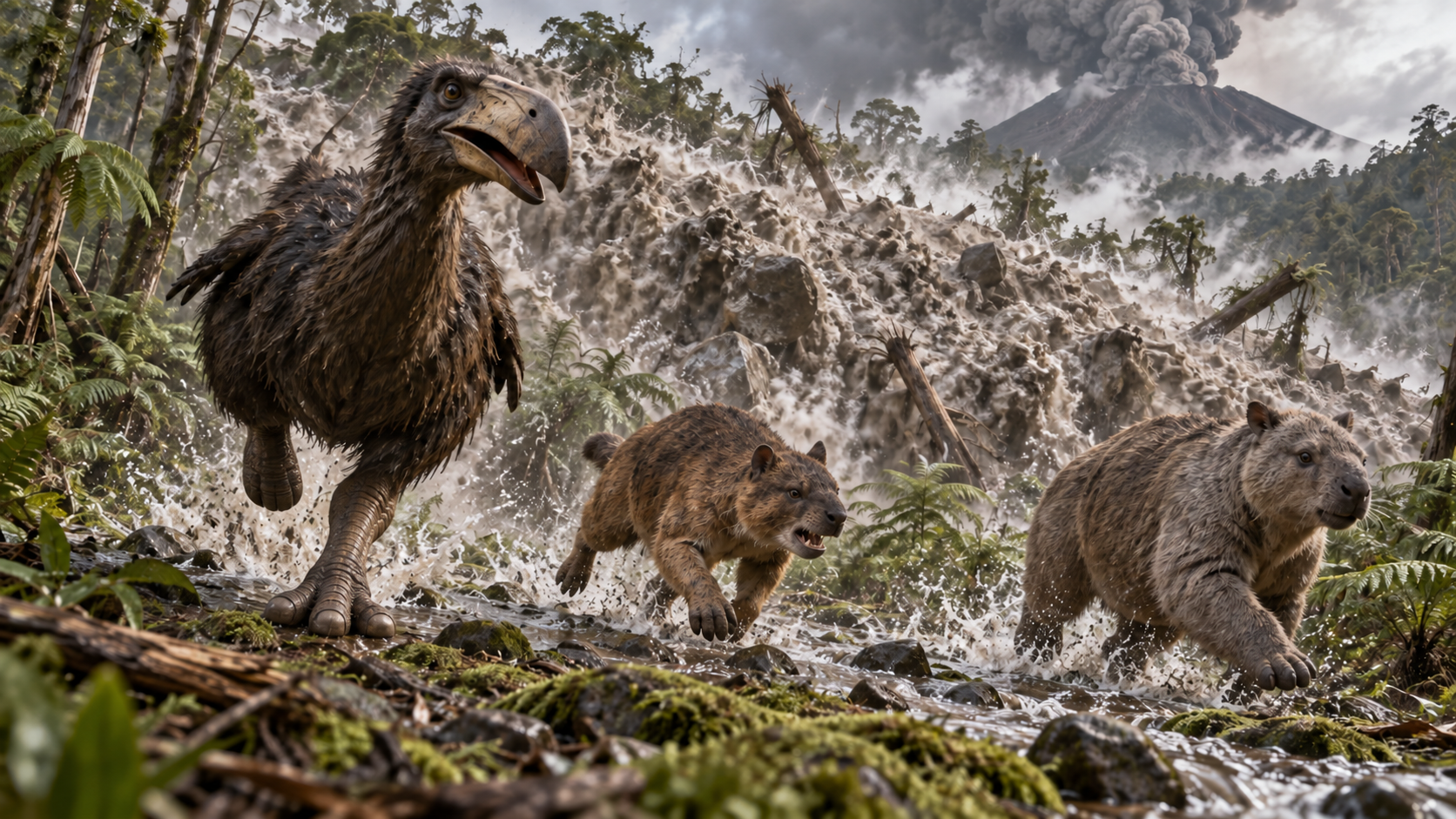
The crime scene lies in the latest Cretaceous. At the time, Haţeg belonged to an island world in the European archipelago. Much is known about its unusual dinosaurs, but the new study follows the far smaller animals that worked on dead bodies and bones.
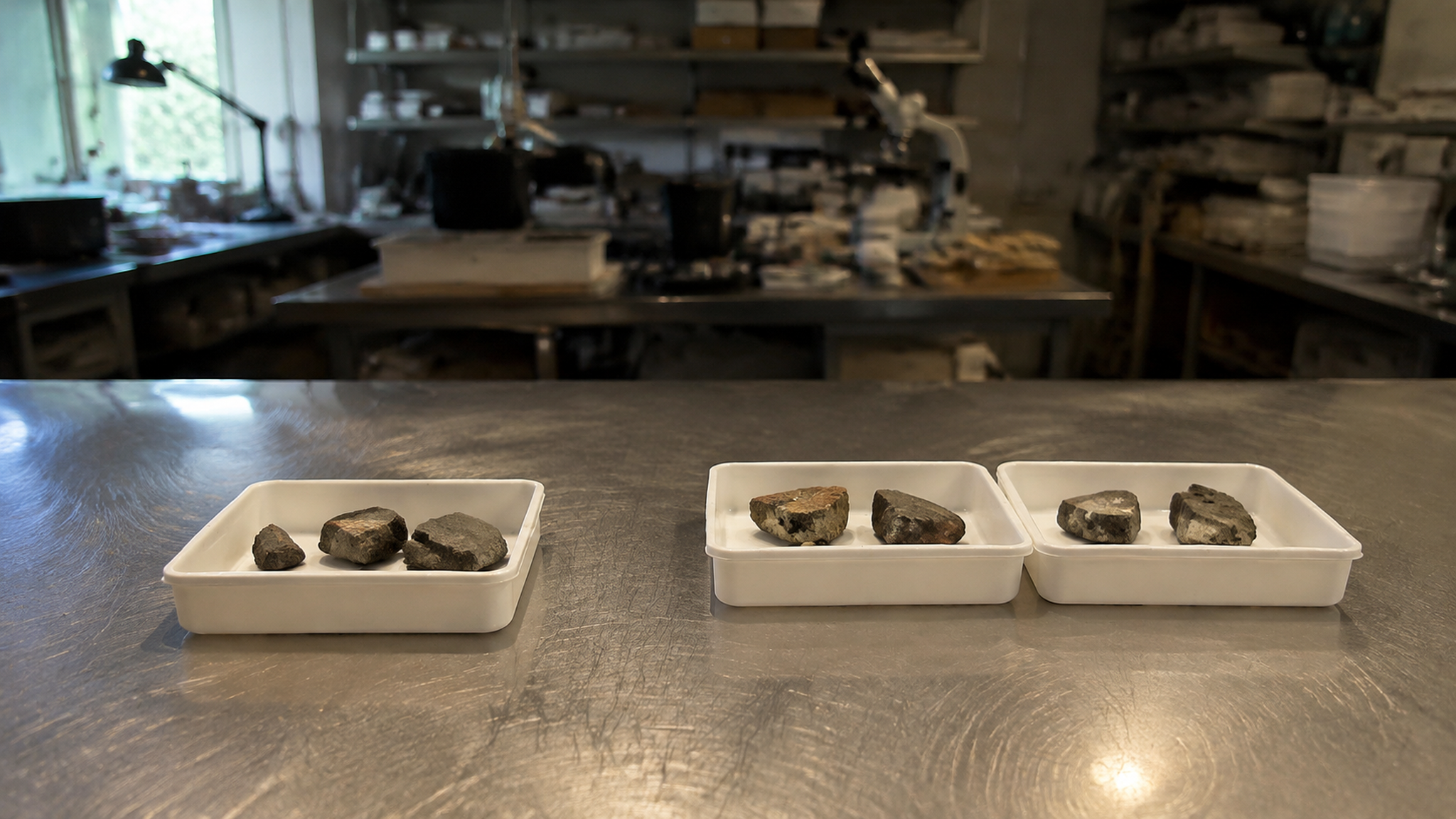
Anne Bettermann, Zoltan Csiki-Sava, Herve Bocherens and Felix J. Augustin examined fossil vertebrate remains from several rock units and depositional environments across the basin. They assigned the visible damage to six forms. The shape, size, depth and position of each trace proved decisive.
Earlier studies knew such damage mainly from a limited part of the basin. The new survey adds finds from three further rock units. It therefore shows that bioerosion was more widespread in space and time than previously documented in detail.
The altered specimens range from a titanosaur shinbone and a dinosaur calf bone to a turtle shell. Each surface supplies another link in the chain of evidence.
Tiny traces lead to three suspects
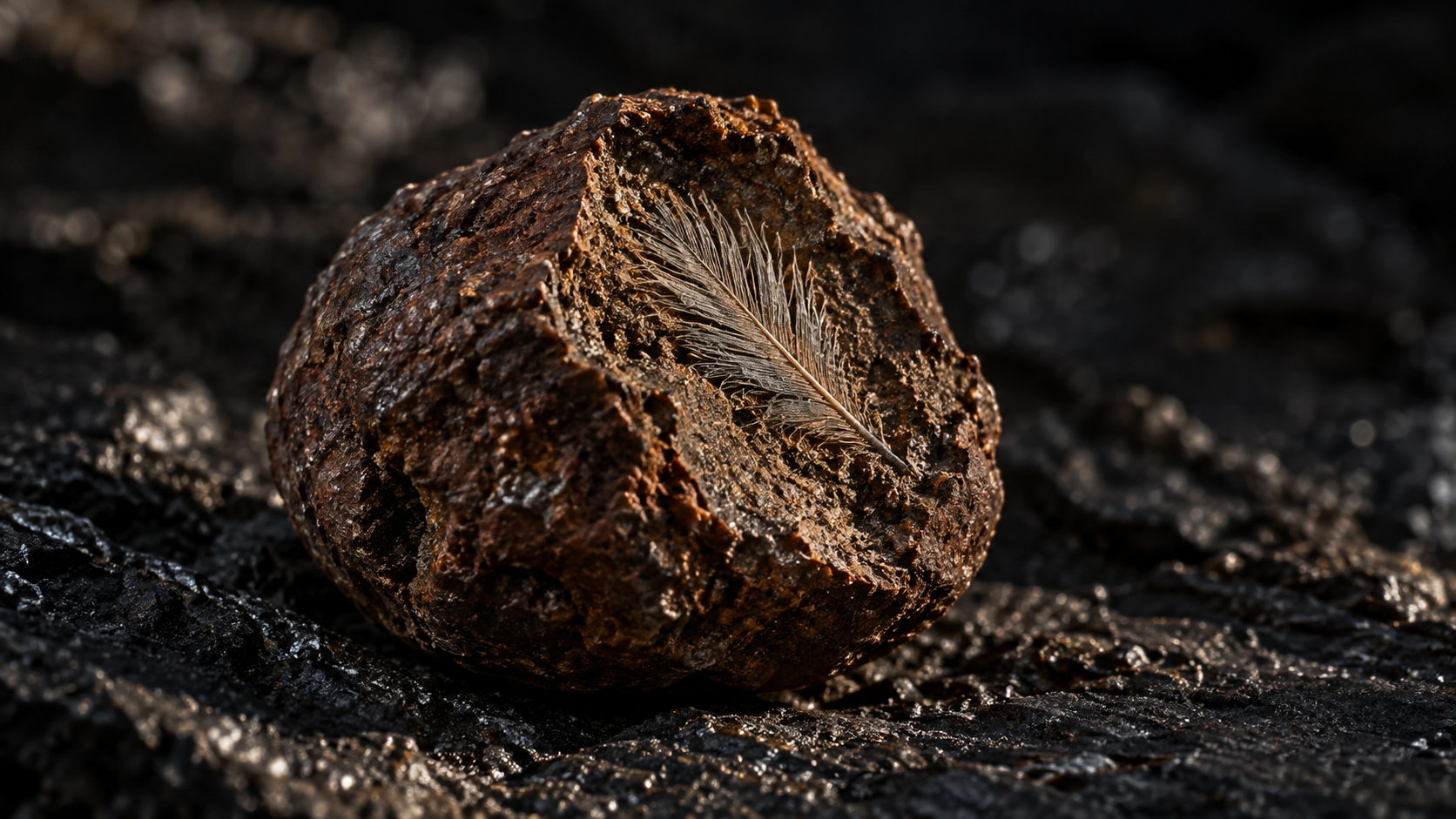
The most striking marks look like little stars. A shallow hollow forms the centre, with narrow furrows radiating outwards. Most of these pits measure about five millimetres, while one specimen reaches ten millimetres.
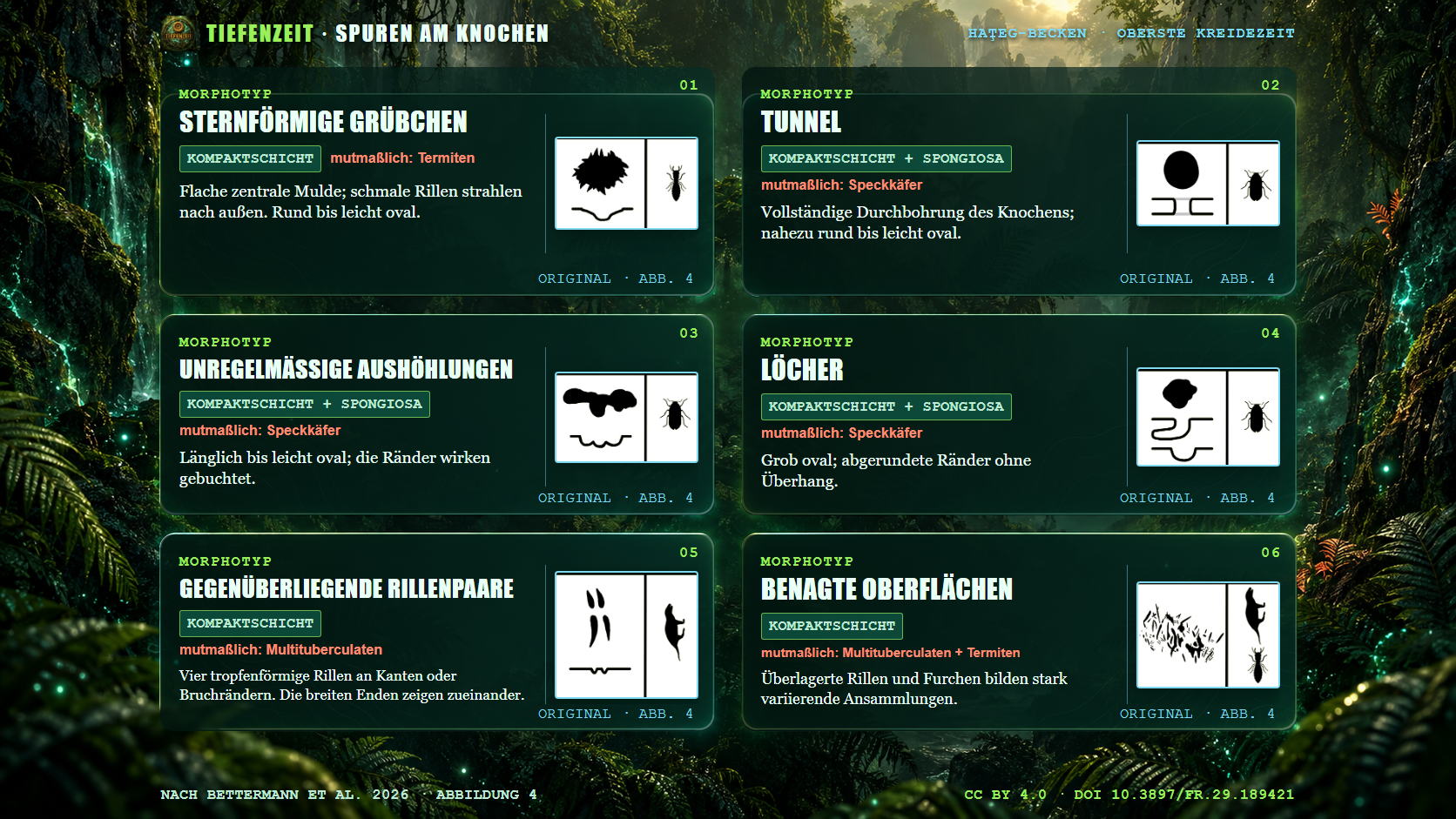
These stars occur only in the hard outer layer of bone. Comparable patterns from other sites support their interpretation as termite traces. The first group has therefore left its signature.
Other traces run much deeper. Almost circular to slightly oval tunnels cross a titanosaur shinbone and a turtle shell. Some pierce the solid outer layer, extend into the spongy interior and can perforate the entire bone element.
There are also oval holes and an irregular cavity. In a micro-CT scan—an X-ray image assembled from many layers—one hole in the turtle shell has a chamber-like shape. Such cavities match pupal chambers in which larvae transformed under protection.
The shapes of the tunnels, holes and cavities support their interpretation as hide beetle traces. Their larvae use sheltered places on modern dry carcasses for pupation. The second suspect did not merely dig at the surface: its presumed traces reach deep into the bone.
Paired grooves expose small mammals
Two conspicuous bite marks lie on the broken edge of a dinosaur calf bone from Tuştea. Each consists of opposing pairs of parallel grooves. The individual notches are no more than three millimetres long and occur on edges or fractured surfaces, not in the middle of smooth bone.
Their shape and spacing support an interpretation as multituberculate bite marks. These small, now-extinct mammals had distinctive teeth. The paired grooves record their use like a tiny imprint.
The team also documents irregularly gnawed surfaces. Scratches, furrows and notches cluster and overlap there; individual concentrations range from at least seven to more than fifty marks. In one find, the pattern covers an area of roughly ten by forty millimetres.
These irregular surfaces broaden the picture beyond the two precise bite marks. Insects and mammals could alter bone surfaces in different ways. Stars, tunnels, holes and grooves thus form an ensemble left by various scavengers.
The bones lay exposed for months
The strongest finding concerns the time after death. All six trace forms arose before the remains were finally buried. They do not provide an exact decay clock, but the examined specimens were demonstrably exposed for at least several months and perhaps longer.
The story now shifts from the culprit to the clock. The marks capture the period of decomposition and later modification. Six tiny trace forms become testimony to the carcass’s long aftermath.
Their distribution also offers a clue to the ancient landscape. Bioerosion—biologically caused destruction of bone—occurs less often in the poorly drained areas studied than in moderately to well-drained settings. Wet conditions may have encouraged faster burial or been less suitable for some trace-makers.
On many larger bones, bioerosion occurs on only one side. This fits pieces partly sinking into the ground while the exposed side remained accessible. Other bones were worked all around and were apparently fully accessible for longer.
Across several sites and geological intervals, the team encountered a similar range of scavenging animals. This supports the idea of a comparatively stable decomposer community in the habitats studied. At the same time, regional differences reveal how strongly each route to fossilisation depended on local soil and water conditions.
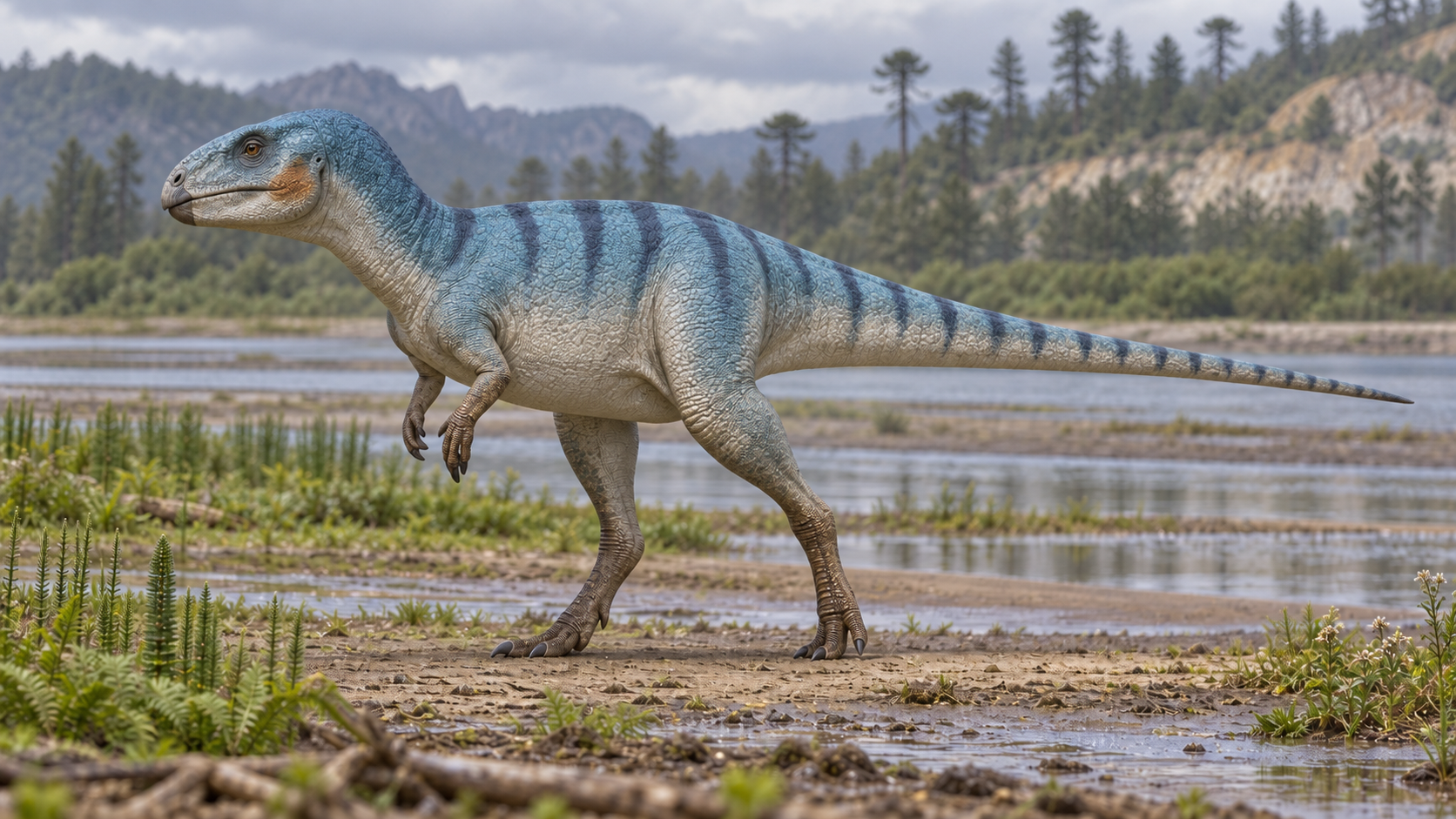
The big reveal therefore lies in damage only millimetres across. Bones preserve more than animals such as titanosaurs, rhabdodontids and turtles. They also preserve the slow aftermath at the surface: insects and small mammals left their marks before floods, transport and sediment turned remains into fossils.
Source
Anne Bettermann, Zoltan Csiki-Sava, Herve Bocherens and Felix J. Augustin (2026): *Not only boring issues: bioerosion on bones from the Upper Cretaceous of the Haţeg Basin (Romania) and the implications for carcass decomposition on Haţeg Island*. Fossil Record 29, published under CC BY 4.0. DOI: 10.3897/fr.29.189421. [Primary article](https://doi.org/10.3897/fr.29.189421)