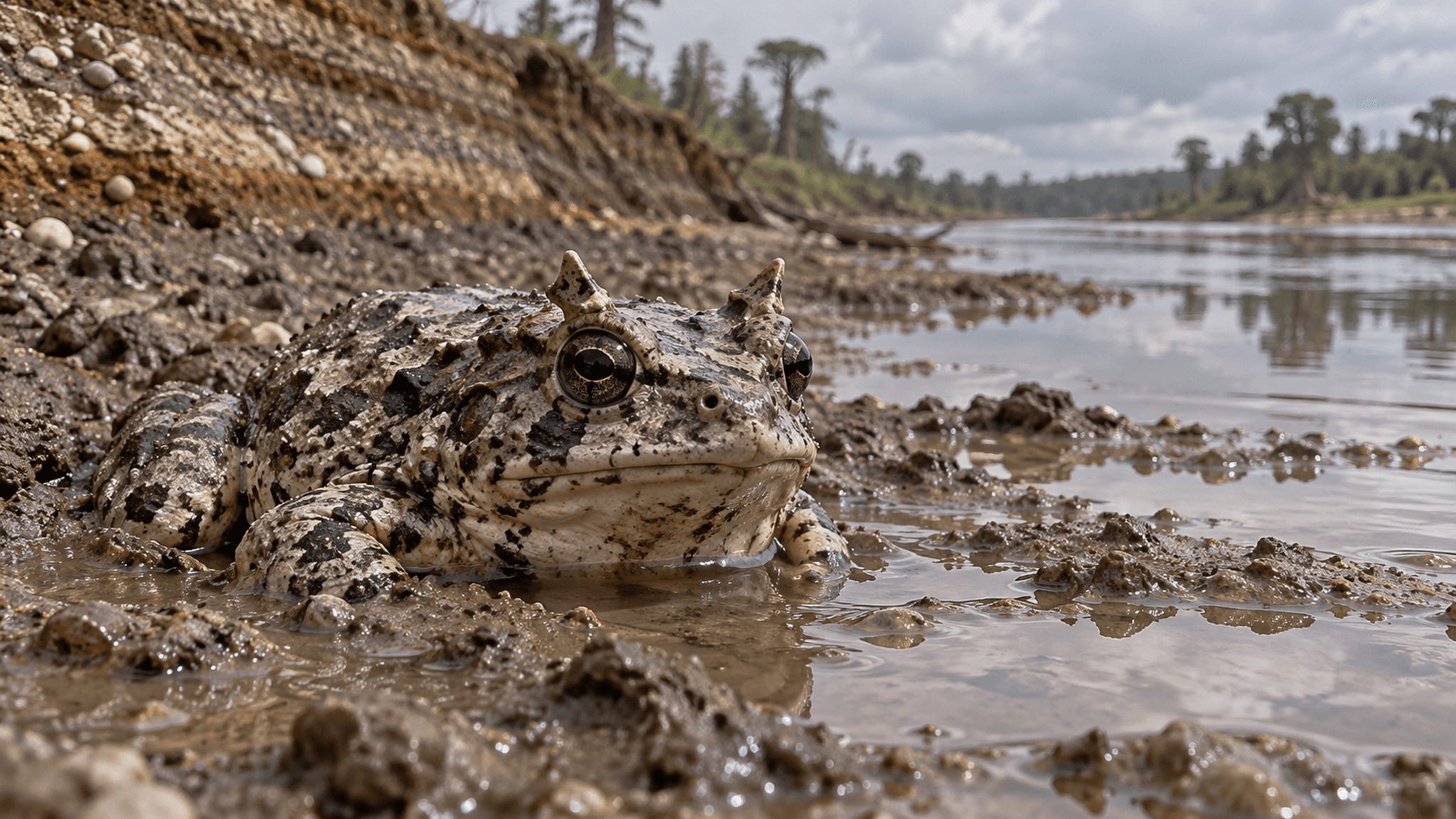
A team led by Alfred A. J. Lemierre of the Royal Tyrrell Museum of Palaeontology now presents the horned skull in the Zoological Journal of the Linnean Society. At last, an evolutionary oddity has a face. The animal is one of the modern frogs, the Neobatrachia, and the only known member of this group from the Mesozoic Era to have lived on the northern continents of the time.
A horned frog among dinosaurs
The rivers of Iharkút in Veszprém County repeatedly laid down fresh layers of gravel, sand, silt and clay. Its bones do not reveal exactly how the frog lived on this floodplain.
Much larger neighbours lived all around it. The armoured dinosaur Hungarosaurus tormai, the horned dinosaur Ajkaceratops kozmai and Pannoniasaurus inexpectatus were unearthed at the same site. The last was a mosasaur—aquatic lizard—that hunted in freshwater.
A second frog, Bakonybatrachus fedori, also comes from Iharkút. But for years, researchers could not confidently place the frog with the bony spikes.
First fragments, then two pigeonholes
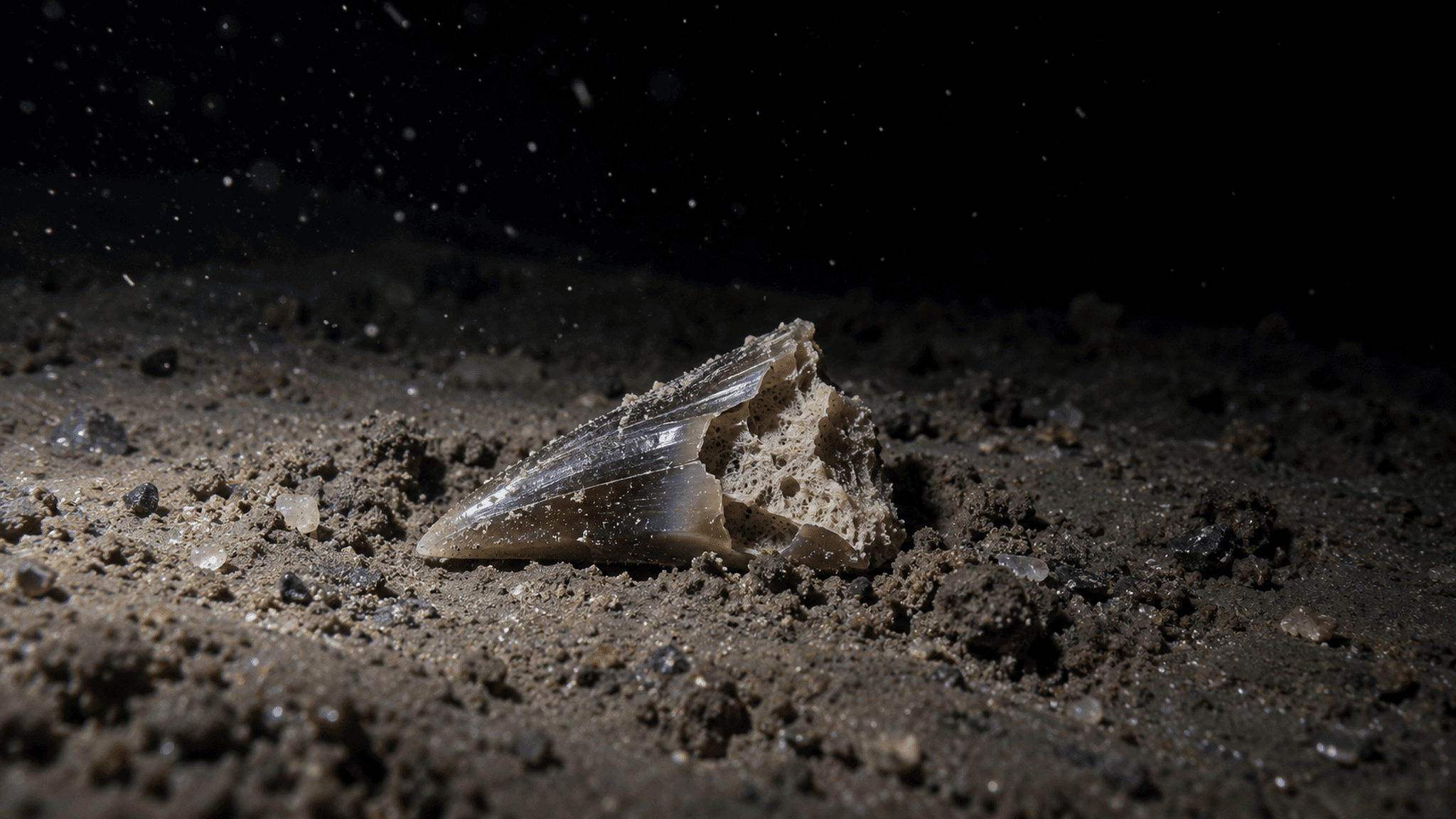
For a long time, researchers knew the animal only from fragments: hip bones, lower-leg bones, an upper jaw, and isolated pieces of the lower jaw and skull. With so little material, they first assigned the frog to one major frog group and, in 2021, to another.
The 2021 team also suggested that its ancestors had migrated from Africa to Europe through the region of the ancient Mediterranean. Until then, no articulated skull had been available.
The skull carries horns
Then the skull surfaced. It is preserved in three dimensions, and its bones remain joined as they were in the living animal. What survives is mainly the rear of the head, including the back wall, sides, floor and roof of the skull.
A horn-like projection grows from each upper rear corner. Each is formed by a bone at the side of the skull that sends two branches far backwards and ends in a point. The team had not expected this rare feature.
Only two other frog genera wear such headgear
Among all frogs, only two other genera have such spikes at the back of the head: every species of Hemiphractus and some species of Ceratophrys. In each of the three genera, the spikes have a different structure and shape.
In the South American horned frogs of the genus Hemiphractus, the bony spikes form part of a skull shield. In the Hungarian frog, they jut out as separate horns.
The trail leads to the southern continents
Then comes the twist in the family tree. The new relationship analysis compares feature after feature to determine which animals are related—and sends the trail of the Hungarian frog far south. Together with four other frog species from the Late Cretaceous, two each from South America and Africa, Hungarobatrachus szukacsi may belong to the Australobatrachia, the ‘southern frogs’.
The analysis assigns none of the five species to either of the two more closely related subgroups within this lineage. Africa therefore enters this frog’s story for a second time, now through its possible closest relatives.
If the analysis is confirmed, the southern frogs were more diverse and more widely distributed during the Late Cretaceous than previously known. One of them would then have lived on a Hungarian floodplain with horns on its head.
---