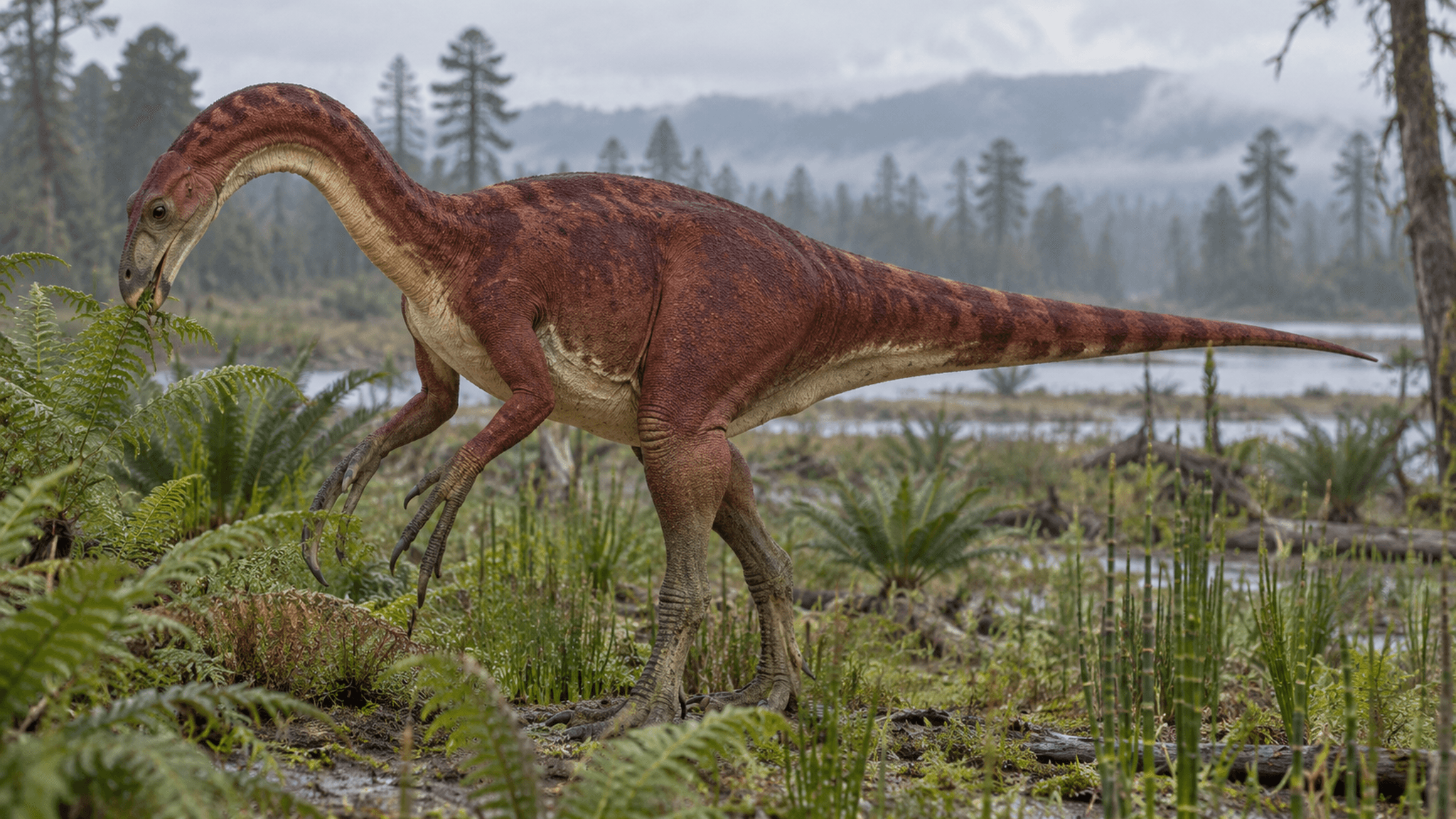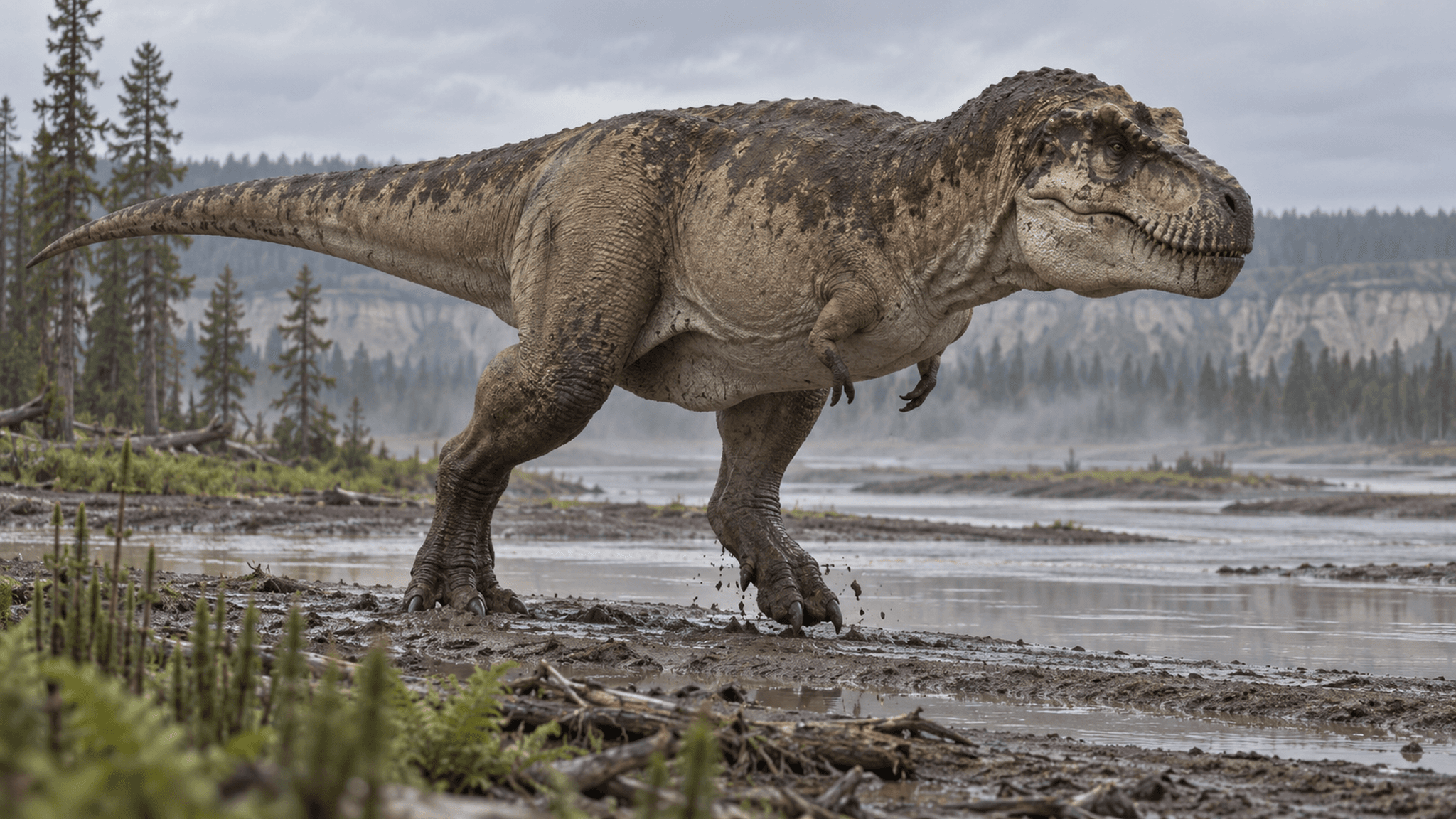
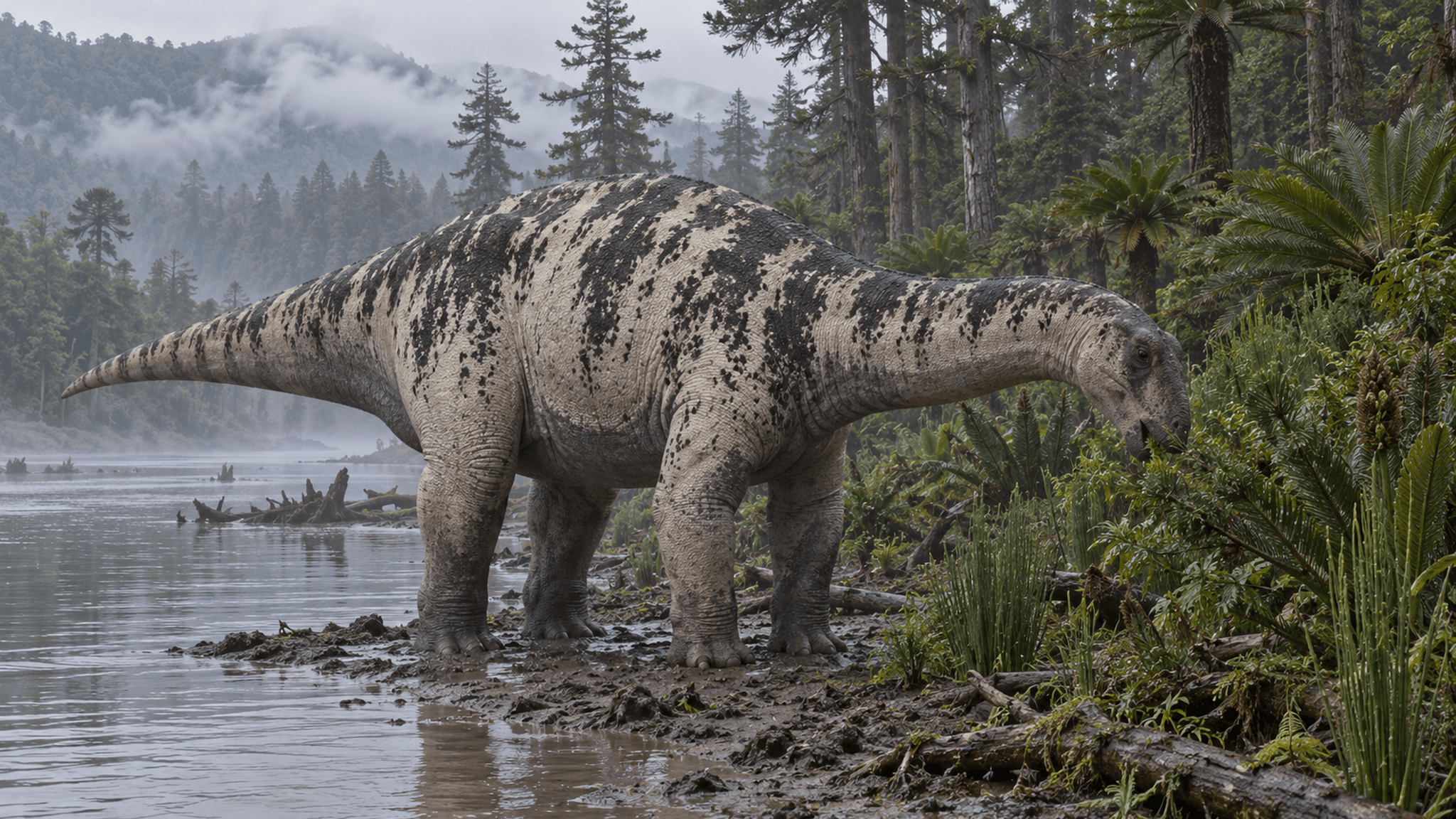
A team led by Alexis Licht of Aix Marseille University reports the findings in the journal Communications Earth & Environment. The rock layers of north-eastern Thailand are packed with bones. Their true age, however, remained unclear for decades.
Grains of Sand as Prehistoric Stopwatches
The answer lay in zircon, tiny and extremely tough crystals washed out of ancient rocks by rivers and deposited in new layers. Inside them, uranium decays into lead at a fixed rate. Experts read this built-in clock using uranium–lead dating.
The youngest grain in a layer reveals its maximum depositional age: the earliest point at which the layer could have formed. A rock can never be older than the grains it contains. The more grains scientists measure, the more reliably that youngest one emerges.
600 Grains Instead of 100: Why the Old Clock Was Wrong
This is where the team struck. For each sample, the researchers fired a laser at between 150 and 600 zircon grains. Its beam measured 25 micrometres across, about one-third the width of a human hair.
According to the authors, earlier studies often relied on fewer than 100 grains per sample. In their assessment, that is usually not enough for a robust age. Some of the older, conflicting dates can therefore be traced to samples that were too small.
The team tested six methods for calculating the depositional age against one another. In the end, the researchers chose the average of the youngest group containing at least three overlapping zircon ages. A single outlier can no longer knock the clock off course.
A Long-Neck Loses Its Record
The biggest consequence hits a famous fossil. Isanosaurus attavipachi was discovered in 1998 at Ban Non Thaworn in Chaiyaphum Province and was long considered an animal from the Late Triassic, the period before the Jurassic. That placed it among the world’s earliest sauropods, the four-legged, long-necked giants whose later members became the largest land animals of all time.
The new dating throws Isanosaurus attavipachi out of the Triassic. According to the authors, the diversification of true sauropods therefore began only in the Early Jurassic. The evolutionary clock jumps forward by millions of years.
Sauropodomorphs, the broader group containing long-necked dinosaurs and their early ancestors, are also considerably younger on the Khorat Plateau than previously assumed. The Nam Phong Formation was regarded as home to some of their oldest representatives. It now falls within the Pliensbachian, in the middle of the Early Jurassic.
Long-Necks and Predators in Step with America and Africa
Around 150 million years ago, a sauropod tears branches from a treetop. A few dozen metres away, a predatory dinosaur related to Allosaurus stands motionless. Animals like these left their bones in the Phu Kradung Formation, known for more advanced sauropods and relatives of Allosaurus.
The formation now extends from the Kimmeridgian to the early Berriasian, roughly 155 to 140 million years ago. It therefore spans the end of the Jurassic and the beginning of the Cretaceous. Only this dating makes a direct comparison with two of the world’s best-known fossil sites possible.
The Morrison Formation in the western United States dates from the Late Jurassic, around 163.5 to 145 million years ago. Apatosaurus, Diplodocus and Allosaurus lived there. Tanzania’s Tendaguru Formation spans roughly 165 to 130 million years ago and shows striking similarities to the fauna of Morrison.
According to the new study, the Phu Kradung fauna largely overlaps with both in time. Thailand’s long-necks and predators therefore shared their age with the stars of American and African museums.
From a Giant Bone in a Riverbed to a World of Bird-Hipped Dinosaurs
Dinosaur research in Thailand began by chance in 1976. Geologist Sudham Yaemniyom found the thigh bone of a sauropod in a riverbed at Phu Wiang. Most of the fossils there come from the Early Cretaceous and are around 130 million years old.
At Phu Wiang, plant-eating sauropods were found alongside carnivorous theropods—predatory dinosaurs—of various sizes. The species-rich Sao Khua Formation belongs to this period. The new dating places it in the Hauterivian and Barremian, around 130 to 120 million years ago.
Then the fauna changes. In the Khok Kruat Formation, around 120 to 100 million years old, ornithischians take command, a large group of dinosaurs with bird-like hip structures.
Later still, the landscape itself transforms. A Cenomanian age, in the early Late Cretaceous, fits the younger Maha Sarakham and Phu Tok formations. Their salt and dune deposits point to dry or desert-like conditions that prevailed across East Asia at the time.
Thailand Closes a Gap in the Tropical Fossil Record
With the new timeline, changes in the fauna of the Khorat Plateau follow the same rhythm as on the ancient continents of Laurasia to the north and Gondwana to the south. The tropics, where the fossil record has remained sparse, now provide a firmly dated sequence spanning roughly 90 million years of dinosaur history. The bones had long been sitting in museums. Only the crystals gave them back their time.
---