Search & archive
Search headlines and article text. Leave the search field empty to browse every article, newest first.
57 articles · Page 2 / 5
 Dinosaurs
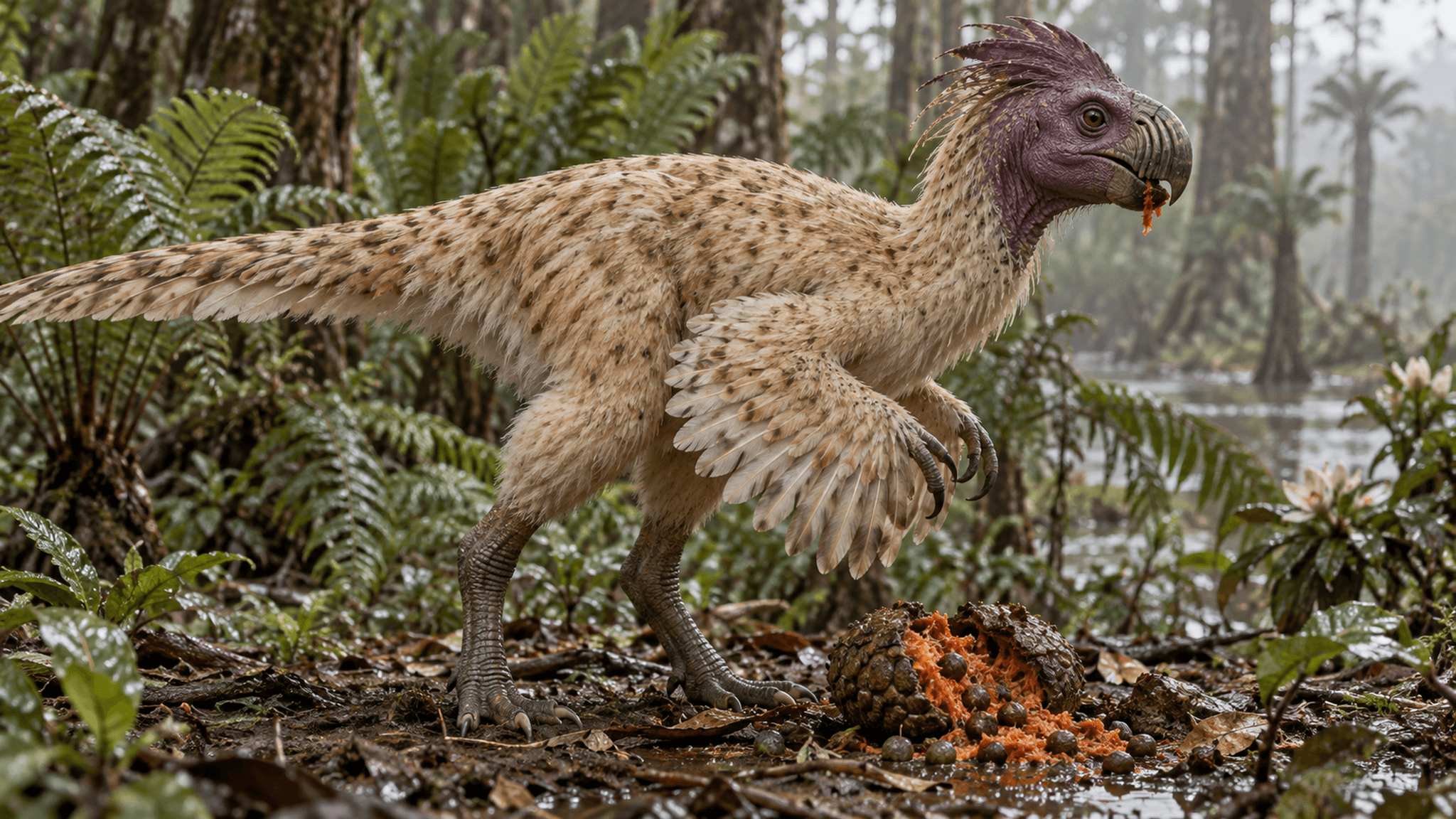
 · 12 Oct 2026Researchers have discovered a small dinosaur in North America that chewed like a parrot! *Infernogallus jamesi* slid its lower jaw backwards and forwards, crushing soft food between ridged chewing surfaces — probably juicy fruit above all. A fruit-eating dinosaur: until now, there had been no direct evidence of one.
 Dinosaurs
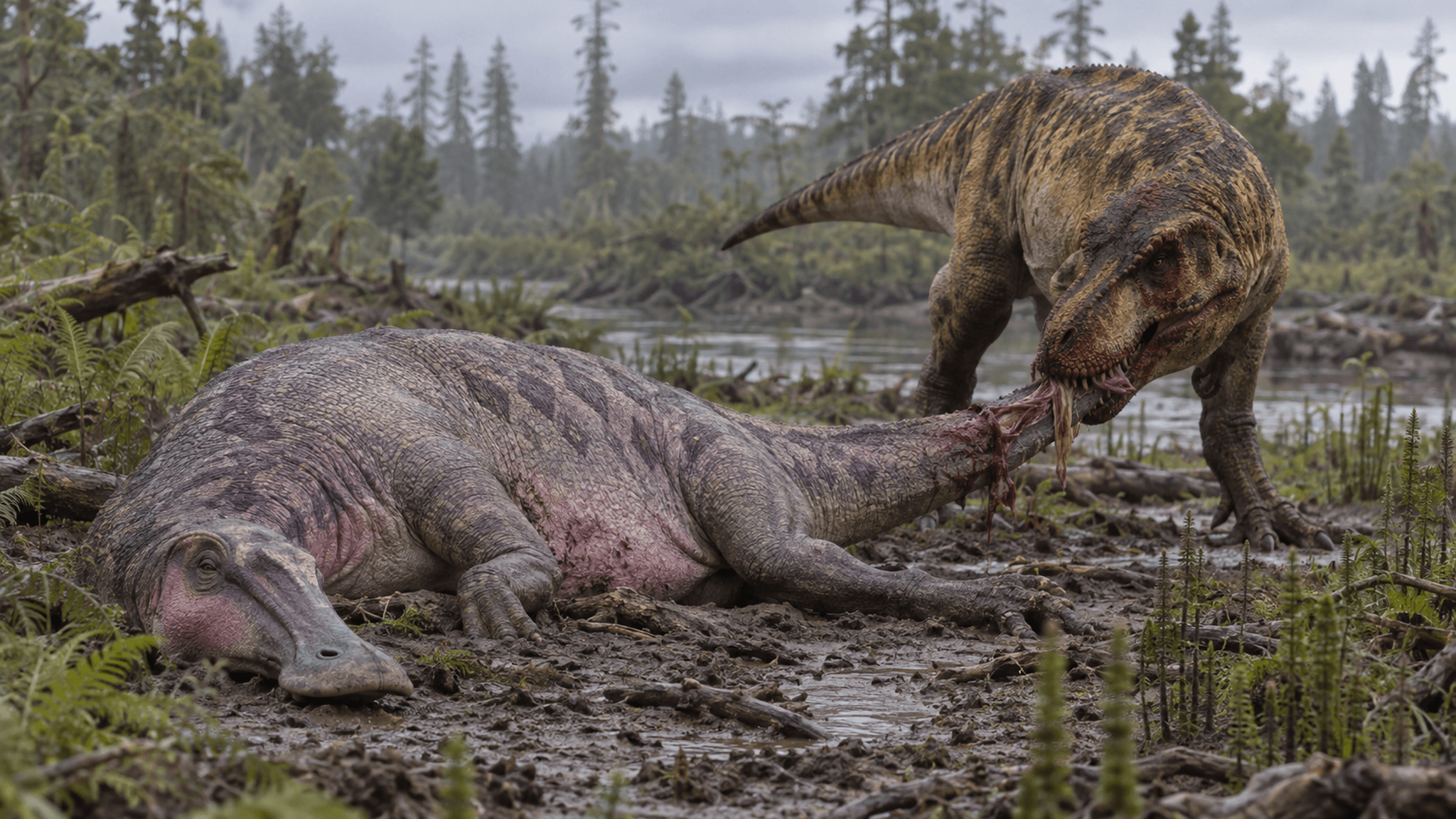
 · 12 Oct 2026A predator tugs at a carcass and tears flesh from the tail. Its teeth scrape diagonally across the vertebrae. Researchers in Canada have systematically analysed just such suspected tyrannosaur bite marks. The result: 84.7 per cent of the bitten duck-billed dinosaur vertebrae from Dinosaur Provincial Park in Alberta come from the tail. The scratches follow the flesh.
 Dinosaurs
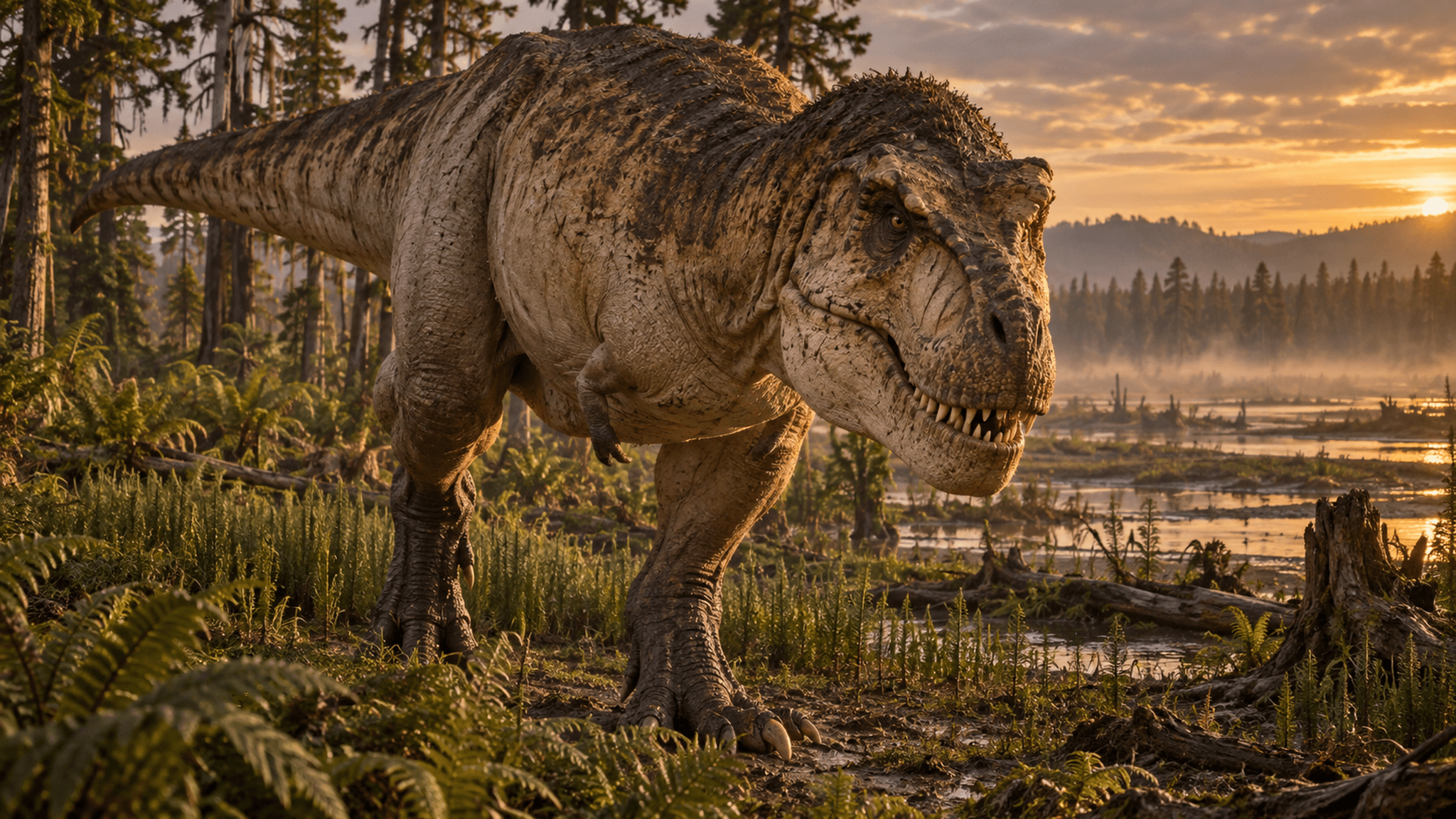
 · 9 Oct 2026A *Tyrannosaurus rex*, one of the largest predatory dinosaurs ever, seizes a large prey animal, holds it fast and bites through flesh and bone. That is the picture revealed by 3D models used by researchers in Spain to compare its skull with the heads of two other giant predators. The tyrannosaur’s shorter head is the more robust one, and its thick teeth were probably built for tremendous bite force.
 Fossil Finds
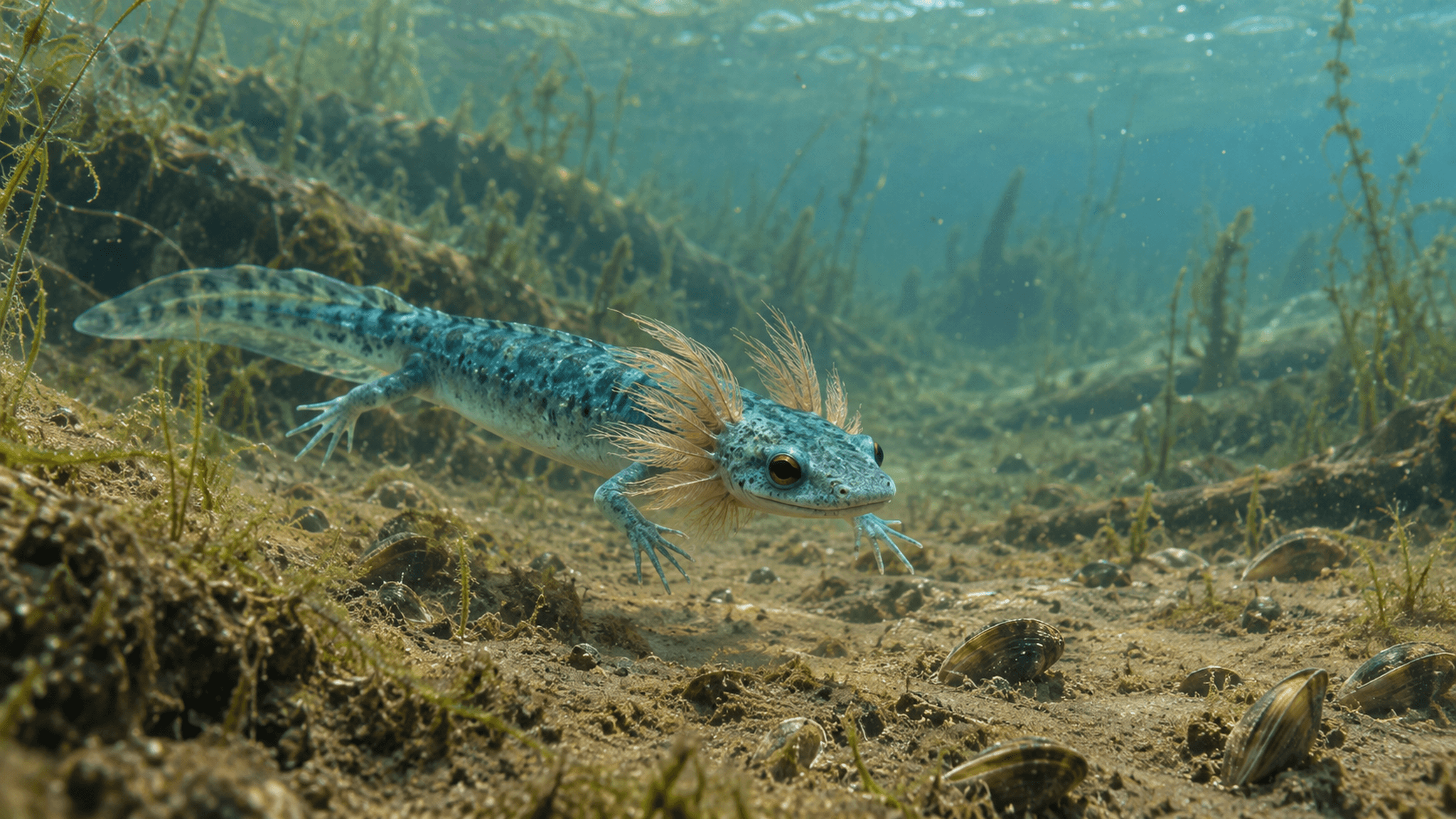
 · 9 Oct 2026An amphibian paddles through a lake in what is now Moravia, at the very beginning of the Permian period. Its original fossil is very probably lost, but new finds from Zbýšov and Moravský Krumlov rescue the species: *Moraverpeton remesi* becomes *Branchiosaurus remesi*. A new replacement fossil now serves as the benchmark, while Branchiosaurus makes its first appearance in the Permian of the Boskovice Basin.
 Evolution
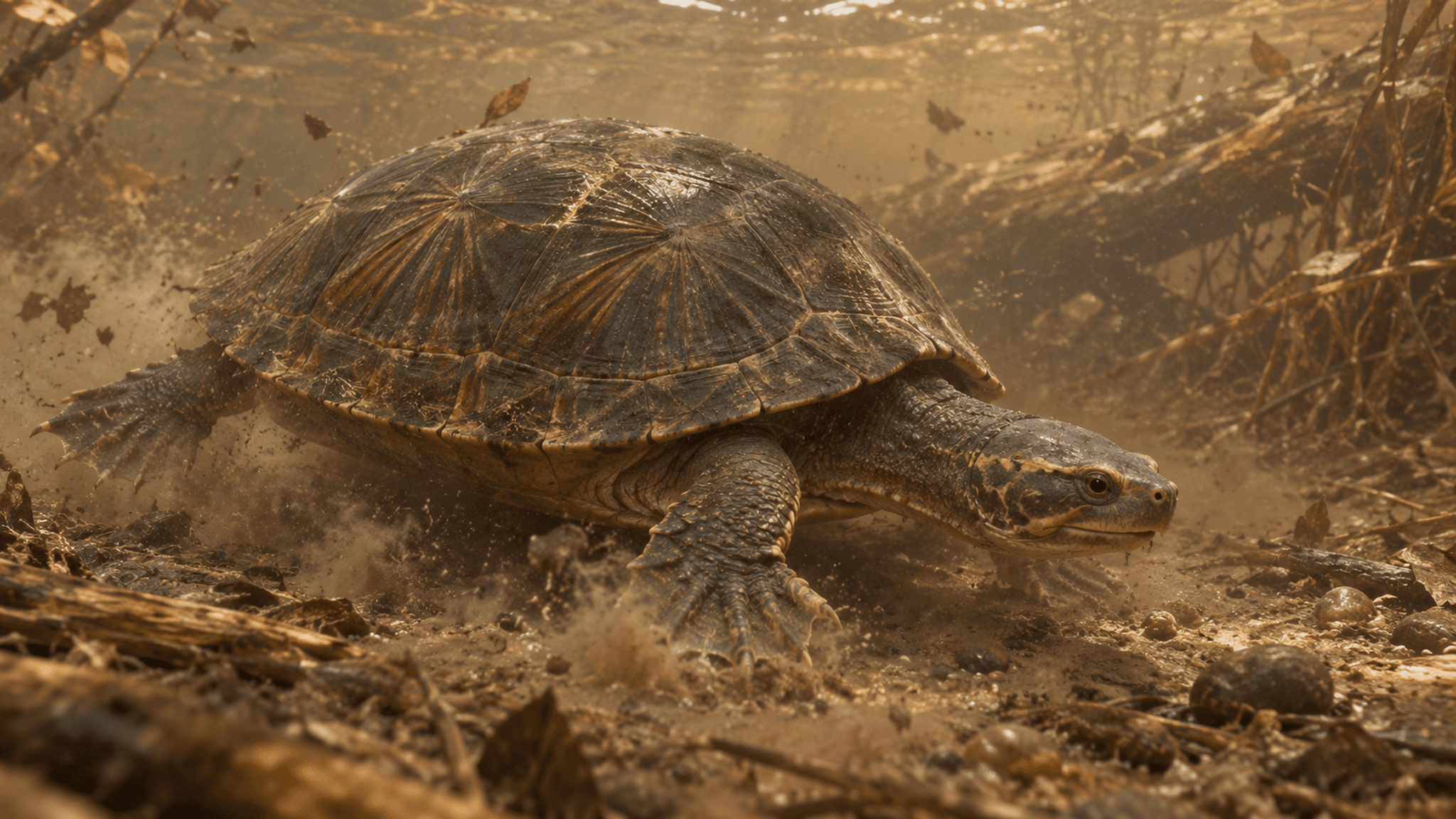
 · 8 Oct 2026Around 75 million years ago, a turtle lived in the rivers of what is now Alberta. *Plesiobaena antiqua* was the most common Cretaceous turtle in Canada’s Dinosaur Park Formation. X-ray scans of four skulls and three lower jaws now show that its head changed as it grew. The jaws also fit a shift towards hard food.
 Fossil Finds
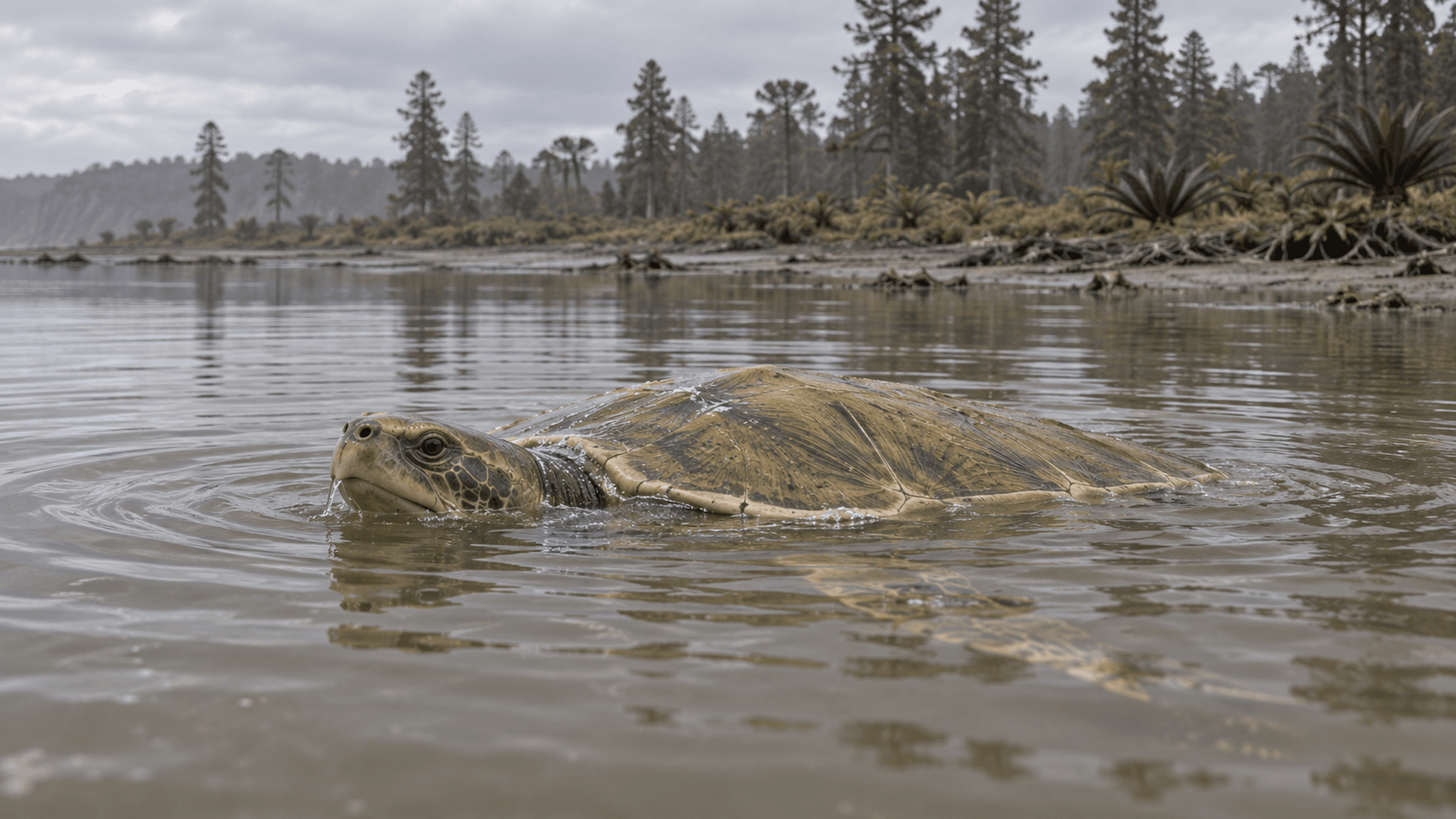
 · 8 Oct 2026A shallow, muddy lagoon in what is now southern France preserved the remains of a Jurassic turtle that researchers have now identified as a new species: *Caesaria templaria*. Two fossils from the limestone of Canjuers even establish a new genus. They come from the youngest Jurassic turtle fauna known in Europe.
 Evolution
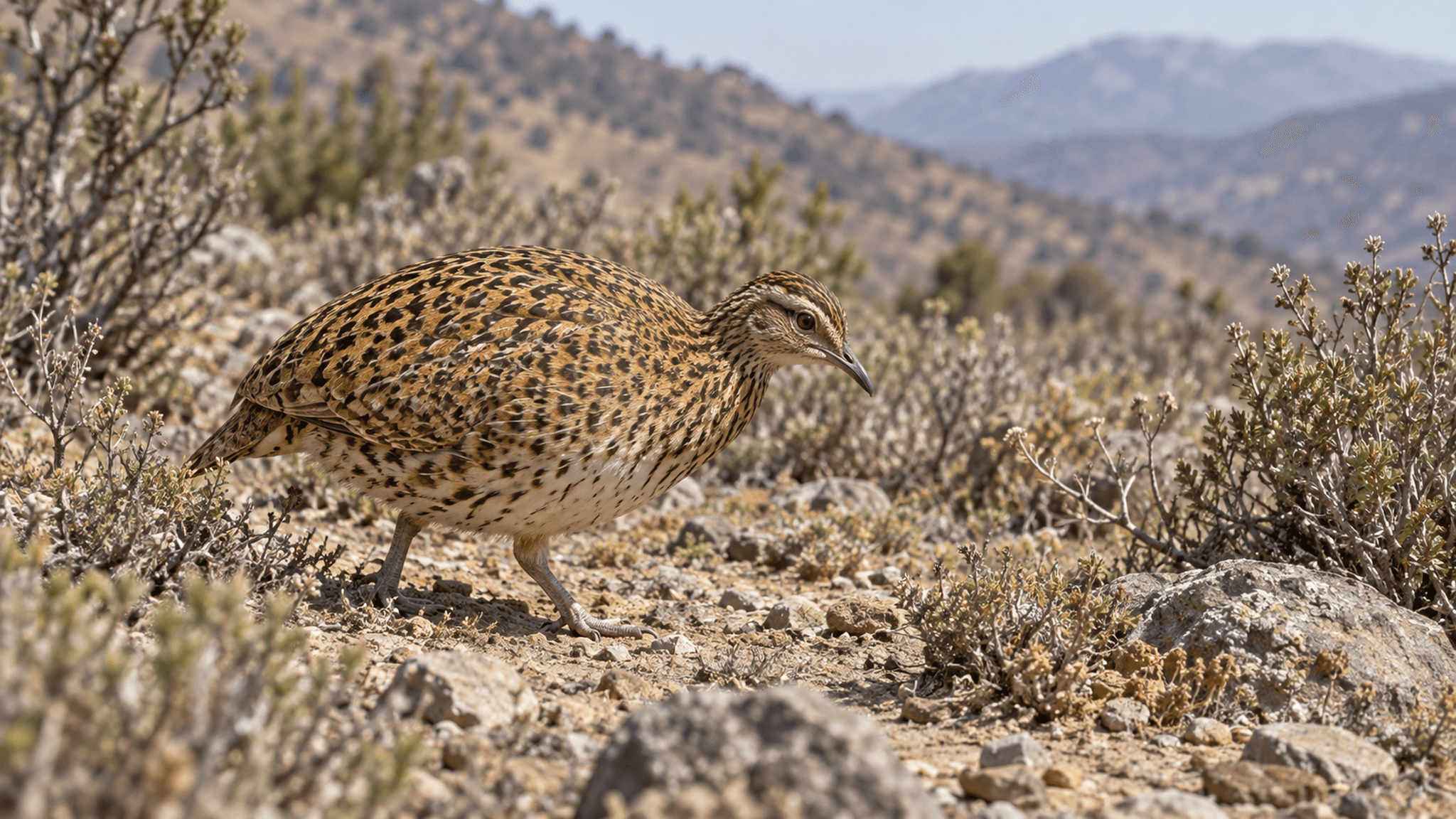
 · 8 Oct 2026Inside the egg of a Chilean tinamou, three developing bone structures grow together into a single V. A new embryo study suggests that the bird wishbone arose this way: from two collarbones and a central piece. The question is ancient, because theropod dinosaurs already carried wishbones, yet fossils have never revealed where they came from.
 Dinosaurs
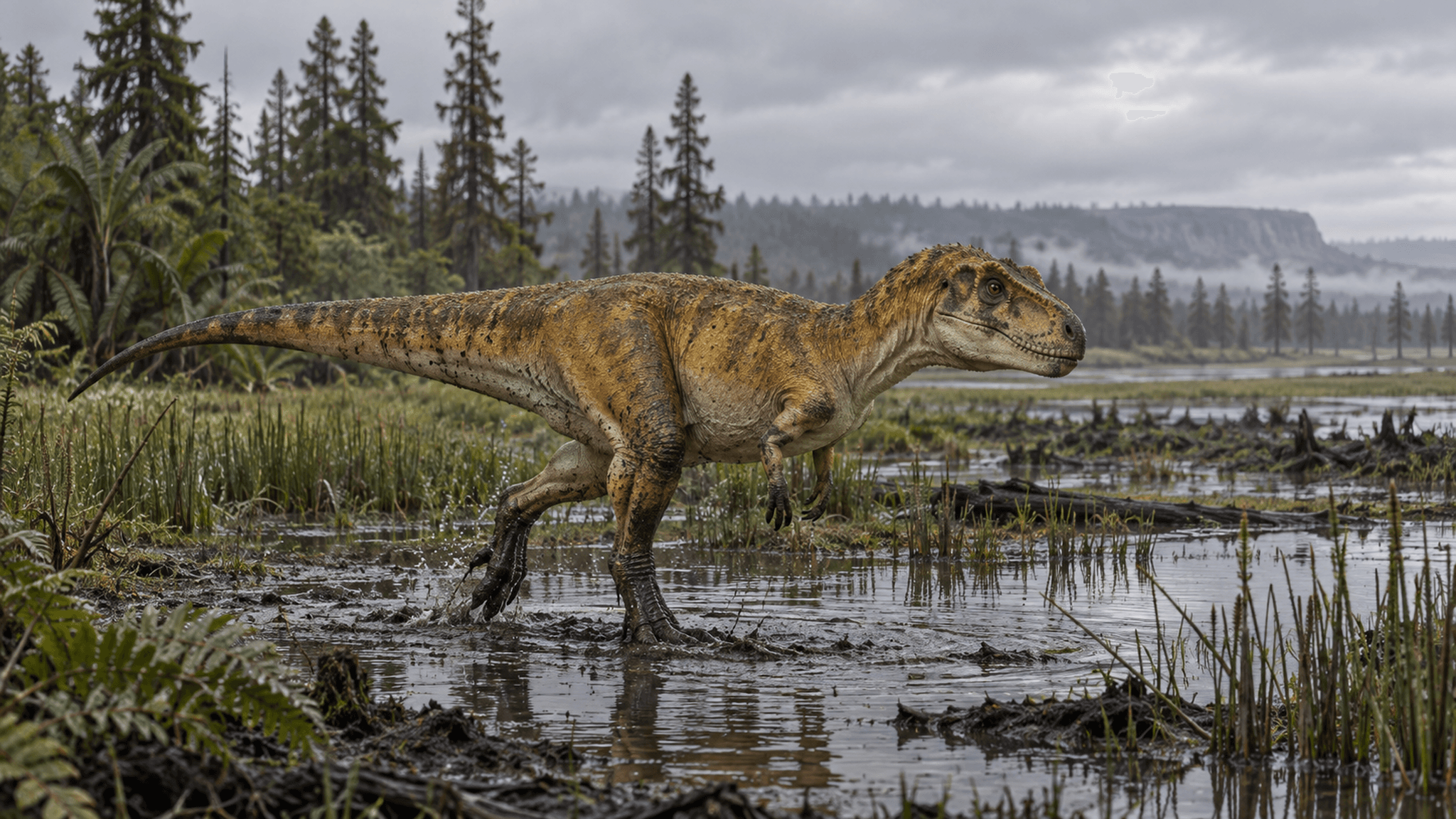
 · 8 Oct 2026Fine scratches left by another animal's teeth run across the jaw of a young Albertosaurus, a more slender relative of *Tyrannosaurus rex*, found in the Red Deer River valley in Alberta, Canada. Two groups of unhealed bite marks best match small predatory dinosaurs and provide the first documented evidence that such hunters fed on a tyrannosaur.
 Fossil Finds
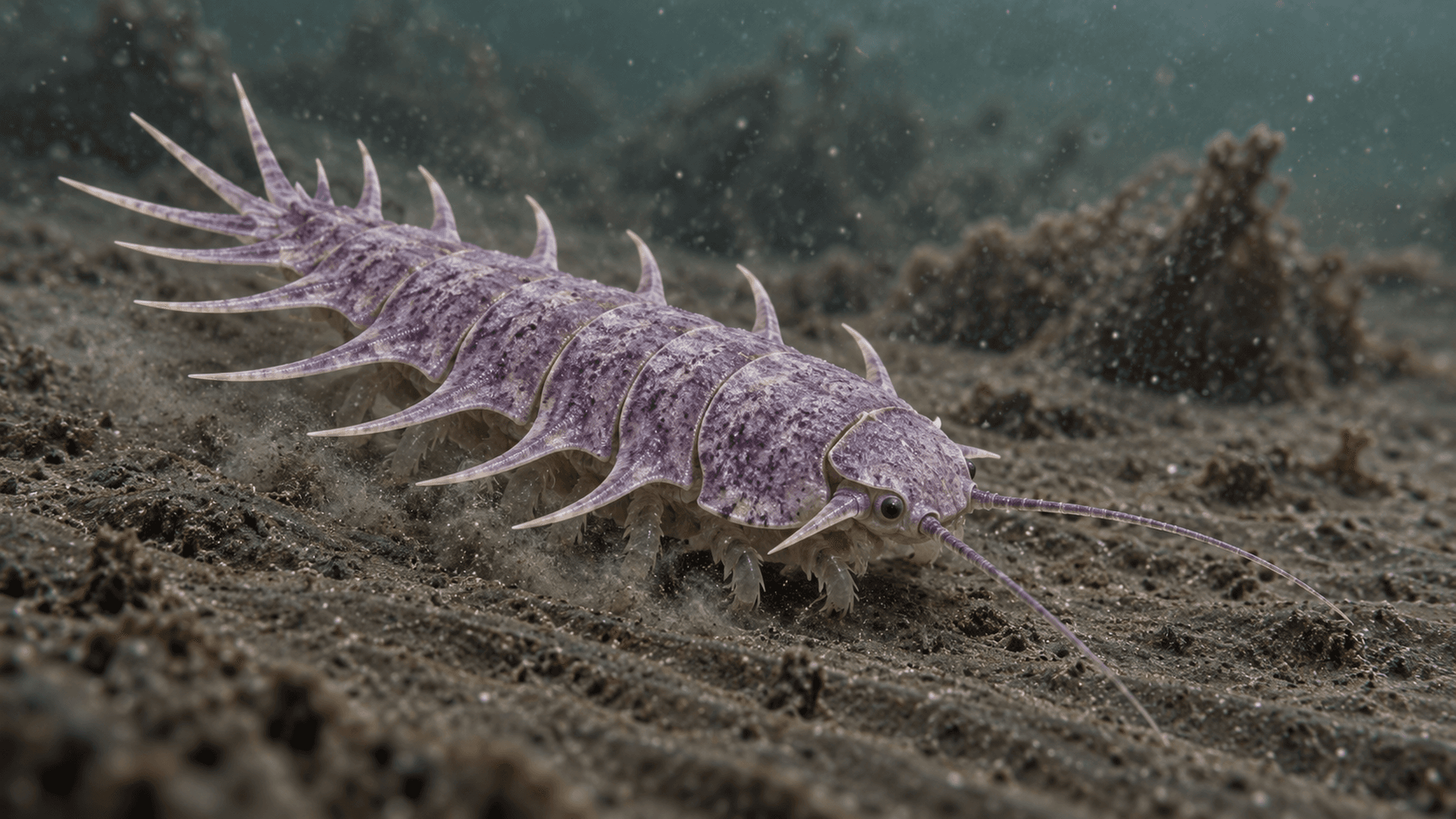
 · 8 Oct 2026Seven pairs of long spines jut from its flanks, while 13 pairs of legs carry its flat body across the seabed below. For more than half a billion years, these legs lay hidden in rock until an X-ray scan brought them to light. They belong to *Dianhaia heptacantha*, a previously unknown arthropod — a relative of modern crustaceans and insects — from the Chengjiang fossil site in southern China.
 Fossil Finds
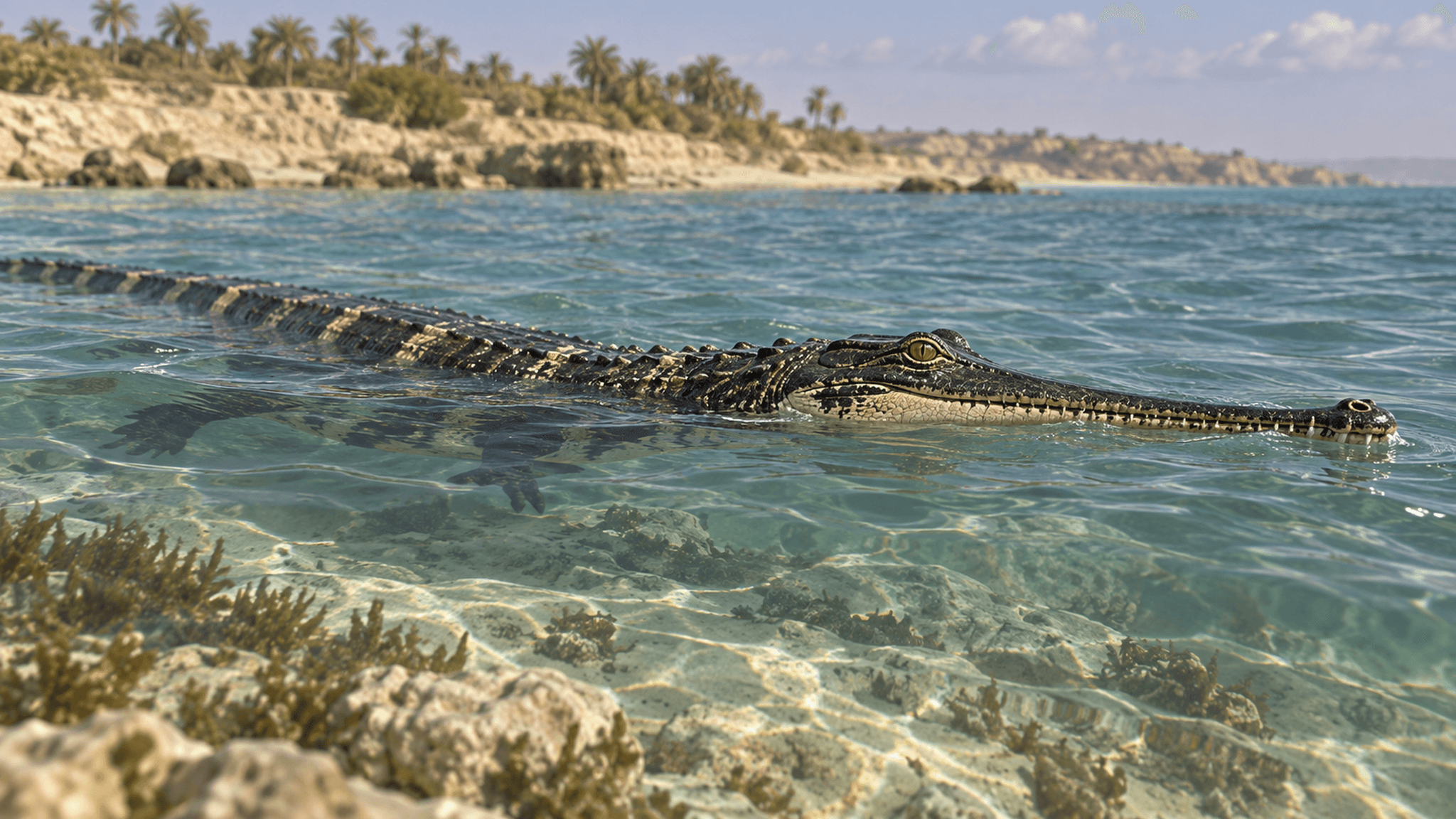
 · 7 Oct 2026A long, narrow jaw snaps at prey in the warm, shallow sea east of present-day Cairo. The prehistoric crocodile it belonged to lies in the same limestone from which the Great Sphinx was carved — and spent decades under the wrong name. A new study now shows that the animal was not closely related to the false gharial, a living crocodilian from Southeast Asia.
 Dinosaurs
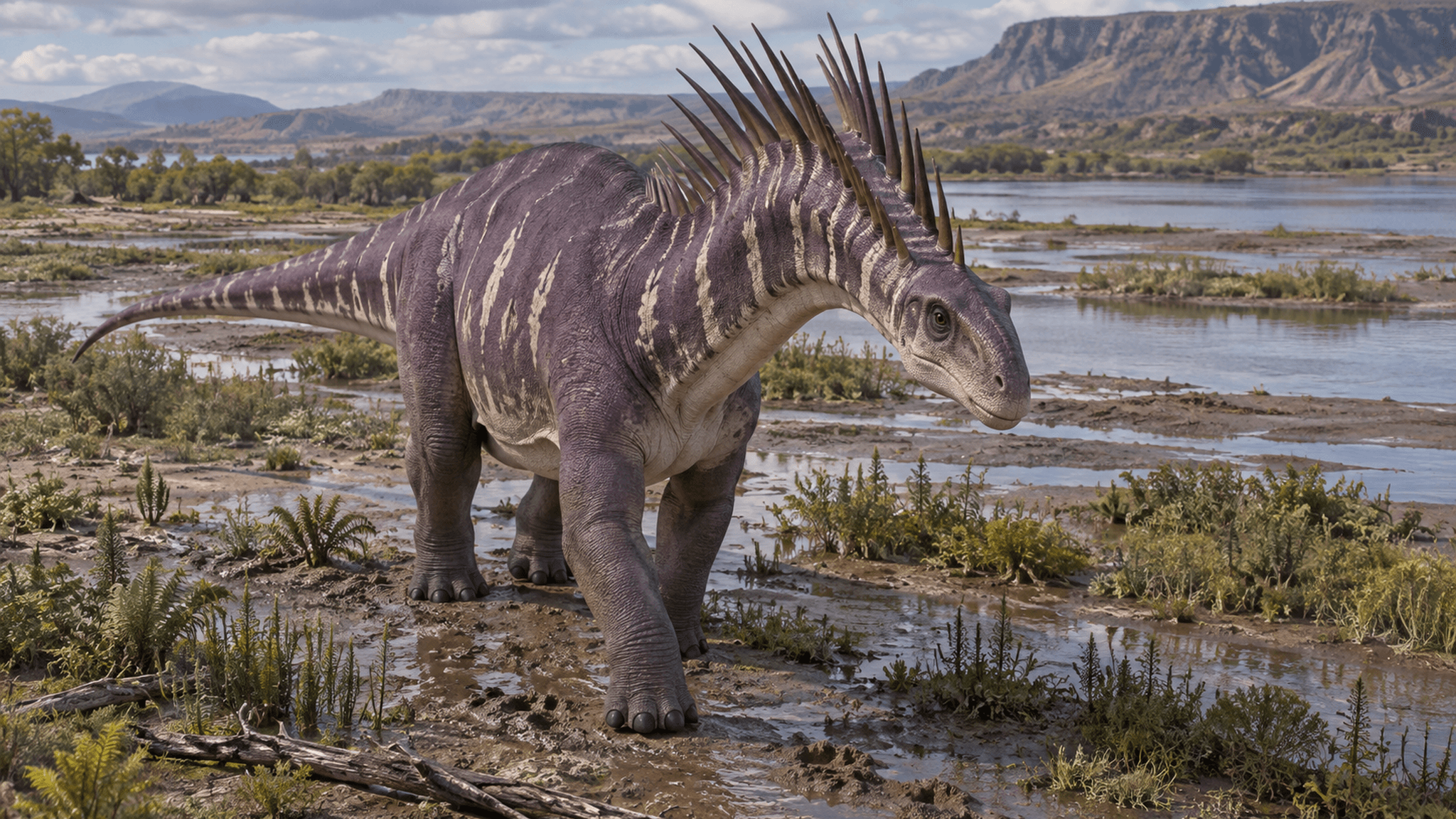
 · 7 Oct 2026A long-necked giant plants its hind leg, and its weight of many tonnes bears down on a single thigh bone. Researchers have now put such bones through a virtual press. In wide-legged sauropods, the long-necked dinosaurs of prehistory, stress in the model usually rose less sharply than in narrow-legged relatives such as *Diplodocus*. They found no universal recipe for gigantism.
 On This Day
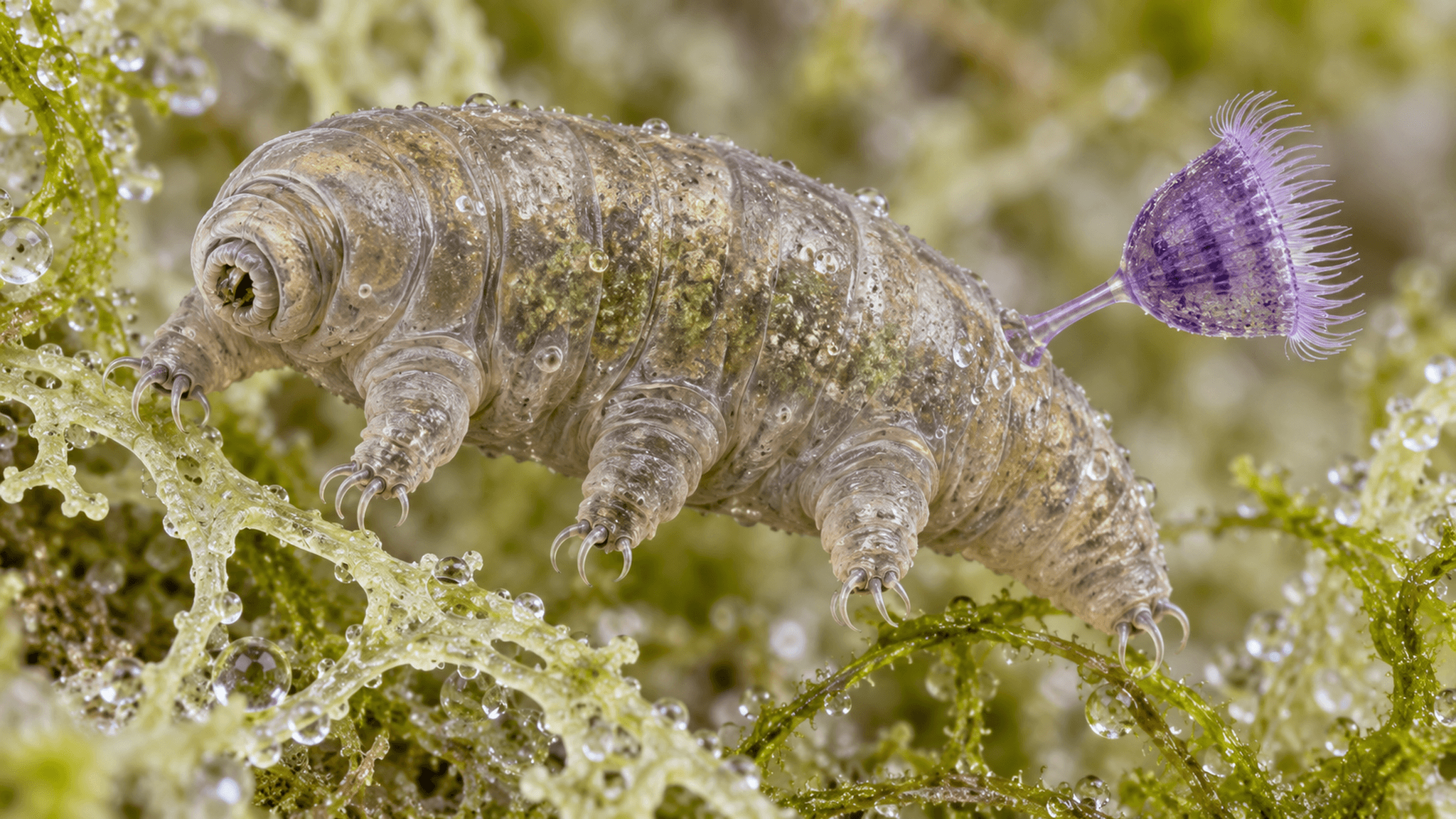
 · 6 Oct 2026A tiny single-celled organism rides around the world on tardigrades and also clings to mites and even specks of dirt. For almost sixty years, the hitchhiker was considered a rarity. Researchers have now reported 49 new locations, from Britain through Canada and Australia to Antarctica.
